


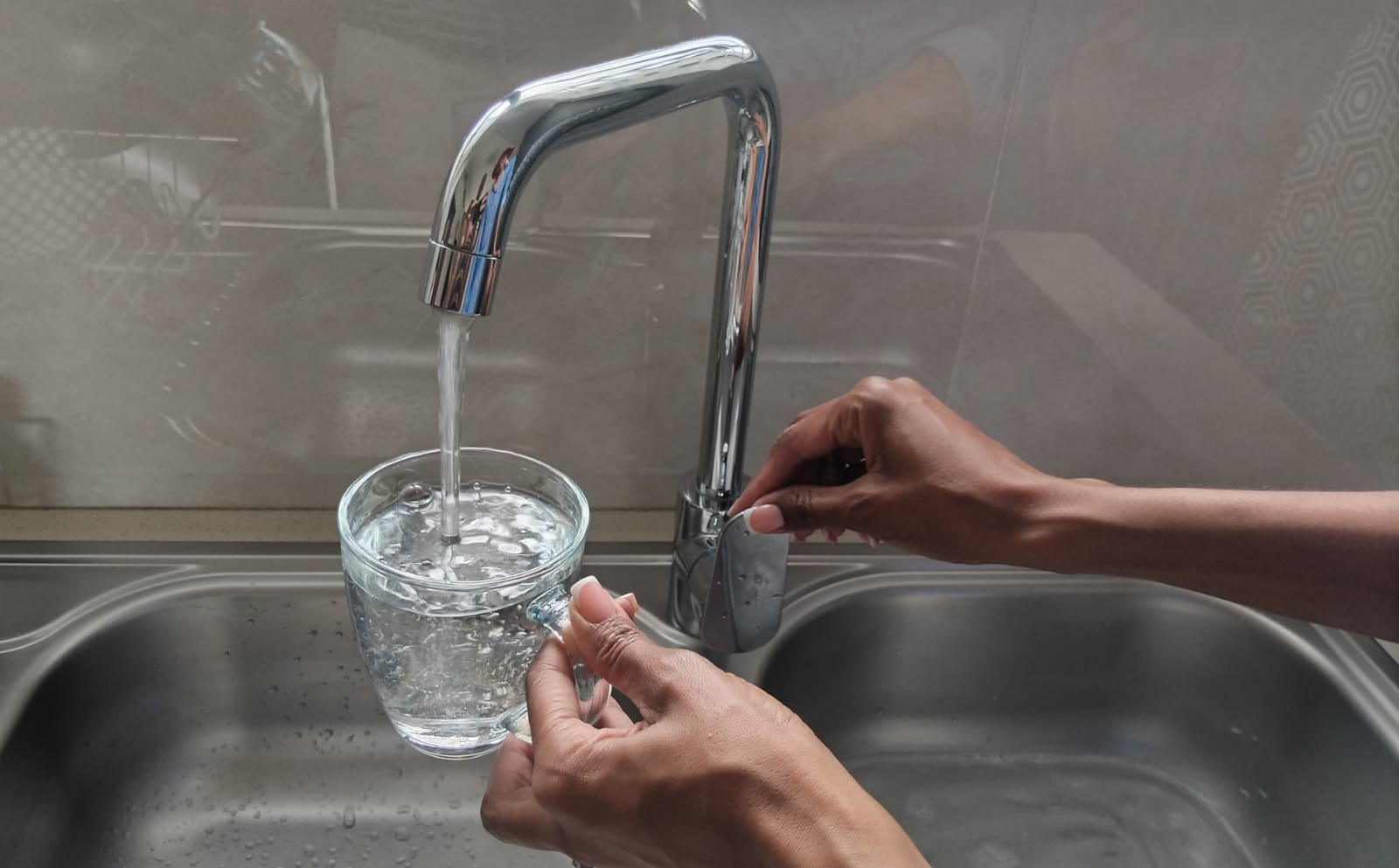
- Localised water crises are becoming part of everyday life, affecting households, schools, clinics, and businesses across the country.
- Infrastructure decay, poor maintenance, and weak municipal governance remain the primary drivers of shortages and water quality failures.
- Opportunities exist to stabilise water systems through governance reforms, improved operations, and active citizen participation in conservation efforts.
As South Africa begins 2026, the country faces a water sector at a fragile and decisive moment. Over the past year, water challenges have shifted from warnings in research reports and policy documents to everyday disruptions affecting millions of people.
Intermittent supply in parts of Johannesburg and Tshwane, prolonged shortages nationwide, and unsafe drinking water in Hammanskraal illustrate how localised water crises have become a defining feature of daily life, disrupting households, schools, clinics, and businesses. This is a warning the country can no longer ignore. Yet it is not a story of inevitable collapse.
Alongside these failures are signs that hard lessons are being learned. The year ahead represents a critical window. The choices made now will determine whether South Africa continues to lurch from one localised crisis to the next, or begins to stabilise and rebuild its water systems.
Progress made, often the hard way
In several major supply systems, dam levels remained relatively stable through much of 2025. This reinforces a central insight from recent research and lived experience alike. South Africa’s water crisis is driven less by a lack of water than by governance failures, inadequate maintenance, and weak operational capacity.
In Gauteng, for example, severe supply interruptions occurred even when dams were relatively full. There has nevertheless been a growing shift in focus. Infrastructure refurbishment, water reuse, and demand management are receiving greater attention, rather than an almost exclusive reliance on new dams and large transfer schemes. In some cities, improved coordination between bulk suppliers and municipalities helped reduce the severity of supply interruptions during peak demand periods.
Water quality monitoring has also improved in transparency. While the results have often been alarming, they have made it increasingly difficult to ignore the extent of failure at wastewater treatment works and drinking water plants. Importantly, there is growing recognition across the sector that many localised water crises are symptoms of institutional weakness rather than hydrological limits. This shared diagnosis is a necessary starting point for reform.
Structural challenges remain entrenched
Despite pockets of progress, structural problems remain severe. Ageing infrastructure and chronic under-maintenance continue to drive high levels of water loss, with leaks and pipe bursts now commonplace in many towns and cities. Even where water is available in dams, it frequently fails to reach households reliably. Water quality failures have become just as serious as shortages.
The prolonged crisis in Hammanskraal is the most visible example, but similar conditions exist wherever untreated or partially treated effluent is discharged into rivers and dams. These failures undermine ecosystem health, raise treatment costs, and expose communities to direct public health risks.
Rapid urbanisation, population growth, and the expansion of informal settlements are placing additional strain on systems already operating beyond their design limits. Underpinning these pressures are persistent shortages of technical skills, weak financial management, and fragmented accountability at the municipal level. Without addressing these fundamentals, emergency interventions will continue to substitute for long-term solutions.
Signals to watch in 2026
Several signals will determine whether South Africa’s water security trajectory improves or deteriorates during 2026. Infrastructure performance will be a key indicator. Fewer pipe bursts, reduced water losses, and better-functioning wastewater treatment plants would suggest that investment is translating into operational gains.
Water quality trends demand equally close attention. Rising microbiological contamination and nutrient pollution often precede wider public health and ecological crises. Climate variability will continue to test already fragile systems, as both droughts and intense rainfall events place additional stress on infrastructure.
Water security is also a collective responsibility. High household consumption, illegal connections, poor maintenance of private plumbing, and limited reporting of leaks all place further strain on constrained systems. In cities experiencing prolonged shortages, sustained reductions in demand have often made the difference between partial recovery and ongoing crisis.
A culture of water efficiency, leak reporting, and realistic expectations of supply reliability is therefore essential. Finally, governance and accountability will be decisive. How reforms are implemented at the municipal level, how funds are spent, and how performance is monitored will matter far more than the number of new strategies or plans produced.
Warning carries hope
Despite the severity of South Africa’s water challenges, there are strong reasons to resist narratives of inevitable failure. The country has a robust scientific and technical knowledge base, progressive water legislation, and decades of experience managing scarcity and variability. Many of the solutions required—reducing losses, protecting source water quality, stabilising operations, and managing demand—are well understood.
Localised successes demonstrate what is possible when governance, capacity and accountability align. Where maintenance is prioritised and operations stabilised, service reliability improves. Water reuse and demand management initiatives show that resilience can be built incrementally, even under constrained conditions.
Crucially, recognising that South Africa’s water crisis is a combination of institutional and hydrological factors opens space for action. Governance failures are within human control. If the government stabilises institutions and infrastructure, municipalities prioritise operations and maintenance, and consumers actively reduce demand, fix leaks, and value water as a scarce public good, this warning can still be turned into a pathway toward greater water security rather than a permanent state of crisis.
Conclusion
At the start of 2026, South Africa’s water outlook is a warning, not a verdict. Declining water quality, failing infrastructure, and uneven institutional capacity continue to drive localised water crises that affect daily life and public health. At the same time, there is growing clarity about the real causes of these failures and increasing recognition that many are preventable and even solvable.
The task for the year ahead is to convert understanding and plans into action. Doing so will not eliminate localised water crises overnight, but it can reduce their frequency, severity, and social cost. Whether water becomes South Africa’s next entrenched emergency or a catalyst for long-overdue institutional renewal will depend on how seriously this warning is taken by all.
Get your news on the go. Click here to follow the Conviction WhatsApp channel.


