


- Unisa reports strong graduation output and research growth between 2021 and 2025.
- Financial reserves increase significantly alongside clean audits and governance reforms.
- New strategy focuses on digital transformation, research expansion and student success.
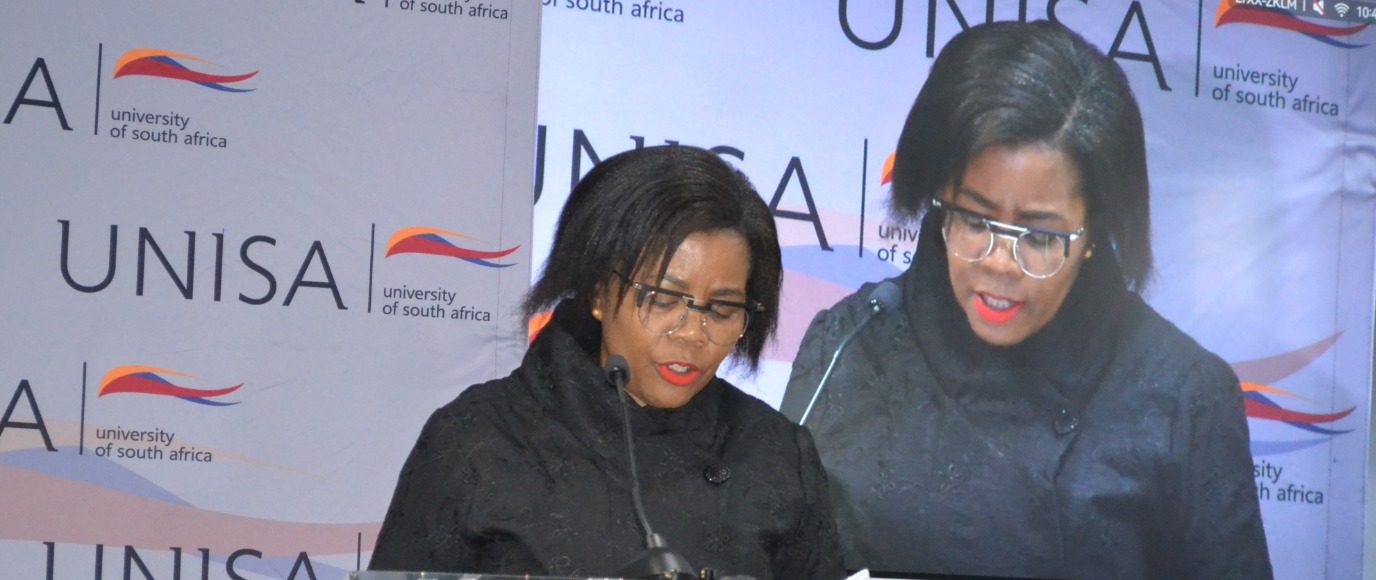
Unisa’s Vice-Chancellor, Professor Puleng LenkaBula, has marked 2026 as a year of decisive action, signalling a clear shift from reflection to implementation as the university moves into its next phase of growth.
Speaking at a media briefing in Pretoria on Thursday, 19 March 2026, LenkaBula gave a detailed account of the university’s performance over the past five years and laid out a forward-looking strategy built around research, digital transformation and institutional reform.
LenkaBula described the moment as one of renewal, stressing that the university must actively shape its own future rather than simply react to global change. She said, “Today’s briefing serves not only as an opportunity to reflect on our institutional journey during the period 2021 to 2025, but also as a platform to map the course ahead as we enter a new phase in 2026.”
Institutional performance and research growth
LenkaBula pointed to sustained growth in student success and postgraduate output, noting that the university has consistently graduated more than 50 000 students each year. She said this track record reinforces Unisa’s role in developing the high-level skills the country’s economy and society depend on.
She said, “These figures reaffirm Unisa’s leadership in high-level skills production and its vital role in supporting national development.” The university also produced over 500 doctoral graduates and more than 900 master’s graduates over the same period, pointing to a strengthening postgraduate pipeline.
Research output has grown steadily alongside this, with Unisa holding a place among the top 10 research-performing institutions in South Africa. LenkaBula noted real gains in global rankings, particularly around sustainability, and said, “The institution is ranked among the top eight universities in South Africa and within the top 1,000 globally.”
She also highlighted growth in NRF-rated researchers and growing international recognition, adding, “In 2024, the Stanford University Elsevier ranking listed 20 Unisans among the top 2% of scientists globally.” This momentum, she explained, is driven in part by the university’s catalytic niche areas, which now account for more than half of its total research output.
Governance, finances and digital transformation
LenkaBula was emphatic on the importance of governance and financial stability, describing both as foundational to the university’s credibility and long-term health. She confirmed that Unisa received multiple consecutive unqualified audit outcomes between 2021 and 2024.
She said, “These achievements are a testament to the collective commitment of our leadership, management and administrative teams toward building a well-governed and ethically grounded institution.” Over the same period, the university grew its reserves substantially, from approximately R9 billion to more than R24 billion.
Governance reforms introduced over this period include a new Institutional Statute, Governance Framework and updated supply chain policies. LenkaBula said these changes form part of a broader push to modernise the university’s systems and sharpen accountability.
Digital transformation has been another clear priority, with significant investment going into Unisa’s open distance e-learning model. She explained that the university is strengthening its digital infrastructure, cybersecurity systems and online academic services to widen access and improve the student experience at scale.
Strategy for 2026 and beyond
Looking ahead, LenkaBula was unequivocal. 2026 will be about doing, not planning. She said, “2026 must be a year of execution with impact,” a message that emerged from internal strategic engagements where staff and leadership called for faster reform and stronger accountability.
She outlined a set of priorities centred on expanding research capacity, strengthening academic talent, deepening partnerships and advancing digital innovation, all aimed at positioning Unisa as a leading force in Africa’s fast-changing higher education landscape.
LenkaBula also connected the university’s strategy to the bigger picture, pointing to persistent challenges like unemployment, inequality and technological disruption. She argued that higher education institutions have a responsibility to produce graduates who are adaptable and globally competitive, while also playing an active role in addressing social and economic problems.
She closed with a clear statement of ambition that Unisa intends to lead, not follow, in shaping the future of higher education. She said, “The future of this institution will not be revealed to us; we will build it together,” before adding, “Let it signal to South Africa, to Africa, and to the world that Unisa is not only prepared for the future, but Unisa is ready to define it.”
Get your news on the go. Click here to follow the Conviction WhatsApp channel.