


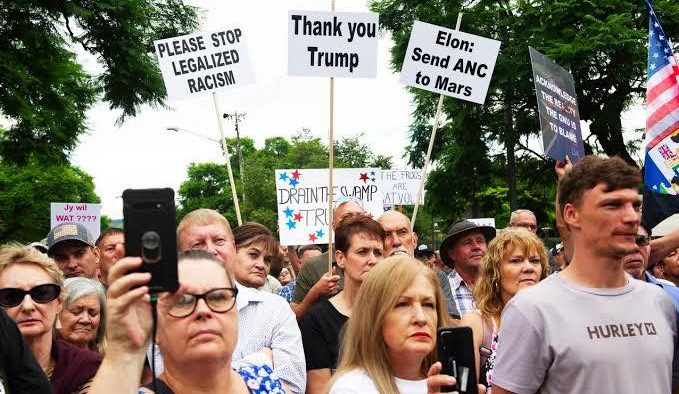
Many believe that apartheid was defeated, but that is false. While apartheid as a political system may have been dismantled, its ideology and way of thinking remain deeply entrenched.
The Trump administration fast-tracked a controversial initiative under the US Refugee Admission Programme to resettle approximately 3,000 Afrikaners and other "disfavoured minorities" from South Africa, claiming they are victims of "unjust racial discrimination." This policy is publicly framed as a humanitarian response to allegations of "racial persecution" and "white genocide" in post-apartheid South Africa. However, at its core, it deliberately conflates economic redistribution with persecution, reframing long-overdue justice as an existential threat.
Whiteness as property
Cheryl Harris’s seminal work demonstrates that whiteness functions as property, conferring not only material entitlements but also social dominance and epistemic control. For example, land restitution is perceived not merely as an economic issue but as a direct affront to the proprietary value of whiteness itself.
America’s claim of "white genocide" echoes its historical complicity as "apartheid’s reluctant uncle," to borrow Thomas Borstelmann's phrase. This narrative aims to whitewash white atrocities under apartheid and in Palestine today, weaponizing refugee policy and invoking settler colonial logics in bad faith. It reverses realities of power and dispossession, reinforcing racial retrenchment while obstructing justice.
Despite persistent claims, there is no credible evidence that white South African farmers face systematic persecution. Yet, this myth fuels racialised policymaking that WEB Du Bois aptly described as "the global colour line." Whiteness continues to function as a passport to mobility, citizenship, and legal protection, while Blackness and other racialised identities remain subject to suspicion, surveillance, and exclusion. South Africa today is a graveyard of Black bodies, ravaged by poverty, racism, violence, and marginalisation.
Diplomacy and the enduring hierarchies of whiteness
Applying Judith Butler’s framework, Trump and white supremacist groups, locally and abroad, render only certain lives as valuable and grievable. In contrast, black, brown, and stateless lives are devalued, ungrievable, and excluded from the moral and institutional purview of humanitarian concern.
Diplomacy has consistently failed to challenge whiteness and its atrocities, from the transatlantic slave trade and colonialism to apartheid and ongoing genocidal activities in Palestine. As a profession rooted in imperial interests, diplomacy serves to shield whiteness rather than dismantle its global privilege. Racial hierarchies are reinforced across visa regimes, trade negotiations, and asylum policies.
The US refugee resettlement program for Afrikaners is less a humanitarian act and more an affirmation of whiteness as globally grievable. Meanwhile, black and racialised communities remain excluded or criminalised. In this context, even the act of "fact-checking" claims of "white genocide" proves futile, as these narratives are not only entirely baseless but also deeply harmful and misleading. They unjustly reframe the historical oppressor as the victim, obscuring the true legacy of racial oppression and dispossession.
Ultimately, there is little that can be done to reverse this entrenched racial order, as evidenced by white Israel’s brutal assault on Gaza in full view of the world and the refusal of wealthy white nations to grant asylum to desperate Sudanese, Haitians, and others. Diplomacy can reset political, economic, and trade relations, but it cannot undo whiteness or the barbarism and atrocities it has sanctioned for centuries.
Siya yi banga le economy!

#Conviction
Get your news on the go. Click here to follow the Conviction WhatsApp channel
