


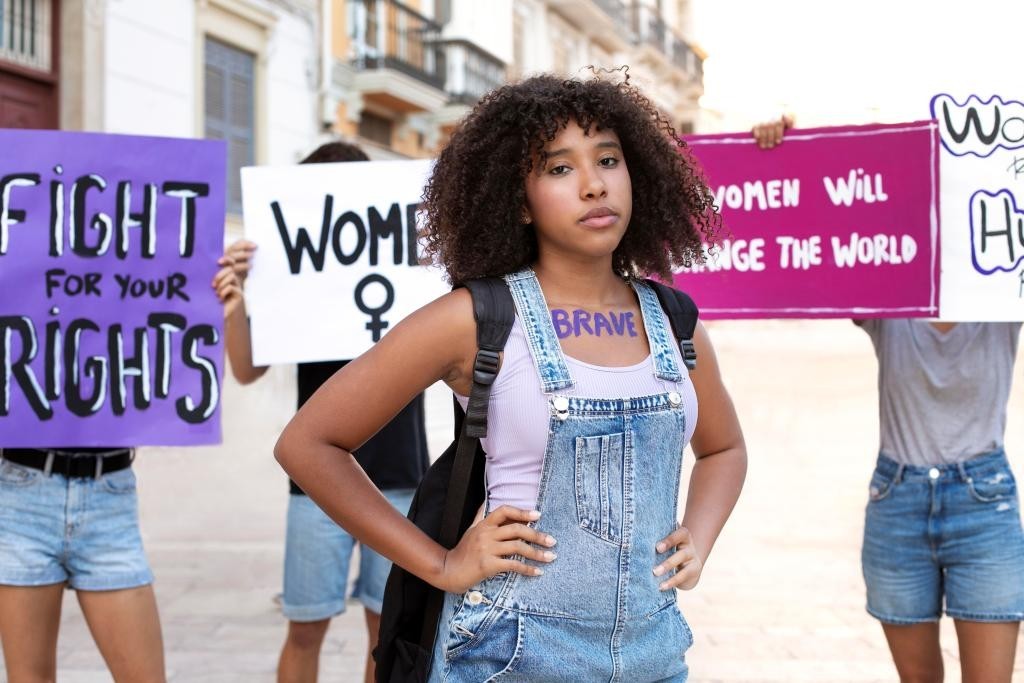
- Women’s unpaid care work is sustaining households, communities and the formal economy, yet its costs are borne largely through lost income, time and opportunities.
- Failures in water, healthcare, transport, childcare and social services are often transferred into additional unpaid labour that disproportionately affects poor and marginalised women.
- Dr Adeniyi and Prof Durojaye call for unpaid care to be measured, recognised in policy and budgets, supported through public investment, and shared more fairly between the state, employers and men in households.
Every failed public service generates an invoice. In South Africa, that invoice is often sent to a woman. When childcare is unaffordable, someone must remain at home. When a clinic is inaccessible, someone must care for the sick. When food runs short, someone must decide how to stretch what remains. That person is disproportionately likely to be a woman.
“Women’s work” does not appear in government budgets, municipal reports or national accounts. It is described as duty, motherhood, sacrifice or, especially during Women’s Month, resilience. But South Africa must confront an uncomfortable truth: the country is sustained by an invisible welfare system financed through women’s unpaid time, labour, health and lost opportunities.
Every year, South Africa honours the women who marched to the Union Buildings on 9 August 1956. Yet their legacy should compel us to do more than praise women’s strength. It should require us to examine why women are still expected to carry burdens created by unequal households, inadequate public services and an economy that undervalues care.
The language of resilience can inspire, but it can also conceal institutional failure. A woman who wakes early to fetch water because her community lacks a reliable supply may be resilient. A grandmother supporting several children on a limited grant may be resourceful. A mother who abandons paid employment because childcare costs more than she earns may be making a rational decision. But these are not only stories of courage – they are also evidence of systems that are failing.
Unpaid care is an economic infrastructure
South Africa recognises roads, electricity, transport and telecommunications as infrastructure because the economy cannot function without them. Yet the economy also cannot function unless someone raises children, prepares meals, cleans homes, supports older people and cares for relatives who are ill or living with disabilities. This unpaid care sustains the workers, businesses and institutions on which the formal economy depends.
Women are therefore not only excluded from parts of the formal economy; their unpaid labour is subsidising it. The absence of payment does not mean that the work has no cost. It means the cost has been transferred to the woman performing it – she pays through interrupted education, lost income, reduced career progression, exhaustion and weakened financial independence.
When services fail, the burden moves
Public service failures do not disappear. They are transferred. An unreliable water supply results in hours spent locating and carrying water. Inadequate healthcare becomes unpaid nursing at home. The absence of affordable childcare becomes a woman’s withdrawal from work, education or business. Unsafe transport results in lost employment opportunities and restricted mobility. Food insecurity becomes the emotional and practical burden of deciding who eats.
This has important human rights implications. South Africa’s Constitution guarantees women equality, dignity, and access to healthcare, food, water and social security, while prohibiting direct and indirect gender discrimination. These protections, reinforced by the Promotion of Equality and Prevention of Unfair Discrimination Act, CEDAW and the Maputo Protocol, require the state to address systemic inequalities and ensure that inadequate public services and unpaid care responsibilities do not continue to impose disproportionate burdens on women.
Women may formally enjoy rights to dignity, equality, healthcare, food, water and social security. But when access to these rights requires excessive unpaid labour, repeated travel, long waiting periods and personal sacrifice, those rights aren’t being equally realised. Women often become the informal providers of services that public institutions are constitutionally required to deliver.
Not all women carry the same burden
Women do not experience these pressures equally. A professional woman may face unequal expectations around childcare and career progression, while a rural woman may spend hours reaching transport, healthcare or water. A domestic worker may care for another family’s children while struggling to secure care for her own. A woman with a disability may face inaccessible transport, buildings and information. An older woman may become the principal caregiver for grandchildren and unemployed relatives.
Women living in poverty face the greatest burden because they cannot easily purchase alternatives. Wealth can buy private transport, domestic assistance, childcare and healthcare. Poverty turns every institutional failure into additional unpaid work.
This creates time poverty. A woman who spends hours obtaining basic services has less time for paid work, education, rest, political participation and personal development. She may not be formally excluded from economic life, but the demands placed on her time make meaningful participation extremely difficult.
What needs to change
Women’s Month must move beyond praising women for surviving systems that should be transformed.
Firstly, South Africa must measure unpaid care work regularly. National time-use surveys should show who performs unpaid work, how much time it consumes and how service failures increase that burden.
Secondly, government departments and municipalities should introduce gendered time-impact assessments. Before closing, relocating, digitising or reducing a service, authorities should ask whether the decision will increase the time women spend accessing water, healthcare, transport, childcare, food or social assistance.
Thirdly, care must be treated as essential social and economic infrastructure. Affordable childcare, community-based care, accessible healthcare and support for caregivers are necessary for women’s economic participation.
Fourthly, responsibility for care must be redistributed. Men must assume a fairer share of domestic work. Employers should support caregiving without penalising women’s careers. The government must provide the services that prevent care responsibilities from overwhelming households.
Finally, gender equality should not be measured only by counting how many women enter employment, business or leadership. We must also ask how much invisible work they perform before the workday begins and after it ends.
Stop celebrating exhaustion
The women of 1956 did not march so that future generations could become more efficient at enduring inequality. They marched because unjust systems had to be confronted and changed.
This Women’s Month, South Africa should stop romanticising women’s exhaustion. Women should not have to compensate indefinitely for failed services, inadequate care systems and unequal household responsibilities. A society that depends on women’s unpaid labour while refusing to recognise its value is not empowering women – it is benefiting from their inequality.
The most meaningful tribute South Africa can offer women isn’t another celebration of how much they can carry. It is a commitment to ensuring that they no longer have to carry so much. Until women’s time, care and unpaid labour are reflected in budgets, policy and accountability systems, women will continue subsidising the country with their lives. And they will continue paying the bill.
Get your news on the go. Click here to follow the Conviction WhatsApp channel.
The opinions expressed in this article are solely those of the author and do not necessarily reflect the views of the University of Pretoria or Conviction.co.za
