


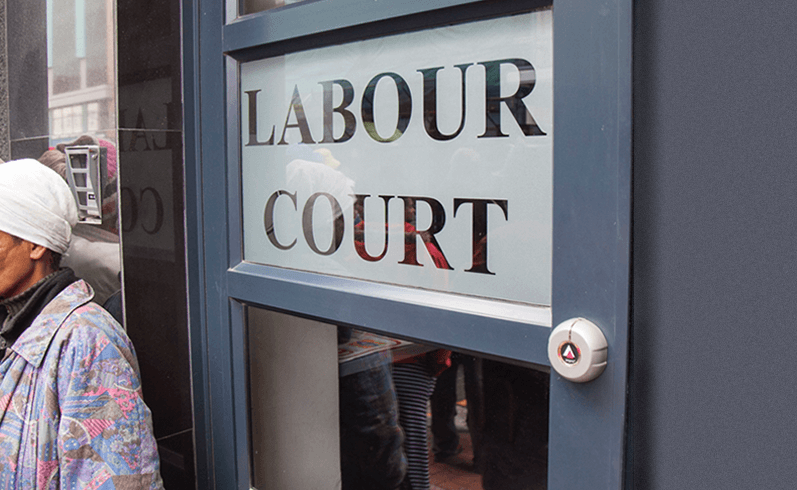
- The Labour Court clarified that a dispute must be referred to court within 90 days after the CCMA certifies the dispute as unresolved.
- Acting Judge C May explained that the 90-day period starts from whichever comes first: either when the certificate of outcome is issued or when 30 days have passed since the dispute was referred to the CCMA.
- The court allowed Lamour Tommy Nel an opportunity to apply for condonation after her referral against Boldr (Pty) Ltd was filed outside the time limit.
Employees who want to challenge a dismissal in the Labour Court should pay careful attention to when the 90-day referral period begins.
A recent Labour Court judgment clarifies exactly how this deadline is calculated and explains why missing it may prevent the court from hearing a case.
This issue arose in a dispute between Lamour Tommy Nel and Boldr (Pty) Ltd. Nel applied for default judgment after challenging her dismissal for operational requirements.
However, Acting Judge C May found that the court could not grant relief because the matter had been referred outside the statutory time period.
The judgment sets out clearly when the 90-day referral clock starts ticking under the Labour Relations Act.
How the 90-day period is triggered
Nel first referred her dispute to the Commission for Conciliation, Mediation and Arbitration (CCMA) on 18 June 2024. Conciliation took place on 11 July 2024, but the dispute remained unresolved.
In labour disputes, when conciliation fails, the CCMA issues a certificate confirming the dispute remains unresolved. This is a critical step, as it allows the matter to proceed to the next stage.
Judge May explained that the Labour Relations Act requires some disputes to be referred to the Labour Court within 90 days after conciliation fails. The judgment emphasised that Section 191 of the Act specifically regulates how this period is calculated.
The court stated that the 90-day period begins from whichever happens first, either the CCMA issues a certificate confirming that the dispute is unresolved or 30 days have passed since the referral to the CCMA.
The judgment explained the rule clearly, “The 90 days for referring the matter to this Court is triggered by the earlier of either the elapse of 30 days from the date of the referral to the CCMA, or the issue of the certificate of outcome.”
In Nel’s case, the clock started when the certificate of outcome was issued.
Why the deadline matters
Judge May referred to earlier decisions showing that it is the issuing of a certificate stating the dispute remains unresolved that gives the Labour Court jurisdiction.
The court cited authority confirming that, “Jurisdiction is conferred on this court in terms of Section 191(5)(b) read with Section 191(11) of the LRA when the CCMA issues a certificate that the dispute remains unresolved.”
The court further highlighted the consequences of missing the deadline, stating that, “A referral outside of the time periods means that the Court is divested of jurisdiction.”
Put simply, if the referral is late and no condonation is granted, the Labour Court cannot decide the dispute.
Court allows opportunity for condonation
Although the referral was late, the Labour Court was careful not to permanently close the door on the dispute.
Judge May pointed out that the Labour Relations Act should be interpreted in a way that encourages quick resolution of labour disputes.
At the same time, the court recognised that people should not be unfairly prevented from pursuing their claims if they have a reasonable explanation for the delay.
For that reason, the court ordered Nel to file an application for condonation for her late statement of claim within 30 days.
Boldr (Pty) Ltd was told to file its response, along with any necessary condonation application, within 15 days of receiving Nel’s application. No order as to costs was made.
Get your news on the go. Click here to follow the Conviction WhatsApp channel.
