Skip to content
Close Menu
ConvictionConviction
  • Home
  • Law & Justice
  • Special Reports
  • Opinion
  • Ask The Expert
  • Get In Touch

Subscribe to Updates

Get the latest creative news from FooBar about art, design and business.

What's Hot

Where did we go wrong? When acid is served as water and blind loyalty becomes poison

May 5, 2026

Tenants taking their landlord to court over claims of an unsafe home and unaddressed repairs

May 5, 2026

Gautrain expansion puts South Africa’s land rights and expropriation laws to the test

May 5, 2026
Facebook X (Twitter) Instagram
Trending
  • Where did we go wrong? When acid is served as water and blind loyalty becomes poison
  • Tenants taking their landlord to court over claims of an unsafe home and unaddressed repairs
  • Gautrain expansion puts South Africa’s land rights and expropriation laws to the test
  • Pretoria High Court to decide whether baby savers are criminals or lifesavers
  • High Court protects essential water pipeline at Sefako Makgatho University
  • Medical failures left woman infertile and permanently scarred
  • A chance flight with Adv Dumisa Ntsebeza SC became a masterclass in law and purpose
  • Fast cars, denied claims and the high cost of speeding in South Africa
Facebook X (Twitter) Instagram
ConvictionConviction
Demo
  • Home
  • Law & Justice
  • Special Reports
  • Opinion
  • Ask The Expert
  • Get In Touch
ConvictionConviction
Home » Insurer’s attempt to exclude COVID-19 business interruption cover for Fourways Mall dismissed
Consumer Protection Law

Insurer’s attempt to exclude COVID-19 business interruption cover for Fourways Mall dismissed

Supreme Court of Appeal upholds policyholder rights, confirms infectious disease cover, and clarifies rectification standards.
Kennedy MudzuliBy Kennedy MudzuliNovember 19, 2025No Comments
Facebook Twitter Pinterest LinkedIn WhatsApp Reddit Tumblr Email
blank
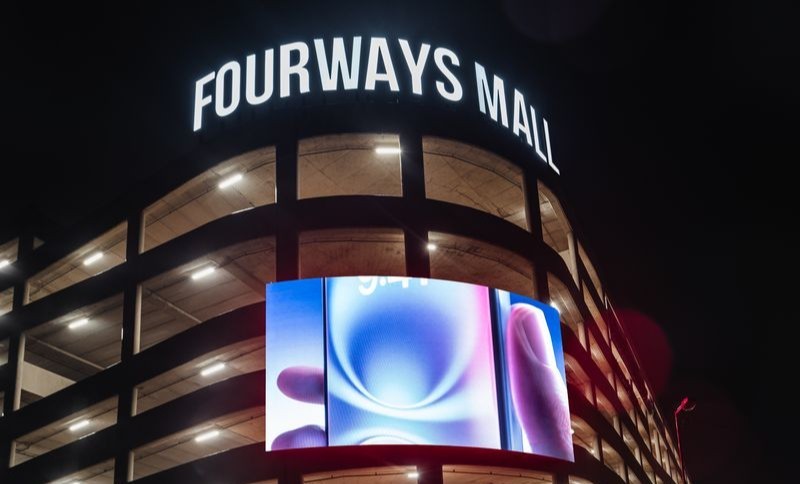
Fourways Mall in Johannesburg is at the centre of a landmark Supreme Court of Appeal ruling on COVID-19 business interruption insurance Picture: Facebook
Share
Facebook Twitter LinkedIn Pinterest Email
  • The SCA rejected an insurer’s attempt to retrospectively remove COVID-19-related business interruption cover from Fourways Mall’s insurance policy.
  • The court held that the parties’ true intention was recorded in the final Placing Slip and policy, both of which included infectious and contagious disease cover.
  • The judgment reaffirms the strict requirements for rectifying contracts and strengthens certainty for policyholders in similar disputes.

The Supreme Court of Appeal has dismissed an attempt by a major South African insurer to retrospectively exclude coverage for losses arising from infectious and contagious diseases such as COVID-19 in a case involving Fourways Mall.

Delivering the unanimous judgment, Judge SP Mothle wrote, “The wording in the Placing Slip and the insurance contract is the same, and indicates that the parties were of the same intent.”

The dispute arose after Azrapart (Pty) Ltd and Accelerate Property Fund Limited, co-owners of Fourways Mall in Johannesburg North, sought indemnification from their insurers for business interruption losses triggered by the COVID-19 lockdown. The policy, underwritten by a consortium led by AIG South Africa Limited and including Old Mutual Insure, Bryte, Guardrisk, and Insurance Underwriting Managers (IUM), explicitly included cover for infectious and contagious disease under its business interruption section.

However, when the insured parties claimed for COVID-19-related losses, the insurers denied liability, arguing that the cover had been erroneously included and sought rectification of the policy to retrospectively delete this clause.

The High Court’s finding and appeal

The Johannesburg High Court rejected the insurers’ plea for rectification, ruling that the infectious and contagious diseases cover was validly included in the policy. The court held that the insurers had failed to highlight or notify any exclusion of the cover during the negotiation process. This omission breached standard insurance industry practices, which require that any changes or exclusions be clearly marked during contract drafting.

Following this ruling, all but one insurer, IUM, settled with the insured parties. IUM proceeded with the appeal to the SCA, maintaining that the inclusion of the cover was a mutual error and that the contract did not reflect the common intention of the parties.

SCA’s analysis of the negotiation process

In a unanimous judgment authored by Judge Mothle, the SCA examined the negotiation process, which unfolded through a series of Quoting Slips and emails. Early drafts included the cover, and at no stage did IUM raise any objection or propose its exclusion. Notably, IUM never signed the key Quoting Slip that excluded the cover, but did sign the final Placing Slip and the policy itself, both of which included the clause.

The court highlighted that under the industry’s rules, the Placing Slip and final policy wording are definitive, and any deviation requires explicit renegotiation and endorsement. Judge Mothle explained, “Clause 8 of Policy Drafting Rules for Assets All Risksis instructive. It recognises the Placing Slip as the policy wording that must be contained in the insurance contract. Clause 8 provides, ‘the policy must be drafted in accordance with the terms, conditions, exclusions, etc, reflected in the signed Placing Slip. Do not deviate from the Placing Slip without first renegotiating with insurers.”

The SCA found no evidence of a mutual mistake or of a common intention to exclude the cover cover. Instead, the evidence showed a consistent intention to include such cover, especially as the COVID-19 pandemic was precisely the type of event the cover was designed for.

Rectification not established

The SCA reaffirmed the legal requirements for rectification. The party seeking rectification must prove, on clear evidence, that the written contract does not reflect the true, continuing intention of both parties, and that the error was mutual. Citing previous authority, the judgment stated, “It is a settled principle that a party who seeks rectification must show facts entitling him to that relief ‘in the clearest and most satisfactory manner’... In essence, a claimant for rectification must prove that the written agreement does not correctly express what the parties had intended to set out therein.”

The court found that IUM failed to meet this high threshold. There was no proof of a common mistake or that the contract failed to record the parties’ intentions.

Impact and costs

The SCA dismissed the appeal, confirming that the cover formed part of the insurance contract and awarding costs against IUM, including the costs of two counsel. As Judge Mothle concluded, “Therefore, the defence of rectification has no merit, and the appeal must therefore fail. The costs should follow the result.”

Conviction.co.za

Get your news on the go. Clickhere to follow the Conviction WhatsApp channel.

business interruption Covid-19 Fourways Mall insurance law Supreme Court of Appeal
Share. Facebook Twitter Pinterest LinkedIn Tumblr Telegram Email
Kennedy Mudzuli

    Multiple award-winner with passion for news and training young journalists. Founder and editor of Conviction.co.za

    Related Posts

    Fast cars, denied claims and the high cost of speeding in South Africa

    May 4, 2026

    Top court orders fresh look at 30-year sentence in robbery case to determine fairness

    April 29, 2026

    Police failure to inform detainee of bail rights rendered detention unlawful

    April 20, 2026
    Leave A Reply Cancel Reply

    Prove your humanity: 6   +   7   =  

    Subscribe to our newsletter:
    Top Posts

    Making sectional title rules that work: A practical guide

    January 17, 2025

    Protection order among the consequences of trespassing in an ‘Exclusive Use Area’

    December 31, 2024

    Between a rock and a foul-smelling place

    November 27, 2024

    Irregular levy increases, mismanagement, and legal threats in a sectional title scheme

    June 2, 2025
    Don't Miss
    Opinion
    7 Mins Read

    Where did we go wrong? When acid is served as water and blind loyalty becomes poison

    By Professor Jacob Tseko MofokengMay 5, 20267 Mins Read

    Prof Jacob Tseko Mofokeng reflects on how blind loyalty, weakened accountability and ethical failure have eroded institutional trust within SAPS, arguing that meaningful reform must rebuild ethical scrutiny, internal accountability and professional judgment.

    Tenants taking their landlord to court over claims of an unsafe home and unaddressed repairs

    May 5, 2026

    Gautrain expansion puts South Africa’s land rights and expropriation laws to the test

    May 5, 2026

    Pretoria High Court to decide whether baby savers are criminals or lifesavers

    May 5, 2026
    Stay In Touch
    • Facebook
    • Twitter
    • WhatsApp
    Demo
    About Us
    About Us

    Helping South Africans to navigate the legal landscape; providing accessible legal information; and giving a voice to those seeking justice.

    Facebook X (Twitter) WhatsApp
    Our Picks

    Where did we go wrong? When acid is served as water and blind loyalty becomes poison

    May 5, 2026

    Tenants taking their landlord to court over claims of an unsafe home and unaddressed repairs

    May 5, 2026

    Gautrain expansion puts South Africa’s land rights and expropriation laws to the test

    May 5, 2026
    Most Popular

    Making sectional title rules that work: A practical guide

    January 17, 2025

    Protection order among the consequences of trespassing in an ‘Exclusive Use Area’

    December 31, 2024

    Between a rock and a foul-smelling place

    November 27, 2024
    © 2026 Conviction.
    • Home
    • Law & Justice
    • Special Reports
    • Opinion
    • Ask The Expert
    • Get In Touch

    Type above and press Enter to search. Press Esc to cancel.