


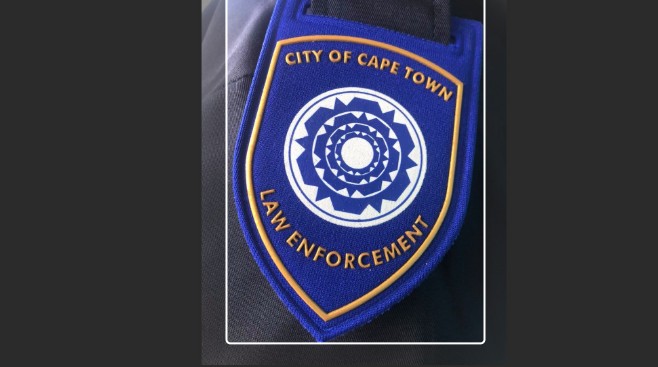
- The Labour Court upheld the reinstatement of a Cape Town law enforcement officer who was dismissed after testing positive for cannabis, dismissing the City’s attempt to overturn the arbitration award.
- The court found that the arbitrator acted properly, with no evidence of misconduct or error, and confirmed the fairness of the arbitration process.
- Keegan Mantis will return to duty on 2 March 2026 and receive over R553,000 in backpay, with each party responsible for its own legal costs.
A Cape Town law enforcement officer, Keegan Mantis, will return to work after being dismissed for testing positive for cannabis.
The Labour Court dismissed the City of Cape Town’s attempt to overturn an arbitration award that reinstated him, confirming that Mantis must report for duty on 2 March 2026 and receive more than R553 000 in backpay.
The City of Cape Town approached the Labour Court as the applicant, seeking to review and set aside an arbitration award.
The first respondent was the South African Municipal Workers Union acting on behalf of its member, Mantis. The second respondent was the South African Local Government Bargaining Council, where the arbitration proceedings were held. The third respondent was Orlando Moses, the arbitrator who issued the award reinstating Mantis.
How the incident unfolded
Mantis was employed as a learner law enforcement officer in the City’s Law Enforcement Department, a position classified as high risk because officers may be required at any time to carry firearms, drive official vehicles and respond to emergencies demanding rapid decisions.
On 8 March 2022, the City’s Executive Director for Safety and Security issued a circular introducing a zero-tolerance approach for law enforcement officers who test positive for drugs or alcohol as part of its Substance Abuse System and Procedure.
On 3 February 2023, Mantis was subjected to a random workplace drug test. The result returned positive for THC, the psychoactive component of cannabis. He was formally charged with misconduct for testing positive while on duty in breach of the City’s policy. A disciplinary hearing followed. Mantis was found guilty and dismissed on 31 October 2023.
Dissatisfied with the outcome, the union referred the dispute to the bargaining council. At arbitration, Mantis pleaded guilty to failing the drug test. The only issue was whether dismissal was an appropriate sanction.
The City led evidence that law enforcement officers operate in a dangerous environment and may at any time be required to carry firearms or drive vehicles. It relied on its zero-tolerance policy to justify dismissal.
However, it was a common cause that at the time of the test, Mantis was not carrying a firearm and was not required to drive a vehicle. There was no evidence that he was intoxicated or unable to perform his duties.
The arbitrator concluded that dismissal was too harsh in the circumstances and ordered reinstatement with retrospective backpay.
The Labour Court’s findings
On review, the City argued that the arbitrator committed a gross irregularity and ignored material evidence. Acting Judge May began by restating the distinction between review and appeal, noting that “in order to maintain the distinction between review and appeal, an award of an arbitrator will only be set aside if both the reasons and the result are unreasonable”.
The court explained that a result would only be unreasonable if “it is entirely disconnected with the evidence, unsupported by any evidence and involves speculation by the arbitrator”.
Referring to Stock Civils Engineering (Pty) Ltd v RIP NO and Another, the judge emphasised that a reviewing court must determine whether the arbitrator functioned properly by “acting honestly, duly considering all the evidence before him and having due regard to the applicable legal principles”. The judgment added that if the arbitrator does so, “but reaches the wrong conclusion, so be it”.
Applying that test, Judge May found that “nothing in the pleadings or arguments suggests that the Arbitrator engaged in improper conduct or acted with any malfeasance or dishonesty” and that “there was no material malfunctioning”.
The court stated that “the arbitrator was acutely aware of his duties” and that he “assessed the evidence before him in its totality”. His findings, the judge held, “are not divorced from the material before him, and he did not misconceive what was required of him”.
The conclusion was clear. “The award is in the circumstances unassailable,” the court held, adding that “it follows therefore that the application should be dismissed”.
What happens now
The review application was dismissed, and each party was ordered to pay its own costs. The court noted that “the parties will still be in an employment relationship and therefore the most appropriate order as to costs is that both parties remain responsible for their own costs”.
Because the review proceedings delayed implementation of the arbitration award, the court ordered that Mantis report for duty on 2 March 2026. The City must pay him backpay for the period from 31 October 2023 to 2 March 2026, calculated at R553 135.24, by 31 March 2026.
Get your news on the go. Click here to follow the Conviction WhatsApp channel.
