

Skip to content
Close Menu
ConvictionConviction
  • Home
  • Law & Justice
  • Special Reports
  • Opinion
  • Ask The Expert
  • Get In Touch

Subscribe to Updates

Get the latest creative news from FooBar about art, design and business.

What's Hot

Police liable after Sweet Home residents shot with rubber bullets during a 2012 protest

June 10, 2026

New High Court seats to be established as government rolls out expansion programme

June 10, 2026

Research, resistance and results: Why black women’s leadership matters in academia

June 9, 2026
Facebook X (Twitter) Instagram
Trending
  • Police liable after Sweet Home residents shot with rubber bullets during a 2012 protest
  • New High Court seats to be established as government rolls out expansion programme
  • Research, resistance and results: Why black women’s leadership matters in academia
  • Jetour’s R4,999 car deal ruled misleading for hiding 72-month term and 40% balloon payment
  • Truck driver declared 100% disabled after court overturns 21% compensation assessment
  • Tshwane defeats Eskom in Mooikloof Mega City electricity supply battle
  • Employee accused of toilet paper theft wins another Labour Court battle
  • Homeowners granted six months to settle bond arrears and halt home sale
Facebook X (Twitter) Instagram
ConvictionConviction
Sonneblom
  • Home
  • Law & Justice
  • Special Reports
  • Opinion
  • Ask The Expert
  • Get In Touch
ConvictionConviction
Home » Reclaiming victory: Why Cuito Cuanavale demands our celebration at Freedom Park
Opinion

Reclaiming victory: Why Cuito Cuanavale demands our celebration at Freedom Park

Tsholofelo Hope Ngomane on restoring the place of Cuito Cuanavale in South Africa’s liberation memory.
Tsholofe Hope NgomaneBy Tsholofe Hope NgomaneMarch 19, 2026Updated:March 19, 2026No Comments
Facebook Twitter Pinterest LinkedIn WhatsApp Reddit Tumblr Email
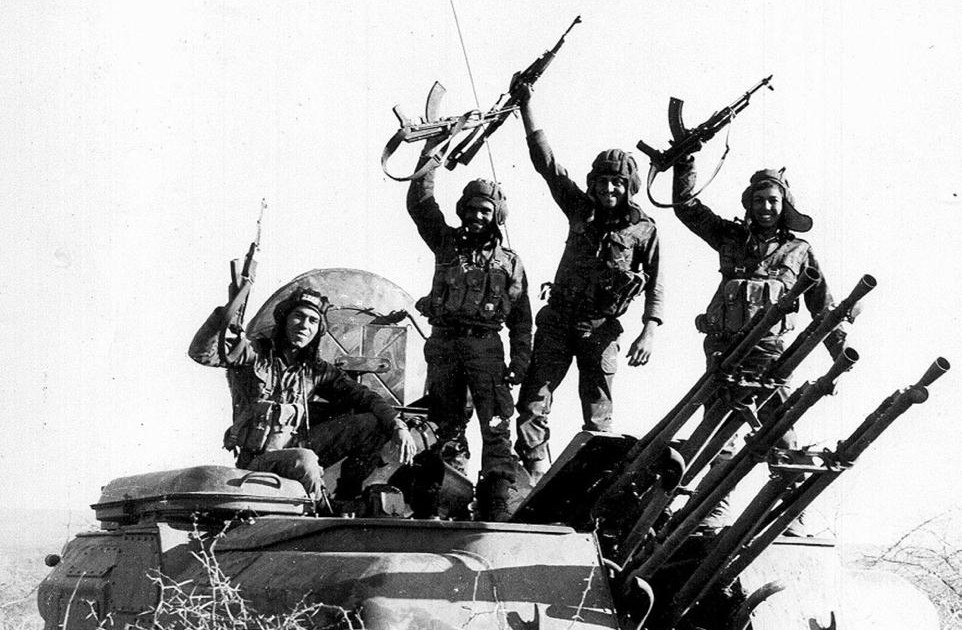
Cuito Cuanavale remains a defining moment in Southern Africa’s liberation history as calls grow for its meaningful commemoration at Freedom Park in 2026.
Share
Facebook Twitter LinkedIn Pinterest Email
  • Cuito Cuanavale reshaped Southern African history, accelerated Namibia’s independence and South Africa’s democracy.
  • The battle’s legacy is fading, risking loss of memory, meaning, and political clarity.
  • Freedom Park offers a vital space to restore this history and inspire civic renewal.

In the dusty plains of southeastern Angola, between 1987 and 1988, a battle unfolded that would quietly but decisively alter the course of Southern African history.

The Battle of Cuito Cuanavale was not merely a military confrontation between the apartheid-era South African Defence Force and the combined forces of Angolan, Cuban, and liberation fighters; it was a moment of rupture. It disrupted the momentum of apartheid’s regional aggression and accelerated the chain of events that led to Namibia’s independence and, ultimately, South Africa’s democratic breakthrough in 1994.

Yet, as we approach its 38th anniversary in 2026, the significance of Cuito Cuanavale risks fading into the margins of public consciousness. This is not just an oversight; it is a loss. Loss of memory, of meaning, and of the political clarity that history can offer. Now more than ever, we must reclaim this moment, not through passive remembrance, but through active, intentional celebration. And there is no more fitting space for this than Freedom Park.

Freedom Park is not simply a heritage site; it is a living archive of South Africa’s journey toward freedom. Its Wall of Names and the Flame of Democracy embody the sacrifices that made our present possible. But in many ways, the story of Cuito Cuanavale, particularly its international dimension, remains under-told within our national narrative. To centre this battle within Freedom Park’s commemorative programme is to expand our understanding of liberation beyond borders, to acknowledge that South Africa’s freedom was forged not only within its own townships and prisons, but also on foreign soil, through global solidarity.

Why this history still matters

Cuito Cuanavale reminds us of a powerful and sometimes uncomfortable truth that freedom is never a solitary achievement. Cuban forces, under the leadership of figures like Fidel Castro, joined Angolan and South African liberation fighters in a struggle that was as much ideological as it was military. Their presence was not incidental; it was decisive. Thousands of Cuban soldiers, alongside Angolan and South African combatants, paid with their lives in a battle that would help dismantle one of the most entrenched systems of racial oppression in modern history.

In today’s world, marked by rising nationalism and selective historical memory, this kind of internationalism feels distant, even inconvenient. Yet, it is precisely this spirit that we must revisit. At a time when global conflicts from Eastern Europe to the Middle East dominate headlines, Cuito Cuanavale challenges us to interrogate our own moral positions. Whose struggles do we recognise? Whose sacrifices do we honour? And perhaps most importantly, whose victories do we choose to forget?

Positioning Cuito Cuanavale at the heart of Freedom Park’s 2026 programme offers more than historical reflection; it creates an opportunity for civic renewal. Imagine young people from across South Africa engaging with this history not as a distant past, but as a source of inspiration and critical inquiry. In a country grappling with deep inequality, youth unemployment, and social fragmentation, such engagement is not symbolic; it is necessary. It reminds us that collective action, even against overwhelming odds, can reshape reality.

Critics may argue that revisiting Cuito Cuanavale is an exercise in nostalgia, disconnected from the urgent challenges of today. But this view underestimates the power of historical consciousness. To forget Cuito is to risk accepting a simplified narrative of our liberation, one that erases the complexity, the alliances, and the sacrifices that made it possible. It allows the dangerous myth to persist that apartheid collapsed under its own weight, rather than through sustained resistance, both internal and external.

A living legacy for 2026

By reclaiming Cuito Cuanavale within the sacred space of Freedom Park, we do more than honour the past; we equip the present. We foster a form of patriotism that is not shallow or performative, but grounded in truth, solidarity, and accountability. We remind ourselves that the struggle for justice did not end in 1994; it merely changed form.

In 2026, let us fill Freedom Park not with routine ceremony, but with purposeful reflection and bold conversation. Let us commemorate Cuito Cuanavale not as a closed chapter, but as a living legacy, one that continues to challenge, inspire, and demand of us.

Because Cuito Cuanavale was never just a battle. It is a mirror. And what it reflects is a question we cannot afford to ignore: what will we do with the freedom that others fought to secure?

Conviction.co.za

Get your news on the go. Click here to follow the Conviction WhatsApp channel.

Angola war Cuito Cuanavale Freedom Park Liberation history South Africa democracy
Share. Facebook Twitter Pinterest LinkedIn Tumblr Telegram Email
Tsholofe Hope Ngomane

Researcher: Freedom Park Heritage Site.

Related Posts

Research, resistance and results: Why black women’s leadership matters in academia

June 9, 2026

Managing agents cannot ignore sectional title law and trustee authority

June 8, 2026

Africa Day celebrations and the enduring gendered contradictions of African unity

June 4, 2026
Leave A Reply Cancel Reply

Prove your humanity: 8   +   5   =  

Subscribe to our newsletter:
Top Posts

Making sectional title rules that work: A practical guide

January 17, 2025

Protection order among the consequences of trespassing in an ‘Exclusive Use Area’

December 31, 2024

Between a rock and a foul-smelling place

November 27, 2024

Irregular levy increases, mismanagement, and legal threats in a sectional title scheme

June 2, 2025
Don't Miss
Civil Law
5 Mins Read

Police liable after Sweet Home residents shot with rubber bullets during a 2012 protest

By Kennedy MudzuliJune 10, 20265 Mins Read

A woman shot while returning home, and a man who lost an eye outside his house have won their claims after a court found police failed to justify the use of rubber bullets during a Philippi protest.

New High Court seats to be established as government rolls out expansion programme

June 10, 2026

Research, resistance and results: Why black women’s leadership matters in academia

June 9, 2026

Jetour’s R4,999 car deal ruled misleading for hiding 72-month term and 40% balloon payment

June 9, 2026
Stay In Touch
  • Facebook
  • Twitter
  • WhatsApp
Demo
About Us
About Us

Helping South Africans to navigate the legal landscape; providing accessible legal information; and giving a voice to those seeking justice.

Facebook X (Twitter) YouTube WhatsApp Twitch RSS
Latest posts

Making sectional title rules that work: A practical guide

January 17, 2025

Protection order among the consequences of trespassing in an ‘Exclusive Use Area’

December 31, 2024

Between a rock and a foul-smelling place

November 27, 2024
OUR PICKS

Agricultural advisors declared scientists in landmark Labour Court ruling

February 17, 2026

FSCA imposes R5.39 million in penalties on financial services firms

June 5, 2026

Standard Bank tops banking complaints list as NFO recovers R442.9 million for consumers

June 6, 2026
© 2026 Conviction.
  • Home
  • Law & Justice
  • Special Reports
  • Opinion
  • Ask The Expert
  • Get In Touch

Type above and press Enter to search. Press Esc to cancel.

Powered by
►
Necessary cookies enable essential site features like secure log-ins and consent preference adjustments. They do not store personal data.
None
►
Functional cookies support features like content sharing on social media, collecting feedback, and enabling third-party tools.
None
►
Analytical cookies track visitor interactions, providing insights on metrics like visitor count, bounce rate, and traffic sources.
None
►
Advertisement cookies deliver personalized ads based on your previous visits and analyze the effectiveness of ad campaigns.
None
►
Unclassified cookies are cookies that we are in the process of classifying, together with the providers of individual cookies.
None
Powered by