


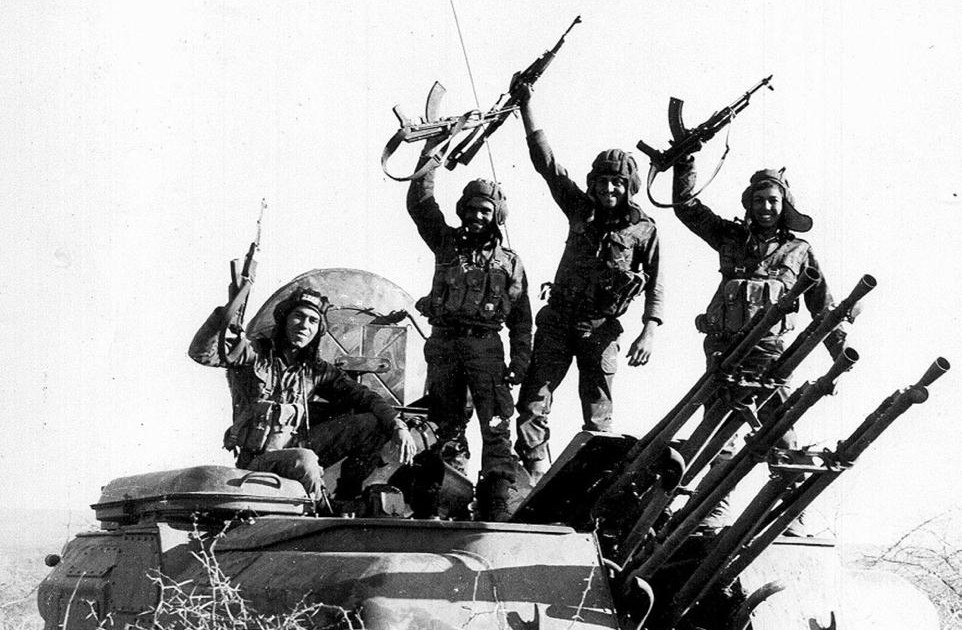
- Cuito Cuanavale reshaped Southern African history, accelerated Namibia’s independence and South Africa’s democracy.
- The battle’s legacy is fading, risking loss of memory, meaning, and political clarity.
- Freedom Park offers a vital space to restore this history and inspire civic renewal.
In the dusty plains of southeastern Angola, between 1987 and 1988, a battle unfolded that would quietly but decisively alter the course of Southern African history.
The Battle of Cuito Cuanavale was not merely a military confrontation between the apartheid-era South African Defence Force and the combined forces of Angolan, Cuban, and liberation fighters; it was a moment of rupture. It disrupted the momentum of apartheid’s regional aggression and accelerated the chain of events that led to Namibia’s independence and, ultimately, South Africa’s democratic breakthrough in 1994.
Yet, as we approach its 38th anniversary in 2026, the significance of Cuito Cuanavale risks fading into the margins of public consciousness. This is not just an oversight; it is a loss. Loss of memory, of meaning, and of the political clarity that history can offer. Now more than ever, we must reclaim this moment, not through passive remembrance, but through active, intentional celebration. And there is no more fitting space for this than Freedom Park.
Freedom Park is not simply a heritage site; it is a living archive of South Africa’s journey toward freedom. Its Wall of Names and the Flame of Democracy embody the sacrifices that made our present possible. But in many ways, the story of Cuito Cuanavale, particularly its international dimension, remains under-told within our national narrative. To centre this battle within Freedom Park’s commemorative programme is to expand our understanding of liberation beyond borders, to acknowledge that South Africa’s freedom was forged not only within its own townships and prisons, but also on foreign soil, through global solidarity.
Why this history still matters
Cuito Cuanavale reminds us of a powerful and sometimes uncomfortable truth that freedom is never a solitary achievement. Cuban forces, under the leadership of figures like Fidel Castro, joined Angolan and South African liberation fighters in a struggle that was as much ideological as it was military. Their presence was not incidental; it was decisive. Thousands of Cuban soldiers, alongside Angolan and South African combatants, paid with their lives in a battle that would help dismantle one of the most entrenched systems of racial oppression in modern history.
In today’s world, marked by rising nationalism and selective historical memory, this kind of internationalism feels distant, even inconvenient. Yet, it is precisely this spirit that we must revisit. At a time when global conflicts from Eastern Europe to the Middle East dominate headlines, Cuito Cuanavale challenges us to interrogate our own moral positions. Whose struggles do we recognise? Whose sacrifices do we honour? And perhaps most importantly, whose victories do we choose to forget?
Positioning Cuito Cuanavale at the heart of Freedom Park’s 2026 programme offers more than historical reflection; it creates an opportunity for civic renewal. Imagine young people from across South Africa engaging with this history not as a distant past, but as a source of inspiration and critical inquiry. In a country grappling with deep inequality, youth unemployment, and social fragmentation, such engagement is not symbolic; it is necessary. It reminds us that collective action, even against overwhelming odds, can reshape reality.
Critics may argue that revisiting Cuito Cuanavale is an exercise in nostalgia, disconnected from the urgent challenges of today. But this view underestimates the power of historical consciousness. To forget Cuito is to risk accepting a simplified narrative of our liberation, one that erases the complexity, the alliances, and the sacrifices that made it possible. It allows the dangerous myth to persist that apartheid collapsed under its own weight, rather than through sustained resistance, both internal and external.
A living legacy for 2026
By reclaiming Cuito Cuanavale within the sacred space of Freedom Park, we do more than honour the past; we equip the present. We foster a form of patriotism that is not shallow or performative, but grounded in truth, solidarity, and accountability. We remind ourselves that the struggle for justice did not end in 1994; it merely changed form.
In 2026, let us fill Freedom Park not with routine ceremony, but with purposeful reflection and bold conversation. Let us commemorate Cuito Cuanavale not as a closed chapter, but as a living legacy, one that continues to challenge, inspire, and demand of us.
Because Cuito Cuanavale was never just a battle. It is a mirror. And what it reflects is a question we cannot afford to ignore: what will we do with the freedom that others fought to secure?
Get your news on the go. Click here to follow the Conviction WhatsApp channel.
