


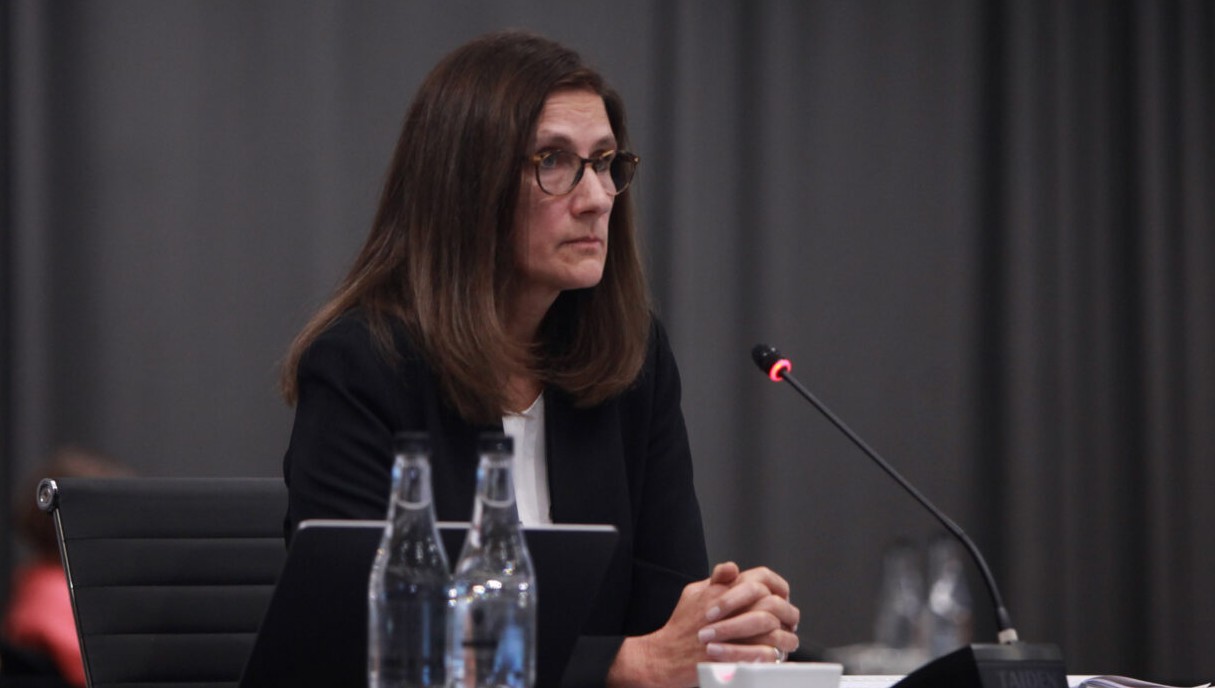
- The appointment of two women marks a historic moment in the composition of the Constitutional Court.
- Both justices bring extensive appellate and judicial experience to the apex court.
- Concerns remain about delays in judicial appointments and the court’s declining performance.
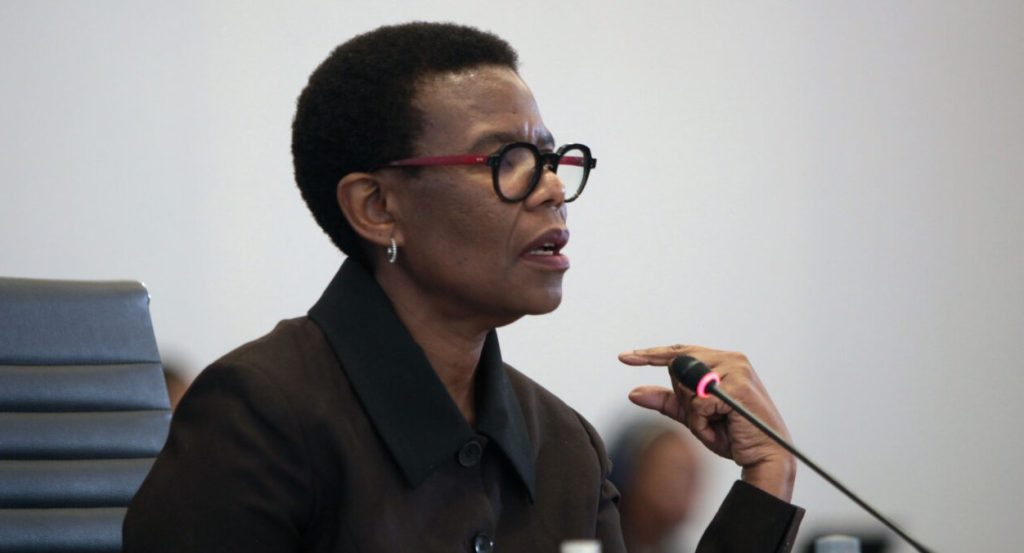
Judges Matter has welcomed President Cyril Ramaphosa’s appointment of Justice Nambitha Christabel Dambuza-Mayosi and Justice Katharine Mary Savage to the Constitutional Court of South Africa.
Both judges bring decades of legal experience, including significant appellate court exposure, which is expected to strengthen the functioning of the country’s highest court.
With these appointments, the Constitutional Court becomes one of the few women-majority apex courts in the world. This carries real symbolic weight as South Africa approaches the 70th anniversary of the Women’s March to the Union Buildings on 9 August. It is also a reminder of how far the judiciary has come since 1994, when only two of more than 100 judges in South Africa were women.
Justice Dambuza-Mayosi
Justice Dambuza-Mayosi brings 21 years of judicial experience to the Constitutional Court. She currently serves as a senior justice of the Supreme Court of Appeal, a position she has held since 2015. Before that, she served as a judge of the Eastern Cape High Court from 2005 to 2015, and of the Competition Appeal Court between 2010 and 2015.
Earlier in her career, she practised as an attorney from 1992 to 2003 and lectured at the University of Fort Hare. She holds BProc and LLB degrees from the University of KwaZulu-Natal, as well as an LLM from Tulane University, which she completed as a Fulbright Scholar. She also serves as a visiting professor at Rhodes University and chairs the governing council of Nelson Mandela University.
Justice Savage
Justice Savage brings 11 years of judicial experience and is widely recognised for her expertise in labour law. She has served as a judge of the High Court in the Western Cape since 2015, and of the Labour Appeal Court since 2024. In 2022, she was elected by the United Nations General Assembly as a judge of the United Nations Appeal Tribunal, the body that adjudicates labour disputes within the UN system.
Justice Savage was also involved in drafting South Africa’s democratic Constitution, working as a legal researcher for the ANC Constitutional Commission in Parliament between 1995 and 1996. She holds BA and LLB degrees from the University of Cape Town, and an LLM awarded summa cum laude from the University of Notre Dame, also as a Fulbright Scholar. Since 2019, she has served as a trustee of the Constitutional Court Trust, which supports the court’s art collection, public access initiatives, and international clerkship opportunities.
Concerns over delays and court performance
While welcoming the appointments, Judges Matter has raised concerns about the 184-day delay between the conclusion of interviews and the President’s decision. The organisation notes that this is the longest such delay recorded in democratic South Africa, and is calling for an explanation as well as measures to prevent similar delays in future, particularly given that at least four more vacancies are expected before the 2029 election.
Judges Matter has also raised concern about the time taken to deliver judgment in Economic Freedom Fighters v Speaker of the National Assembly, which has been outstanding for 500 days since the hearing. The organisation acknowledges that accuracy must take precedence over speed, but argues that the delay points to a broader institutional challenge.
The organisation points to a sharp increase in the court’s workload, from 120 new cases in 2010 to more than 375 in 2024, without a corresponding increase in resources. This imbalance, combined with delays in judicial appointments, has contributed to a noticeable decline in performance: the average time from hearing to judgment has grown from 102 days in 2010 to 214 days in 2024. Judges Matter is calling for urgent intervention to address these structural challenges.
Mbekezeli Benjamin, a researcher at Judges Matter, said, “The historic appointment of two more women to our apex court is welcome news as we celebrate 70 years of the Women’s March. Both Justice Dambuza and Justice Savage will add valuable experience to the Constitutional Court, and we hope that it will address our deep concerns about the declining performance of our apex court."
Benjamin further added, “While we acknowledge the efforts the government, led by Chief Justice Mandisa Maya, is taking to ensure the institutional independence of our courts, we call for urgent interventions to allocate more resources to ensure the Constitutional Court delivers justice speedily and regains its global reputation for judicial excellence.”
Get your news on the go. Click here to follow the Conviction WhatsApp channel.
