Skip to content
Close Menu
ConvictionConviction
  • Home
  • Law & Justice
  • Special Reports
  • Opinion
  • Ask The Expert
  • Get In Touch

Subscribe to Updates

Get the latest creative news from FooBar about art, design and business.

What's Hot

We need feminist consciousness in political leadership and power structures

April 21, 2026

Johannesburg Valuation Appeal Board decision set aside for disregarding rates policies

April 21, 2026

Unisa law expert’s scholarly work geared to assist victims of GBV

April 21, 2026
Facebook X (Twitter) Instagram
Trending
  • We need feminist consciousness in political leadership and power structures
  • Johannesburg Valuation Appeal Board decision set aside for disregarding rates policies
  • Unisa law expert’s scholarly work geared to assist victims of GBV
  • R1.37 million in ATM cash goes missing under G4S custodians’ watch, gross negligence found
  • Wild Coast Sun misled guests over water park access, regulator rules
  • Splicing gun dispute turns violent as worker strikes colleague on the factory floor
  • Candidate attorneys must be exposed to real legal work early
  • Harlequins advances professional rugby model after Tshwane compliance notice
Facebook X (Twitter) Instagram
ConvictionConviction
Demo
  • Home
  • Law & Justice
  • Special Reports
  • Opinion
  • Ask The Expert
  • Get In Touch
ConvictionConviction
Home » We need feminist consciousness in political leadership and power structures
Opinion

We need feminist consciousness in political leadership and power structures

Professor Edith Dinong Phaswana argues that feminist agency is essential in shaping inclusive leadership and economic transformation in Africa.
Professor Edith Dinong PhaswanaBy Professor Edith Dinong PhaswanaApril 21, 2026Updated:April 21, 2026No Comments
Facebook Twitter Pinterest LinkedIn WhatsApp Reddit Tumblr Email
blank
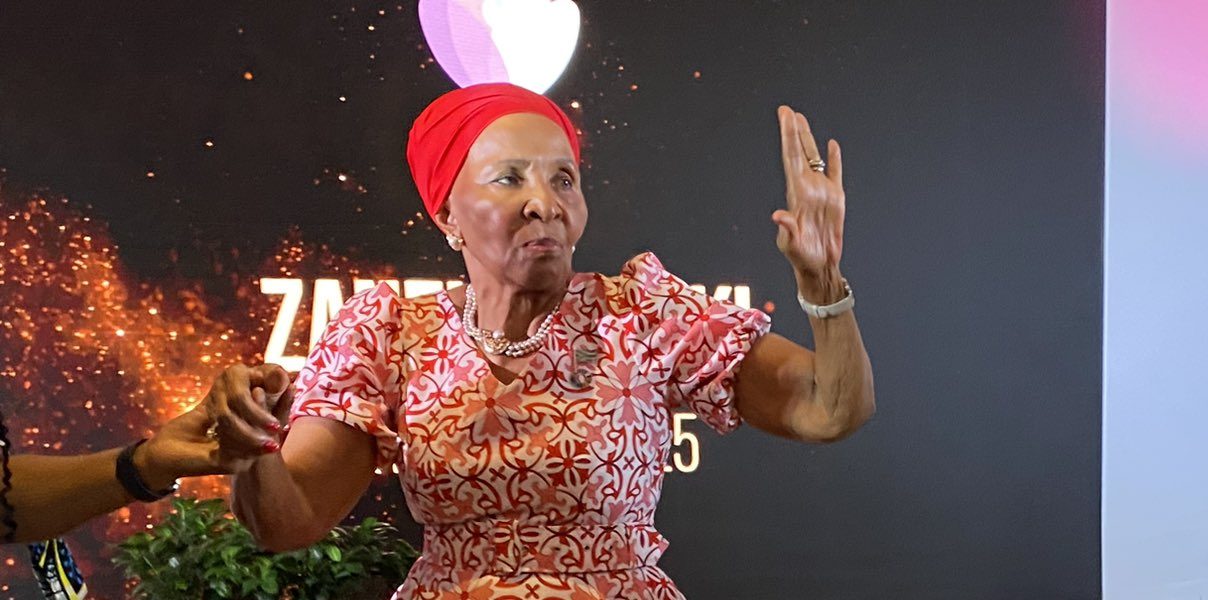
Zanele Mbeki’s leadership reflects the quiet yet decisive influence of feminist agency in reshaping economic and political spaces. Picture: Nomvula Mokonyane/X
Share
Facebook Twitter LinkedIn Pinterest Email
  • A feminist approach to leadership challenges exclusion and expands participation in decision-making.
  • Zanele Mbeki’s work demonstrates how influence beyond formal office can reshape national development.
  • Women-centred economic models offer a pathway to inclusive and sustainable growth across the continent.

We need a feminist consciousness around political leadership, including within the spaces that surround heads of state. In this regard, the work of Zanele Mbeki offers an important example of how feminist agency can shape national development beyond formal political office.

Mbeki once recounts a telling moment from the presidency of her husband, former President Thabo Mbeki. On one occasion, when he was scheduled to meet with a group of prominent business leaders, she requested to see the list of attendees. To her dismay, she discovered that not a single woman had been invited.

Unwilling to accept such exclusion as normal, she intervened decisively. Though she was neither the convener of the meeting nor an invited participant, she insisted that women must be part of the conversation. Acting on principle, she reached out to several accomplished businesswomen she knew and encouraged them to attend.

It was a quiet yet powerful act of feminist leadership, one that challenged the entrenched invisibility of women in spaces where economic decisions are made. In doing so, she reminded us that inclusion does not happen by accident; it often requires the courage of someone willing to disrupt the status quo.

Economic empowerment as feminist practice

Her leadership has never relied on visibility or rhetorical prominence. Rather, it reflects a tradition within African feminist praxis that values institution building, community mobilisation, and economic transformation. For decades, she has championed women’s economic empowerment through initiatives that address the structural barriers faced by women in rural and township economies.

Among her most enduring contributions is the establishment of the Women's Development Bank, which expanded access to finance for women long excluded from formal banking systems. The initiative reflected a deeper feminist understanding that economic agency is foundational to social and political empowerment.

Her more recent work engages with the social business model developed by Nobel Peace Prize laureate Muhammad Yunus. Social business seeks to reconcile market mechanisms with social justice by prioritising social impact rather than profit maximisation. In her articulation of the model, women-led enterprises become vehicles not only for poverty reduction but also for structural transformation in local economies.

This perspective resonates strongly with broader currents in African feminist scholarship, which emphasise development approaches grounded in lived realities, collective empowerment, and institutional innovation. In this sense, Zanele Mbeki’s work illustrates how feminist leadership can operate quietly yet decisively to reshape economic possibilities for women across communities.

Honouring women who shape the path forward

Zanele Mbeki’s feminist leadership also reminds us that great leaders recognise and celebrate the leadership of others. By honouring women who have paved the way, she reaffirms our commitment to building an Africa where women’s leadership, innovation, and economic agency continue to flourish. Recently, she hosted a Leadership Soiree in Marlboro honouring two extraordinary African women.

Ms Gloria Serobe, an accomplished businesswoman and one of the first Black female chartered accountants in South Africa, is the founder of Women Investment Portfolio Holdings WIPHOLD. Through her pioneering work, she has opened pathways for women’s participation and leadership within the financial and corporate sectors.

Serobe was honoured alongside Gertrude Mongella, the distinguished Tanzanian leader who chaired the landmark Fourth World Conference on Women and led the African delegation during this historic global gathering in 1995. Her remarkable leadership earned her the affectionate title Mama Beijing, symbolising her enduring contribution to advancing the global women’s rights agenda.

Her admirable legacy invites us to take the potential of women-centred social business models as a pathway toward sustainable and inclusive development on the African continent.

Conviction.co.za

Get your news on the go. Click here to follow the Conviction WhatsApp channel.

African development Feminism Political leadership Social business women empowerment
Share. Facebook Twitter Pinterest LinkedIn Tumblr Telegram Email
Professor Edith Dinong Phaswana

    Acting Executive Dean: Thabo Mbeki African School of Public and International Affairs, Unisa.

    Related Posts

    Candidate attorneys must be exposed to real legal work early

    April 20, 2026

    South African-led HIV vaccine trial marks a significant moment for science and public health

    April 15, 2026

    From remembrance to repair: Why the legacy of slavery still demands action today

    April 14, 2026
    Leave A Reply Cancel Reply

    Prove your humanity: 0   +   2   =  

    Subscribe to our newsletter:
    Top Posts

    Making sectional title rules that work: A practical guide

    January 17, 2025

    Protection order among the consequences of trespassing in an ‘Exclusive Use Area’

    December 31, 2024

    Between a rock and a foul-smelling place

    November 27, 2024

    Irregular levy increases, mismanagement, and legal threats in a sectional title scheme

    June 2, 2025
    Don't Miss
    Opinion
    4 Mins Read

    We need feminist consciousness in political leadership and power structures

    By Professor Edith Dinong PhaswanaApril 21, 20264 Mins Read

    Prof Edith Dinong Phaswana explores how feminist consciousness in political leadership can drive inclusion, economic empowerment, and structural change.

    Johannesburg Valuation Appeal Board decision set aside for disregarding rates policies

    April 21, 2026

    Unisa law expert’s scholarly work geared to assist victims of GBV

    April 21, 2026

    R1.37 million in ATM cash goes missing under G4S custodians’ watch, gross negligence found

    April 21, 2026
    Stay In Touch
    • Facebook
    • Twitter
    • WhatsApp
    Demo
    About Us
    About Us

    Helping South Africans to navigate the legal landscape; providing accessible legal information; and giving a voice to those seeking justice.

    Facebook X (Twitter) WhatsApp
    Our Picks

    We need feminist consciousness in political leadership and power structures

    April 21, 2026

    Johannesburg Valuation Appeal Board decision set aside for disregarding rates policies

    April 21, 2026

    Unisa law expert’s scholarly work geared to assist victims of GBV

    April 21, 2026
    Most Popular

    Making sectional title rules that work: A practical guide

    January 17, 2025

    Protection order among the consequences of trespassing in an ‘Exclusive Use Area’

    December 31, 2024

    Between a rock and a foul-smelling place

    November 27, 2024
    © 2026 Conviction.
    • Home
    • Law & Justice
    • Special Reports
    • Opinion
    • Ask The Expert
    • Get In Touch

    Type above and press Enter to search. Press Esc to cancel.