


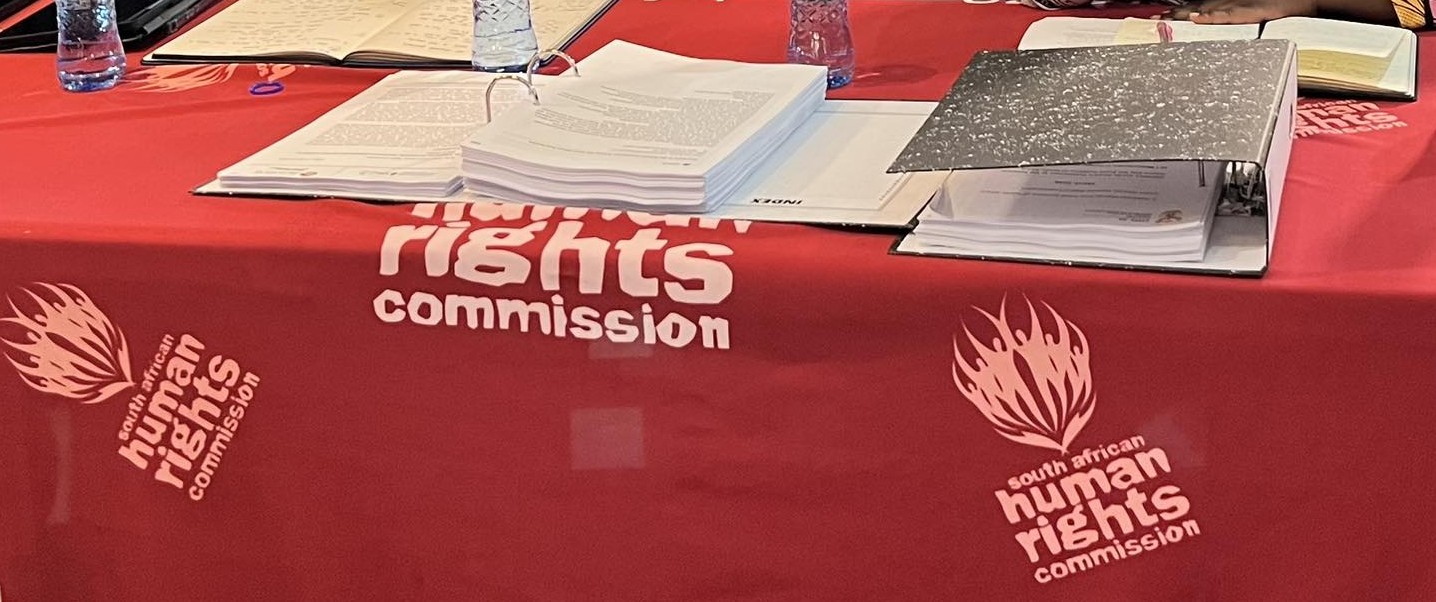
- The court held that SAHRC directives are not binding or legally enforceable.
- Chapter 9 institutions do not share identical powers and must be read within their mandates.
- Only institutions expressly granted coercive authority may issue binding remedial action.
The Constitutional Court has ruled that the South African Human Rights Commission (SAHRC) cannot issue binding or enforceable directives. In its judgment, the country's apex court made a strong constitutional distinction between the SAHRC and other Chapter 9 institutions.
The case began when the SAHRC issued directives against Agro Data CC and Francois Gerhardus Boshoff after a complaint about limited access to water on a Mpumalanga farm. When those directives were ignored, the SAHRC went to court for confirmation that its decisions carried legal weight without needing further litigation.
The complaint was made on behalf of farm residents who relied on borehole water for their daily needs. They argued that the restriction of access harmed their dignity and basic living conditions. After its investigation, the SAHRC ordered that water access be restored and that the parties discuss fair usage and information sharing.
The dispute extended beyond the facts and became a constitutional test of institutional power. Both the High Court and the Supreme Court of Appeal rejected the claim that the SAHRC’s directives were binding, leaving the Constitutional Court to clarify its authority.
The constitutional question
The key issue was whether the SAHRC’s power to “take steps to secure appropriate redress” allows it to issue directives that must be followed, or whether its role is limited to helping complainants find remedies through courts or other processes.
The SAHRC argued that without binding powers, its effectiveness would be diminished and that its findings should hold legal weight unless overturned. Opponents, backed by amici, including AfriForum NPC and ProBono.org, maintained that the Constitution does not give coercive authority and that such powers cannot be inferred.
Interpreting the SAHRC’s mandate
Acting Justice Caroline Nicholls, writing for a unanimous court, found the answer in the wording of Section 184 and the broader structure of Chapter 9.
Justice Nicholls stated, “The ordinary meaning of the phrase ‘take steps to secure’ makes clear that the SAHRC is not empowered to provide a remedy itself but to perform actions that support or enable the obtaining of redress, which is to be dispensed elsewhere.”
The court concluded that the SAHRC’s mandate is facilitative. It investigates, reports, educates, and assists, but it does not impose binding obligations.
Judge Nicholls noted, “The lack of language granting coercive authority, along with the use of facilitative wording, shows that the SAHRC’s powers are supportive rather than coercive.”
Why do other Chapter 9 institutions differ
The ruling emphasises that Chapter 9 institutions do not have the same powers. Justice Nicholls said, “Chapter 9 institutions are not identical. Each is entrusted with powers tailored to its specific mandate.”
The court pointed out that when the Constitution intends to grant binding authority, it does so explicitly. Institutions like the Public Protector are given clear power to take remedial action, which has legal effects.
In contrast, the SAHRC’s powers are defined differently. Its role is to enable redress indirectly by facilitating access to justice, not to impose outcomes.
This distinction was crucial. The court rejected attempts to impose binding authority on the SAHRC based on the powers of other institutions.
Legal effect of SAHRC directives
The court acknowledged that the SAHRC’s findings carry weight but clearly distinguished between influence and enforceability. Justice Nicholls stated, “The recommendation does not, by itself, impose a legally enforceable obligation.”
The ruling confirms that SAHRC directives may guide actions, support litigation, and influence accountability, but they do not create binding legal duties.
Justice Nicholls added, “If the respondent chooses not to act according to the recommendation, the SAHRC cannot simply approach a court to force compliance with its recommendations.” Instead, the Commission or affected individuals must start proceedings to obtain enforceable relief.
Impact on access to justice
The SAHRC argued that without binding powers, vulnerable complainants would lack effective remedies. The court disagreed, finding that the constitutional design intentionally separates investigative and enforcement roles.
Justice Nicholls stated, “Finding that the SAHRC does not have binding powers does not limit the right to effective redress for human rights violations.”
The court emphasised that enforceable outcomes are the responsibility of the courts, while the SAHRC plays a vital supporting role.
The SAHRC’s place in the constitutional framework
The court clarified that the absence of coercive authority does not lessen the SAHRC’s importance. Justice Nicholls said, “The SAHRC is far from toothless.”
Its influence comes from investigation, public accountability, evidence gathering, and enabling access to justice. It remains a central institution in promoting human rights, even without the power to compel compliance.
Conclusion
The Constitutional Court dismissed the appeal and confirmed that the SAHRC cannot issue binding directives.
The judgment clearly separates the SAHRC from Chapter 9 institutions that have explicit remedial powers, reinforcing that enforceable legal obligations can only arise where the Constitution clearly provides for them.
Get your news on the go. Click here to follow the Conviction WhatsApp channel.
