Skip to content
Close Menu
ConvictionConviction
  • Home
  • Law & Justice
  • Special Reports
  • Opinion
  • Ask The Expert
  • Get In Touch

Subscribe to Updates

Get the latest creative news from FooBar about art, design and business.

What's Hot

More than maintenance: Rand Water building trust through action

June 3, 2026

Farm for sale advert slammed for misleading jacuzzi, workshop and three-phase power claims

June 3, 2026

TVET college ordered to apologise for sharing personal information of employees

June 3, 2026
Facebook X (Twitter) Instagram
Trending
  • More than maintenance: Rand Water building trust through action
  • Farm for sale advert slammed for misleading jacuzzi, workshop and three-phase power claims
  • TVET college ordered to apologise for sharing personal information of employees
  • Judge calls for investigation into claims of body corporate capture in Maboneng
  • Company fails bid to escape contract clause buried in terms and conditions
  • Tribunal dismisses Bogdanov’s PhD defence, upholds 10-year JSE ban
  • South Africa cannot afford to lag while youth nicotine addiction escalates
  • Evicted Durban tenants win urgent court order pending eviction challenge
Facebook X (Twitter) Instagram
ConvictionConviction
Sonneblom
  • Home
  • Law & Justice
  • Special Reports
  • Opinion
  • Ask The Expert
  • Get In Touch
ConvictionConviction
Home » Constitutional Court to decide if SA Human Rights Commission’s orders are binding
Constitutional Law

Constitutional Court to decide if SA Human Rights Commission’s orders are binding

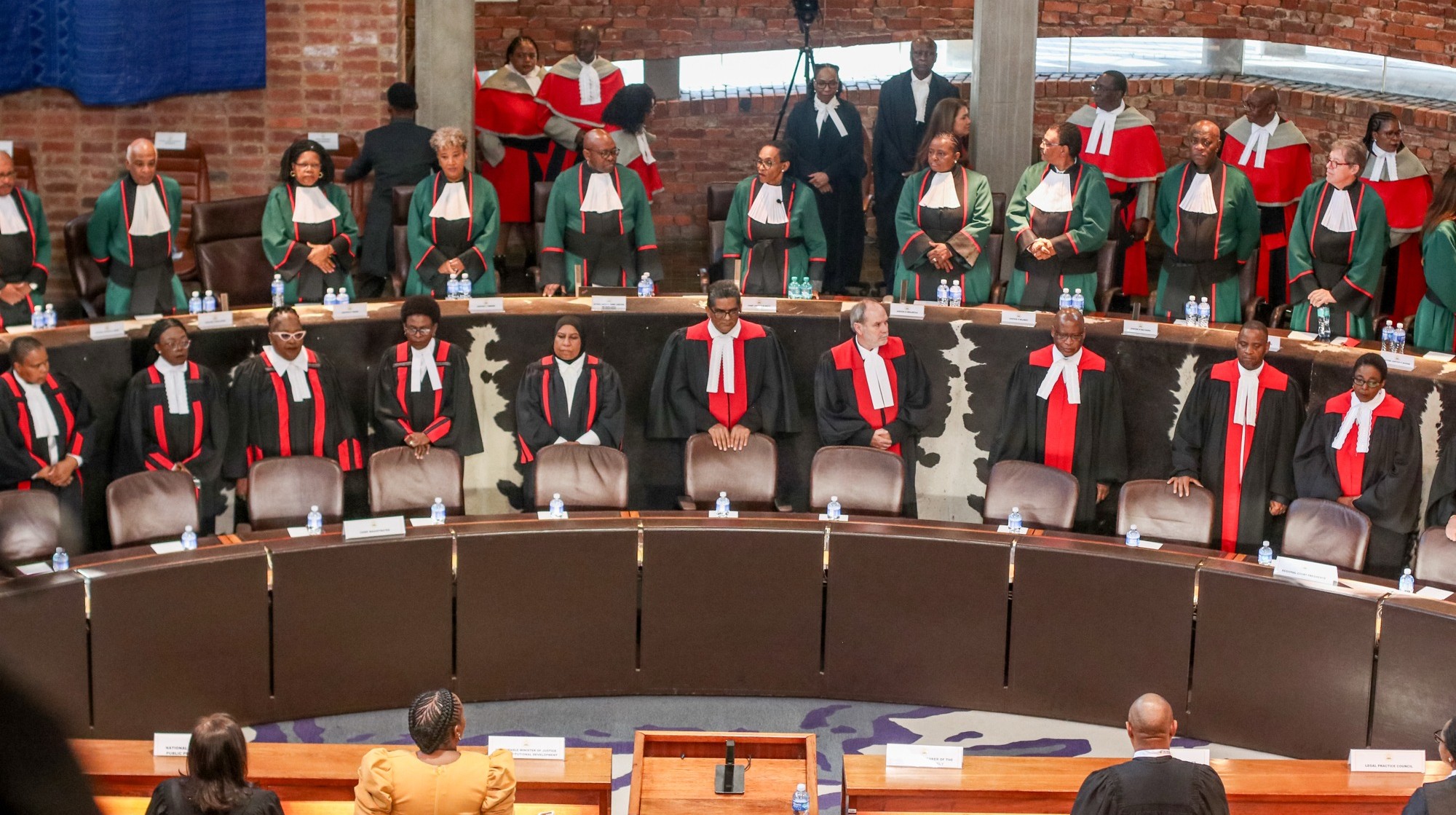
Judges will hear a landmark dispute over the legal force of directives issued by the South African Human Rights Commission after a Mpumalanga water rights complaint.
Kennedy MudzuliBy Kennedy MudzuliNovember 25, 2025No Comments
Facebook Twitter Pinterest LinkedIn WhatsApp Reddit Tumblr Email
Share
Facebook Twitter LinkedIn Pinterest Email
  • The court will consider whether the South African Human Rights Commission can issue binding directives after finding human rights have been violated.
  • The case arises from a water access dispute on a Mpumalanga farm involving long-term occupiers and farm management.
  • The hearing is scheduled for Tuesday, 25 November 2025, and the outcome could reshape the powers of the Commission and other Chapter 9 institutions.

A significant legal battle is unfolding in the Constitutional Court. At stake is whether the South African Human Rights Commission (SAHRC) can issue binding directives after finding that human rights have been violated.

The case arises from a dispute over water access on a farm in Mpumalanga. On 29 May 2018, the SAHRC received a complaint on behalf of Tubatsi Mosotho, “a long-term farm occupier residing on the respondent’s farm since 1965,” alleging that Francois Gerhardus Boshoff, the farm manager, had “unilaterally imposed charges for water, diverted the stream used for livestock, and denied access to the borehole, all without consultation.”

The SAHRC found that these actions violated the occupiers’ rights to dignity, access to water and secure tenure, as protected by the Constitution and the Extension of Security of Tenure Act.

The Commission ordered the respondents to restore the borehole water supply to the occupiers, but they failed to comply. The High Court declined to declare the non-compliance unlawful, holding that the directive “has no legal effect nor is it binding,” but did endorse the SAHRC’s steps to facilitate engagement and information-sharing.

The Supreme Court of Appeal then found that the Commission lacked the authority to issue binding directives. The Constitutional Court must now decide whether, as the Commission argues, its directives “cannot be ignored on a whim, with no consequences against those in respect of whom the SAHRC has made a finding of human rights violation.”

The matter is scheduled to be heard by the Constitutional Court on Tuesday, 25 November 2025.

Commission says its directives must be respected

The SAHRC contends that its power to “take steps to secure appropriate redress” should be interpreted broadly. The Commission claims that, without binding powers, its role would be reduced to “symbolic recommendations, undermining its constitutional promise to provide accessible, non-judicial remedies for rights violations.” It draws on the Nkandla case, where the Constitutional Court held that the Public Protector’s remedial actions are binding, and argues that the same logic should apply to the SAHRC.

In its heads of argument, the Commission submits that its directives “cannot be ignored on a whim, with no consequences against those in respect of whom the SAHRC has made a finding of human rights violation.” It points out that “the constitutional promise of accessible, non-judicial redress for human rights violations collapses” if its directives can simply be disregarded.

The Commission relies on the Constitutional Court’s Nkandla judgment, which stated: “No decision grounded on the Constitution or law may be disregarded without recourse to a court of law. To do otherwise, would amount to a licence to self-help.”

The Centre for Applied Legal Studies (CALS), intervening as amicus curiae, supports the Commission’s position and has argued that international law and the Constitution require effective, accessible remedies for rights violations.

CALS contends that allowing the Commission’s directives to be ignored would undermine both the purpose of the Commission and South Africa’s obligations under international law.

Respondents and intervening parties reject the binding power

AfriForum, as an amicus curiae, submitted that “neither the Constitution nor the Commission’s Act afforded the Commission the power to issue binding remedial directives.” AfriForum emphasised that the Commission’s role is “procedural and facilitative,” not adjudicative, and that “the phrase ‘take steps to secure appropriate redress’ does not empower the Commission to provide redress directly.” The SCA agreed, holding that “the Commission’s findings are preliminary opinions, not conclusive rulings.”

Conviction.co.za

Get your news on the go. Click here to follow the Conviction WhatsApp channel.


Constitutional Court Human Rights Mpumalanga South African Human Rights Commission Water Access
Share. Facebook Twitter Pinterest LinkedIn Tumblr Telegram Email
Kennedy Mudzuli

Multiple award-winner with passion for news and training young journalists. Founder and editor of Conviction.co.za

Related Posts

Constitutional Court clears path for retrenched workers to approach Labour Court directly

June 1, 2026

Mbeki and Mabandla accuse TRC Commission of sidestepping court challenge

May 29, 2026

Anti-money laundering Bill proposes lifestyle audits and tougher penalties

May 29, 2026
Leave A Reply Cancel Reply

Prove your humanity: 5   +   4   =  

Subscribe to our newsletter:
Top Posts

Making sectional title rules that work: A practical guide

January 17, 2025

Protection order among the consequences of trespassing in an ‘Exclusive Use Area’

December 31, 2024

Between a rock and a foul-smelling place

November 27, 2024

Irregular levy increases, mismanagement, and legal threats in a sectional title scheme

June 2, 2025
Don't Miss
Opinion
5 Mins Read

More than maintenance: Rand Water building trust through action

By Professor Anja Du PlessisJune 3, 20265 Mins Read

Prof Anja du Plessis argues that Rand Water’s recent maintenance programme demonstrates how planning, transparency and collaboration can strengthen public trust while securing Gauteng’s long-term water supply.

Farm for sale advert slammed for misleading jacuzzi, workshop and three-phase power claims

June 3, 2026

TVET college ordered to apologise for sharing personal information of employees

June 3, 2026

Judge calls for investigation into claims of body corporate capture in Maboneng

June 3, 2026
Stay In Touch
  • Facebook
  • Twitter
  • WhatsApp
Demo
About Us
About Us

Helping South Africans to navigate the legal landscape; providing accessible legal information; and giving a voice to those seeking justice.

Facebook X (Twitter) YouTube WhatsApp Twitch RSS
Latest posts

Making sectional title rules that work: A practical guide

January 17, 2025

Protection order among the consequences of trespassing in an ‘Exclusive Use Area’

December 31, 2024

Between a rock and a foul-smelling place

November 27, 2024
OUR PICKS

R13,914 debt triggers sale of R380 000 home, transfer halted amid execution flaws

April 20, 2026

Understanding employee rights, workplace protections and grievance resolution in South Africa

June 8, 2025

Agricultural advisors declared scientists in landmark Labour Court ruling

February 17, 2026
© 2026 Conviction.
  • Home
  • Law & Justice
  • Special Reports
  • Opinion
  • Ask The Expert
  • Get In Touch

Type above and press Enter to search. Press Esc to cancel.

Powered by
►
Necessary cookies enable essential site features like secure log-ins and consent preference adjustments. They do not store personal data.
None
►
Functional cookies support features like content sharing on social media, collecting feedback, and enabling third-party tools.
None
►
Analytical cookies track visitor interactions, providing insights on metrics like visitor count, bounce rate, and traffic sources.
None
►
Advertisement cookies deliver personalized ads based on your previous visits and analyze the effectiveness of ad campaigns.
None
►
Unclassified cookies are cookies that we are in the process of classifying, together with the providers of individual cookies.
None
Powered by