


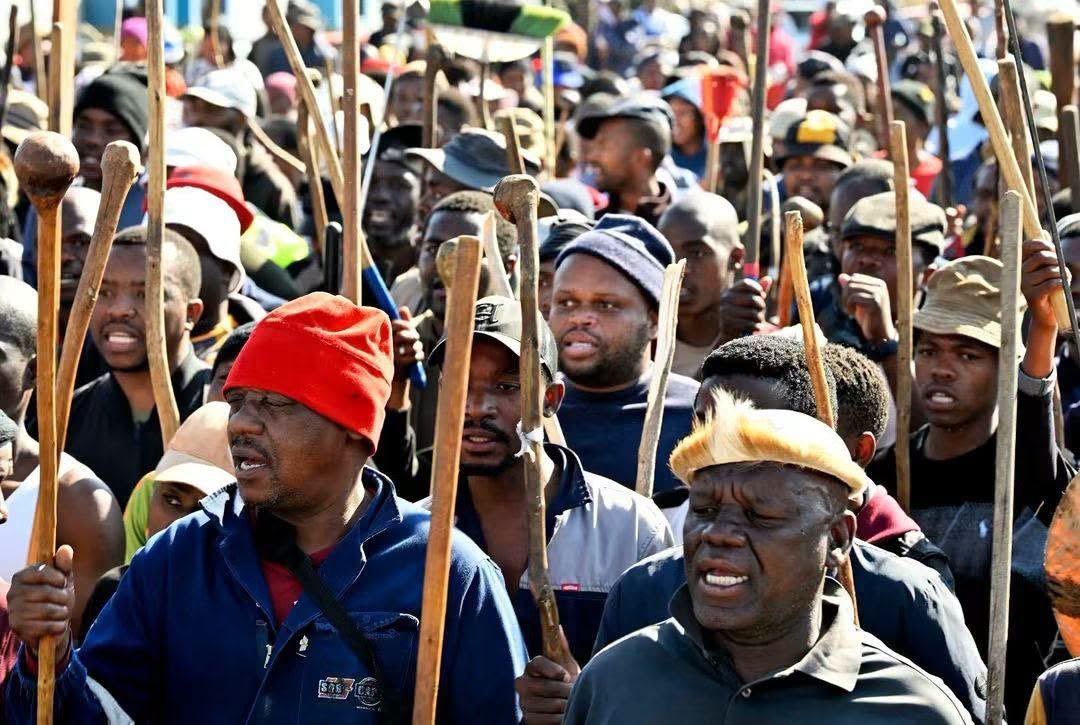
- Protests are planned in at least seven provinces, including major demonstrations in Johannesburg, Tshwane and Durban.
- Police have announced extensive security deployments and warned of road closures and traffic disruptions along protest routes.
- President Cyril Ramaphosa and civil society leaders insist that protests must remain peaceful and respect the Constitution and the rule of law.
South Africa is preparing for a day of nationwide demonstrations against illegal immigration as organisers of the June 30 marches mobilise supporters across the country.
The marches, organised by groups including March and March, call for stronger action against undocumented migrants and reforms to the country’s immigration system. Authorities have confirmed that the protests have been approved and that police will monitor the demonstrations to ensure they remain peaceful and within the law.
The planned protests have also prompted appeals from the government, the South African Human Rights Commission (SAHRC), and civil society organisations for calm, with all warning that while peaceful protest is protected by the Constitution, violence, intimidation, hate speech, and vigilantism have no place in a constitutional democracy.
Major cities prepare for demonstrations
The Johannesburg Metropolitan Police Department (JMDP) has warned motorists to expect widespread traffic disruptions between 7am and 4pm as three approved marches take place simultaneously in the Johannesburg CBD, Hillbrow and Midrand.
The largest demonstration, organised by March and March, is expected to attract about 5,000 participants. Marchers will gather at Beyers Naudé Square before proceeding to Constitution Hill, where they intend to hand over a memorandum to the Hillbrow Police Station commander.
The approved route includes Rahima Moosa Street, Helen Joseph Street, Troye Street, Twist Street, Kotze Street and Queen Street.
A second procession by the Labour and Civic Organisation is expected to attract approximately 1,200 participants. That march will begin near the intersection of Kotze Street and Hospital Street, then proceed to the Department of Home Affairs on Plein Street, where another memorandum is expected to be handed over.
Meanwhile, about 800 participants are expected to take part in a labour march organised by the Mayibuye Youth Activism Movement in Midrand. JMPD said integrated law enforcement teams, together with SAPS Public Order Policing units, will be deployed throughout the day to monitor all demonstrations, manage traffic and respond to any incidents that may arise.
In Tshwane, the Metro Police Department has confirmed that March and March supporters will gather at Church Square from 10am before marching to Sunnyside Police Station.
The approved route passes through Paul Kruger Street, Francis Baard Street, Lillian Ngoyi Street, Madiba Street, Nelson Mandela Drive, Kotze Street, Van Boeschoten Avenue, Robert Sobukwe Street and Leyds Street before reaching the police station.
The Tshwane Metro Police Department has advised motorists to use alternative routes, including Nana Sita Street, Visagie Street, Justice Mahomed Street, Jeff Masemola Street, Bosman Street, Johannes Ramokhoase Street, Struben Street, Bloed Street, Kgosi Mampuru Street and Eskia Mphahlele Drive. Participants are expected to disperse at approximately 3pm.
In Durban, demonstrators are expected to assemble at King Dinuzulu Park before marching along Dr Pixley KaSeme Street, turning into Gillespie Street and continuing to the SAPS Point Police Station on South Beach.
Durban Metro Police have confirmed that the march will proceed under police supervision with security measures in place.
As thousands of people prepare to take part in the demonstrations, the SAHRC has acknowledged that the right to protest is a fundamental constitutional right that strengthens participatory democracy, promotes accountability and advances human rights when exercised lawfully.
However, it warned that demonstrations must remain peaceful and respect the rights of others. The SAHRC therefore called everyone to ensure that all protests remain peaceful, and any demonstrations are conducted lawfully, in a manner that does not incite violence or intimidation, hate speech or damage to property.
The SAHRC also reminded organisers that Tuesday, 30 June, is a normal working day and said protesters should respect the rights of people travelling to and from work.
“As a result, the SAHRC would like to remind protestors that the right to protest does not supersede other rights; it must be exercised while respecting the rights of those who will be commuting to and from work on the day,” the SAHRC said.
The SAHRC further called on police and other law enforcement agencies to exercise restraint while maintaining public order and ensuring the safety of everyone participating in or affected by the demonstrations.
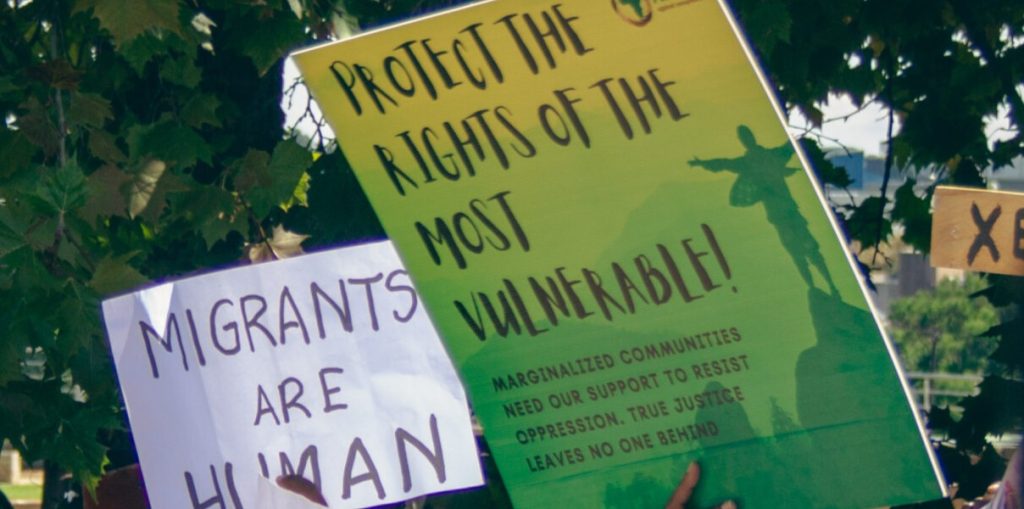
Amnesty warns against xenophobia
Ahead of the demonstrations, Amnesty International South Africa warned that stronger political leadership is urgently needed to address xenophobia and prevent a repeat of the violence that erupted during the 2008 xenophobic attacks, when 62 people were killed, including 21 South Africans and 41 migrants.
The organisation also raised concern about reports that anti migrant groups have encouraged members of the public to carry out so-called citizens’ arrests of undocumented migrants.
Amnesty International South Africa Executive Director Shenilla Mohamed said peaceful protest must never become an excuse for unlawful conduct. “Amnesty International supports the right to peaceful protest. But violence, intimidation, harassment, and self-appointed enforcement of immigration laws are unlawful and have no place in our society. History has shown us where this path leads and how quickly things can turn deadly.”
Mohamed said, “South African law is clear that private individuals do not have the authority to demand immigration documents or arrest people suspected of being undocumented.”
She said the country’s asylum management system had failed hundreds of thousands of asylum seekers by leaving many without documentation for years. “In persisting with a broken system that leaves those trying to claim asylum undocumented and in limbo, some for up to 19 years, the government is causing a divide and inflaming tensions between South African citizens and fellow Africans living in the country.
“This points to the urgent need for broader systemic reform to ensure that all those who appear to be living in the country undocumented are processed promptly and in line with the law.”
Mohamed added that blaming migrants for South Africa’s social and economic problems would only deepen divisions. “Scapegoating asylum seekers, refugees and migrants for South Africa’s deep challenges of unemployment, inequality, and failing services that are rooted in the legacies of apartheid is wrong and dangerous.
“It distracts from the state’s responsibility to deliver for all who live in South Africa and address the root causes. Violence and vigilantism will never fix these problems; they only destroy lives and deepen division.”
President urges peaceful protest
President Cyril Ramaphosa acknowledged that South Africans have genuine concerns about illegal immigration, border management and pressure on public services, but said those concerns must be addressed within the framework of the Constitution and the rule of law.
“South Africans have raised deep concerns about illegal immigration, border management, pressure on public services, criminal syndicates that exploit our immigration system and the impact these challenges have on communities. These concerns are real, and they deserve to be heard,” he said.
The President said the government had accepted that South Africa’s immigration system requires substantial reform and was strengthening border management, improving enforcement against undocumented immigration and tackling corruption that has weakened immigration control.
Ramaphosa also emphasised that the constitutional right to protest does not permit intimidation or violence. “The right to protest is enshrined in our Constitution. It is a credit to our robust democratic order that people are able to express their grievances openly. But the right to protest and freedom of expression does not allow people to threaten or intimidate others, or to engage in acts of vandalism or violence.”
He rejected calls for private citizens to enforce immigration laws. “The painful history of the pass laws reminds us why the authority to demand identification and enforce immigration laws belongs to government law enforcement officers acting within the Constitution, not to private individuals.”
The President concluded by calling on South Africans to reject vigilantism while protecting both the country’s borders and its constitutional values. He said, “Whatever the motivation, taking the law into one’s own hands is vigilantism and has no place in our constitutional democracy.”
The SAHRC echoed those concerns, saying South Africa must look beyond Tuesday’s demonstrations and address the underlying causes of public frustration, including unemployment, socioeconomic challenges, porous borders and crime, to ensure that constitutional rights are realised by everyone.
Get your news on the go. Click here to follow the Conviction WhatsApp channe
