


- South Africa’s constitutional values should remain central to the debate on undocumented immigration.
- Migrant labour has played a significant role in South Africa’s economic development.
- Large-scale departures of undocumented immigrants could have unintended economic consequences.
It is a great tragedy to see the protests taking place in South Africa against illegal migrants, led by the March and March organisation. The national anthem of South Africa is sung all over Southern Africa as a symbol of unity and a sense of humanity, and that acknowledgement is critical in underscoring the power of a united continent.
The South African Constitution is built on the protection of the marginalised and the vulnerable. Thus, these protests and marches against illegal immigrants, which sections of society are supporting, are fundamentally anti-human and go against the core mandate of South Africa’s constitutional democracy of protecting the oppressed through the Bill of Rights.
As a South African state, the Constitution and the law should not hide the pain of years of being taken for granted by the apartheid system through the exploitation of cheap labour received from displaced illegal migrants into the country, but should instead give hope and empathy to the more vulnerable groups.
Migration and South Africa’s economic history
African countries helped build the economy of South Africa during the liberation period through years of struggle and assistance from neighbouring countries such as Malawi, Zimbabwe, Lesotho and Mozambique. Generally, many Southern African countries contributed people who were displaced by the apartheid government to work in the mines, on farms and as small business owners.
Displacement cannot be re-engineered. The entire history of migration was shaped by movement that was advocated by the apartheid government to grow the country’s economy, and that was intentional.
Social movements and activism have become synonymous with social change, and advocacy bodies for the protection of human rights, both internationally and locally, should come to the aid of vulnerable groups that have become targets.
Civil society has a constitutional mandate to promote dialogue, contribute to social cohesion and encourage the South African government to provide the full context of the unemployment rate and the contested access to essential resources for the poorest groups.
The sovereignty of South Africa is being threatened by advocacy groups such as Operation Dudula and March and March, whose position is to instigate violence and perpetuate separatism among the poor by creating fear and promoting the idea that undocumented immigrants are to blame for unemployment and the high crime rate in South Africa.
They deny the discretionary powers of the South African government and its human approach of ubuntu in processing and implementing the legal status of undocumented immigrants. Undocumented immigrants seek refuge in South Africa. Many may not comply with the correct documentation, yet political contestation and competing interest groups continue labelling the vulnerable to advance political agendas and turn undocumented immigrants into scapegoats for the many struggles communities face in accessing resources.
The political context is that the stigma attached to undocumented migrants is founded on the fear of others gaining equal status before the law, while others seek to relegate them to an inferior position. The common good should be to promote unity as the central point of pursuing legal order, unifying people and, in particular, protecting vulnerable groups.
Let us not undermine the rule of law or allow advocacy groups to override the common good, constitutional rights and approaches to equality by targeting vulnerable groups based on whether they are documented or undocumented.
The reality after the protests
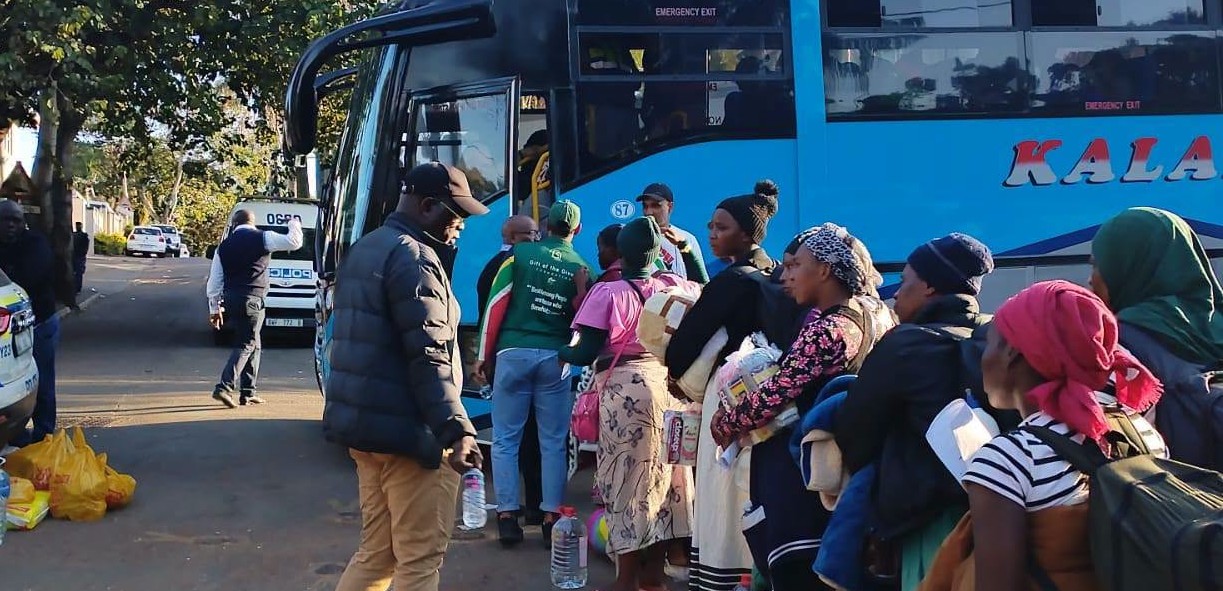
It is evident that only around 25,000 to 30,000 undocumented migrants, or possibly more, officially left the country in the wake of the 30 June protests, compared with an estimated three million living in South Africa.
Unofficially, many who live closer to Musina or the Beitbridge Border Post experience different migration dynamics. Many cross through normal procedures on a daily basis to access essential goods or move further south into South Africa.
After the protests, the question is: who will fill the gap in essential sectors such as local transportation, farming, domestic work, restaurants and hairdressing? The argument that undocumented immigrants are taking jobs away from South Africans is not, on its own, a valid reason.
South African people often refuse to do manual work. Many South Africans do not want to work long hours. Spaza shops are open from 9am to 9pm, and that is the culture of labour in which the majority of South Africans will not agree to work under such circumstances.
Also, the claim that illegal immigrants are the reason for the high crime rate cannot be justified. The involvement of any person in crime must therefore be dealt with and punished through the legal system.
The economic consequences
South Africa’s investment in economic enterprises is being affected, and the optics are not favourable. The current protests against undocumented immigration are not going to result in meaningful short-term employment opportunities for the majority of unemployed South Africans.
The views expressed in this article are those of the author and do not necessarily reflect the views of Conviction.co.za.
Get your news on the go. Click here to follow the Conviction WhatsApp channel.
