Skip to content
Close Menu
ConvictionConviction
  • Home
  • Law & Justice
  • Special Reports
  • Opinion
  • Ask The Expert
  • Get In Touch

Subscribe to Updates

Get the latest creative news from FooBar about art, design and business.

What's Hot

Why Special Tribunal ordered Nkandla architect Minehle Makhanya to repay R147 million

August 28, 2026

Free eye screenings help nearly 200 learners see a brighter future through education

August 28, 2026

Acting magistrate and attorney jailed after repeatedly missing court appearances

August 28, 2026
Facebook X (Twitter) Instagram
Trending
  • Why Special Tribunal ordered Nkandla architect Minehle Makhanya to repay R147 million
  • Free eye screenings help nearly 200 learners see a brighter future through education
  • Acting magistrate and attorney jailed after repeatedly missing court appearances
  • GOOD caucus promise for permanent municipal job carries no legal weight
  • Remembering Queen Manthatisi, the Amazon who held the knife by the sharp blade
  • Three years of salary, no office, unresolved reporting line sparks courtroom battle
  • Scrapyard held insured bakkie despite insurer paying towing costs
  • Legal Indaba 2026 brings together South Africa’s top legal minds in Johannesburg
Facebook X (Twitter) Instagram
ConvictionConviction
Sonneblom
  • Home
  • Law & Justice
  • Special Reports
  • Opinion
  • Ask The Expert
  • Get In Touch
ConvictionConviction
Home » Nkandla architect repay R147 million
Constitutional Law

Why Special Tribunal ordered Nkandla architect Minehle Makhanya to repay R147 million

Judge N Pillay finds Minehle Makhanya personally liable after ruling that his unlawful appointment, unauthorised project expansion, and certification of irregular payments caused R147.3 million in losses to the State
Kennedy MudzuliBy Kennedy MudzuliAugust 28, 2026Updated:August 28, 2026No Comments
Facebook Twitter Pinterest LinkedIn WhatsApp Reddit Tumblr Email
Minehle Makhanya, the former architect and principal agent for the Nkandla security upgrades, following the Special Tribunal judgment ordering him to repay R147.3 million.
Minehle Makhanya has been ordered by the Special Tribunal to repay R147.3 million to National Treasury over unlawful conduct linked to the Nkandla security upgrades.
Share
Facebook Twitter LinkedIn Pinterest Email
  • Special Tribunal orders Minehle Makhanya to repay R147.3 million to National Treasury.
  • Judgment finds five categories of unlawful financial losses arising from the Nkandla upgrades
  • Court rules that verbal instructions did not excuse the failure to obtain written approval or protect public funds

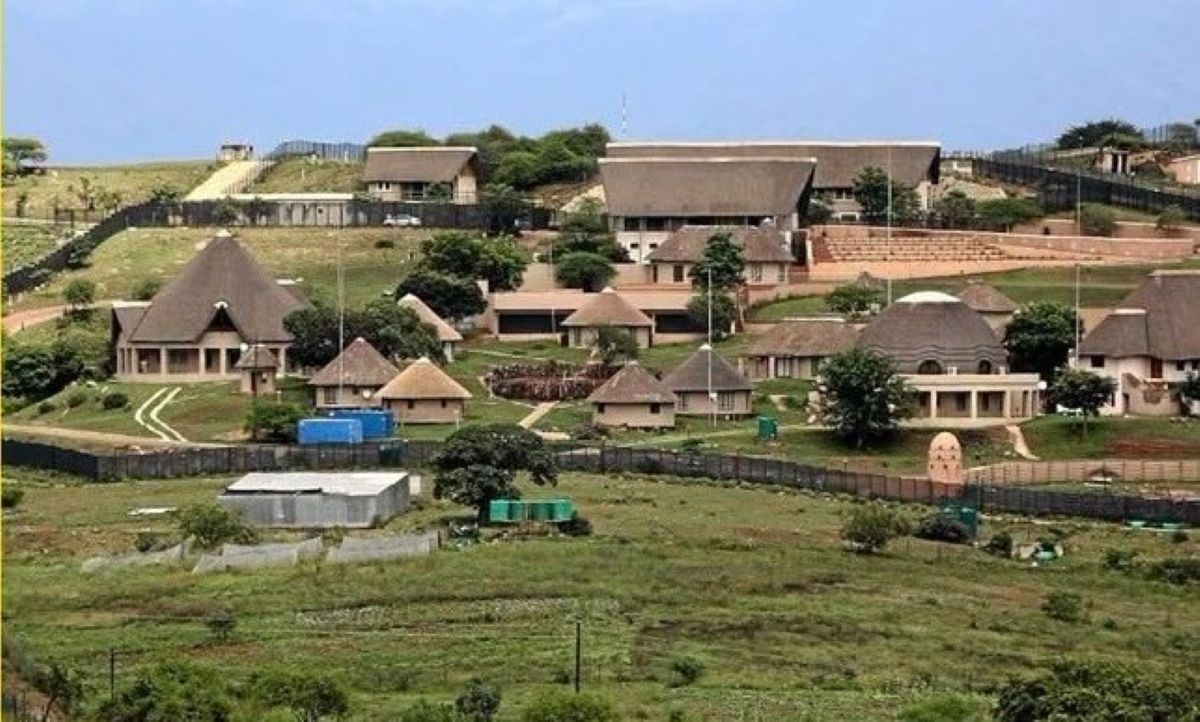
The Special Tribunal has ordered former Nkandla principal agent and architect Minehle Makhanya to repay R147 269 444.06 after finding that his unlawful and negligent conduct caused significant financial losses during the security upgrades at former president Jacob Zuma’s private home.

In a judgment delivered by Judge N Pillay, the tribunal declared that Makhanya’s appointment and contract with the Department of Public Works were invalid. The court also ordered him to pay the money back to the National Treasury with interest at 11.25 percent from the date of judgment, as well as the costs for two legal counsel.

Judge Pillay said the case was about the constitutional duty to make sure every rand taken from public funds is spent legally, reasonably and transparently. Although Makhanya was not the only person involved, the judge said that as architect and principal agent, he was responsible for making sure there was no fruitless or wasteful spending.

Unlawful appointment

The tribunal found that Makhanya was appointed without the competitive procurement process required by the Constitution, the Public Finance Management Act and the department’s own supply chain rules.

Makhanya argued that the sensitive nature of presidential security justified skipping an open tender because he was already working as the Zuma family’s private architect. The tribunal rejected that defence and ruled that there was no legal basis to avoid the public procurement rules.

Five reasons he must repay the money

The R147.3 million repayment order comprises five types of financial loss that the Special Investigating Unit proved during the trial.

The largest claim, R68.5 million, came from unauthorised works that went beyond the security measures approved by the South African Police Service and the South African National Defence Force. The tribunal found that Makhanya authorised structures like tunnels with lifts, a visitors’ lounge, VIP parking, internal roads, air conditioning and landscaping that were not approved as security features.

Another R11.7 million was for buildings that were overdesigned and construction costs that went above market prices. This included guardhouses, a control room and staff accommodation.

The tribunal also upheld a claim for R13.7 million in excessive professional fees paid to Makhanya and other consultants. This happened after inflated project values and unauthorised changes increased their pay.

Another R60.2 million was for payments certified for contractors where the Department of Public Works could not properly check what work was done or how the amounts were calculated.

The last R1.27 million was for payments for work that was not actually done on the outer perimeter fence and for standing time that was not owed.

Verbal instructions failed as a defence

A key issue during the trial was Makhanya’s claim that many of the disputed changes were made on verbal instructions from senior officials and security staff.

Judge Pillay rejected that argument, saying that the Department of Public Works manual required written approval from the Director General before any design changes could be made. Verbal approval, even if it was given, did not excuse the architect from that duty.

The tribunal also accepted evidence from department and SAPS witnesses who denied authorising many of the changes that Makhanya relied on.

Why he was personally liable

Pillay found that Makhanya’s job went far beyond just preparing architectural drawings. As principal agent, he was responsible for the project’s financial control, ensuring designs followed approved cost guidelines, checking payment certificates, and protecting the department’s financial interests before public money was paid out.a

Because the Department of Public Works relied on payment certificates signed off by Makhanya, the tribunal found that his unlawful changes, inflated costs and careless certification directly caused losses that the State could recover.

For these reasons, the Special Tribunal found Makhanya personally liable for repaying R147 269 444.06 to the National Treasury.

Conviction.co.za

Get your news on the go. Click here to follow the Conviction WhatsApp channel.

Minehle Makhanya Nkandla architect Nkandla security upgrades R147 million repayment Special Tribunal
Share. Facebook Twitter Pinterest LinkedIn Tumblr Telegram Email
Kennedy Mudzuli

Multiple award-winner with passion for news and training young journalists. Founder and editor of Conviction.co.za

Related Posts

Electoral Court finds GOOD breached Political Funding Act over undisclosed R900,000 donation

August 26, 2026

Mthatha court orders Dr AB Xuma Municipality to fix neglected rural access road

August 25, 2026

Electoral Court breathes new life into UDF Party disputed name battle against IEC

August 23, 2026
Leave A Reply Cancel Reply

Prove your humanity: 9   +   3   =  

Subscribe to our newsletter:
Top Posts

Making sectional title rules that work: A practical guide

January 17, 2025

Protection order among the consequences of trespassing in an ‘Exclusive Use Area’

December 31, 2024

Between a rock and a foul-smelling place

November 27, 2024

Irregular levy increases, mismanagement, and legal threats in a sectional title scheme

June 2, 2025
Don't Miss
Constitutional Law
4 Mins Read

Why Special Tribunal ordered Nkandla architect Minehle Makhanya to repay R147 million

By Kennedy MudzuliAugust 28, 20264 Mins Read

The Special Tribunal ordered Nkandla architect Minehle Makhanya to repay R147.3 million after finding his unlawful appointment, unauthorised project expansion and irregular payment certification caused major losses to the State.

Free eye screenings help nearly 200 learners see a brighter future through education

August 28, 2026

Acting magistrate and attorney jailed after repeatedly missing court appearances

August 28, 2026

GOOD caucus promise for permanent municipal job carries no legal weight

August 28, 2026
Stay In Touch
  • Facebook
  • Twitter
  • WhatsApp
Demo
About Us
About Us

Helping South Africans to navigate the legal landscape; providing accessible legal information; and giving a voice to those seeking justice.

Facebook X (Twitter) YouTube WhatsApp Twitch RSS
Latest posts

Making sectional title rules that work: A practical guide

January 17, 2025

Protection order among the consequences of trespassing in an ‘Exclusive Use Area’

December 31, 2024

Between a rock and a foul-smelling place

November 27, 2024
OUR PICKS

Pretoria court registrar who issued fraudulent court orders struck off legal roll

August 17, 2026

Eskom ordered to tackle Kusile pollution with urgent 30-day environmental action plan

August 17, 2026

Constitutional Court cites UP professor in landmark copyright judgment

August 22, 2026
© 2026 Conviction.
  • Home
  • Law & Justice
  • Special Reports
  • Opinion
  • Ask The Expert
  • Get In Touch

Type above and press Enter to search. Press Esc to cancel.

Powered by
►
Necessary cookies enable essential site features like secure log-ins and consent preference adjustments. They do not store personal data.
None
►
Functional cookies support features like content sharing on social media, collecting feedback, and enabling third-party tools.
None
►
Analytical cookies track visitor interactions, providing insights on metrics like visitor count, bounce rate, and traffic sources.
None
►
Advertisement cookies deliver personalized ads based on your previous visits and analyze the effectiveness of ad campaigns.
None
►
Unclassified cookies are cookies that we are in the process of classifying, together with the providers of individual cookies.
None
Powered by