


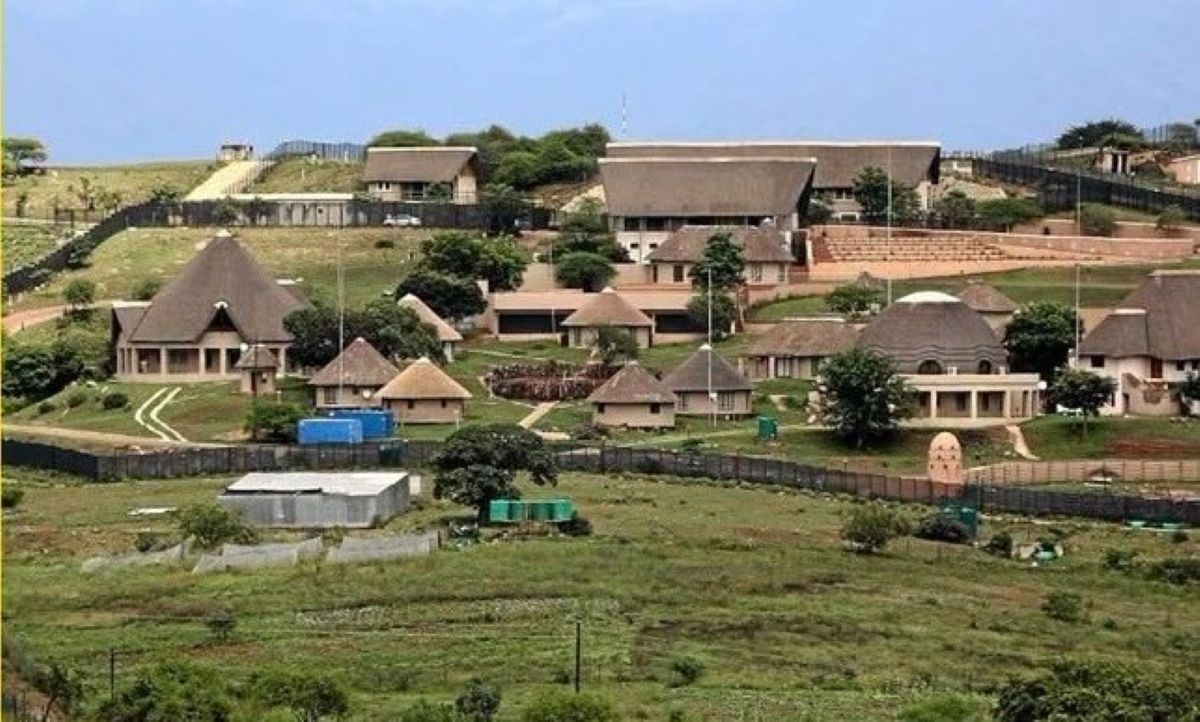
- Special Tribunal orders Minehle Makhanya to repay R147.3 million to National Treasury.
- Judgment finds five categories of unlawful financial losses arising from the Nkandla upgrades
- Court rules that verbal instructions did not excuse the failure to obtain written approval or protect public funds
The Special Tribunal has ordered former Nkandla principal agent and architect Minehle Makhanya to repay R147 269 444.06 after finding that his unlawful and negligent conduct caused significant financial losses during the security upgrades at former president Jacob Zuma’s private home.
In a judgment delivered by Judge N Pillay, the tribunal declared that Makhanya’s appointment and contract with the Department of Public Works were invalid. The court also ordered him to pay the money back to the National Treasury with interest at 11.25 percent from the date of judgment, as well as the costs for two legal counsel.
Judge Pillay said the case was about the constitutional duty to make sure every rand taken from public funds is spent legally, reasonably and transparently. Although Makhanya was not the only person involved, the judge said that as architect and principal agent, he was responsible for making sure there was no fruitless or wasteful spending.
Unlawful appointment
The tribunal found that Makhanya was appointed without the competitive procurement process required by the Constitution, the Public Finance Management Act and the department’s own supply chain rules.
Makhanya argued that the sensitive nature of presidential security justified skipping an open tender because he was already working as the Zuma family’s private architect. The tribunal rejected that defence and ruled that there was no legal basis to avoid the public procurement rules.
Five reasons he must repay the money
The R147.3 million repayment order comprises five types of financial loss that the Special Investigating Unit proved during the trial.
The largest claim, R68.5 million, came from unauthorised works that went beyond the security measures approved by the South African Police Service and the South African National Defence Force. The tribunal found that Makhanya authorised structures like tunnels with lifts, a visitors’ lounge, VIP parking, internal roads, air conditioning and landscaping that were not approved as security features.
Another R11.7 million was for buildings that were overdesigned and construction costs that went above market prices. This included guardhouses, a control room and staff accommodation.
The tribunal also upheld a claim for R13.7 million in excessive professional fees paid to Makhanya and other consultants. This happened after inflated project values and unauthorised changes increased their pay.
Another R60.2 million was for payments certified for contractors where the Department of Public Works could not properly check what work was done or how the amounts were calculated.
The last R1.27 million was for payments for work that was not actually done on the outer perimeter fence and for standing time that was not owed.
Verbal instructions failed as a defence
A key issue during the trial was Makhanya’s claim that many of the disputed changes were made on verbal instructions from senior officials and security staff.
Judge Pillay rejected that argument, saying that the Department of Public Works manual required written approval from the Director General before any design changes could be made. Verbal approval, even if it was given, did not excuse the architect from that duty.
The tribunal also accepted evidence from department and SAPS witnesses who denied authorising many of the changes that Makhanya relied on.
Why he was personally liable
Pillay found that Makhanya’s job went far beyond just preparing architectural drawings. As principal agent, he was responsible for the project’s financial control, ensuring designs followed approved cost guidelines, checking payment certificates, and protecting the department’s financial interests before public money was paid out.a
Because the Department of Public Works relied on payment certificates signed off by Makhanya, the tribunal found that his unlawful changes, inflated costs and careless certification directly caused losses that the State could recover.
For these reasons, the Special Tribunal found Makhanya personally liable for repaying R147 269 444.06 to the National Treasury.
Get your news on the go. Click here to follow the Conviction WhatsApp channel.
