



- Awaiting-trial prisoners can wear private clothing, even expensive brands, due to the presumption of innocence.
- Lavish displays in court risk undermining public confidence and equality before the law.
- Parliamentarians supporting accused persons may be unethical, even if not illegal.
There is a picture that has captured our imagination and should disturb ordinary people. But it does not.
An awaiting-trial prisoner arrives at court, not in shame, not in humility, but like a celebrity. Expensive designer labels. Gold watch. Fresh haircut. A crowd of supporters. Parliamentarians shaking his hand, bowing, taking pictures. The corridors of justice turned into a red carpet.
The public asks a simple question: What is going on here? Is this allowed? And what message does it send? But we pride ourselves on constitutionalism. Apparently, this is the legal position in South Africa.
Awaiting-trial prisoners are not convicts
This is where the law starts, and where public anger starts. Or is it confusion? In South African law, an awaiting-trial prisoner is still presumed innocent under Section 35(3)(h) of the Constitution.
Until a court finds you guilty, you are not a criminal in the eyes of the law. We may know that you were involved in tender corruption. But you are an unconvicted person in detention because bail was denied or because you cannot afford it.
Because of that, the Correctional Services Act 111 of 1998 treats awaiting-trial prisoners very differently from sentenced offenders. Sentenced offenders must wear a prison uniform, must cut their hair according to regulations, and must follow a strict disciplinary code.
Awaiting-trial prisoners, under Section 47 of the Act, retain all rights not taken away by detention itself. They may:
- Wear their own private clothing, not a prison uniform.
- Keep some personal effects.
- Arrange their own food and medical care at their own expense, with permission.
- Receive visits and communicate more freely.
So legally, yes, an awaiting-trial prisoner CAN appear in court in private clothes, even expensive private clothes. The court cannot force him into prison garb to make him look guilty. The presumption of innocence protects his dignity.
That includes designer labels worn by Thabo Bester or Cat Matlala, for example. The Department of Correctional Services cannot vet whether his suit is from Woolworths or Gucci. Its job is security, not fashion policing.
But there is a limit. The clothing must be decent, must not be a security risk, and must not be used to intimidate witnesses or disrupt proceedings.
The presiding officer has the power under the Criminal Procedure Act to control courtroom decorum. If clothing is deliberately provocative or constitutes contempt, a judge can order it changed.
The money behind the designer label
The public suspicion is: “Obviously bought with stolen money and corrupt tenders.” The law says suspicion is not enough. Under South African law, the State must prove that an asset is the proceeds of crime. This is done through:
- Attachment under the Prevention of Organised Crime Act (POCA): The Asset Forfeiture Unit can apply to freeze property if there is reasonable suspicion it is linked to crime.
- Criminal forfeiture after conviction: After a guilty verdict.
- Civil forfeiture: Where the State proves on a balance of probabilities that property is the instrumentality of an offence.
Until that process is completed, a person is entitled to use his property, even if the public believes it was bought with corrupt tenders. The court cannot, on its own, say, “That suit looks too expensive, you must be a thief, take it off.”
This is frustrating, but it is deliberate. If we allowed judges to confiscate suits based on appearance, we would have trial by gossip.
However, if the State has already obtained a preservation order under POCA, and the person is violating it by disposing of or flaunting assets, that is a separate offence and can be prosecuted.
Parliamentarians and the ethics of support
This is where the law moves from Correctional Services to ethics. Is it illegal for an MP to shake hands with, praise, or support an awaiting-trial prisoner? We have seen them do that, right? Some even attend parties with alleged culprits.
But no. It is not a criminal offence. South Africa has no law that forbids association with an accused person. MPs have freedom of association under the Constitution. But it may be unethical, and it is politically corrosive.
The Code of Ethical Conduct for Members of Parliament requires MPs to uphold the dignity of Parliament, to act in a manner that maintains public confidence in Parliament, and not to bring Parliament into disrepute. The Powers, Privileges and Immunities of Parliament and Provincial Legislatures Act requires that Parliament not be used to undermine the administration of justice.
When parliamentarians publicly kowtow to a person facing serious corruption, fraud, or other economic crimes charges, they are not breaking criminal law, but they are breaking the unwritten contract with the public. They are signalling that political loyalty is more important than accountability.
If the parliamentarian is a member of the justice or correctional services portfolio committee, it is even worse, as it can be seen as interference with the correctional system.
If such support involves intimidation of witnesses, obstruction of justice, or abuse of state resources to transport or protect the accused, then it crosses from ethics to criminality under Section 165 of the Constitution and the obstruction of justice provisions in the Criminal Procedure Act.
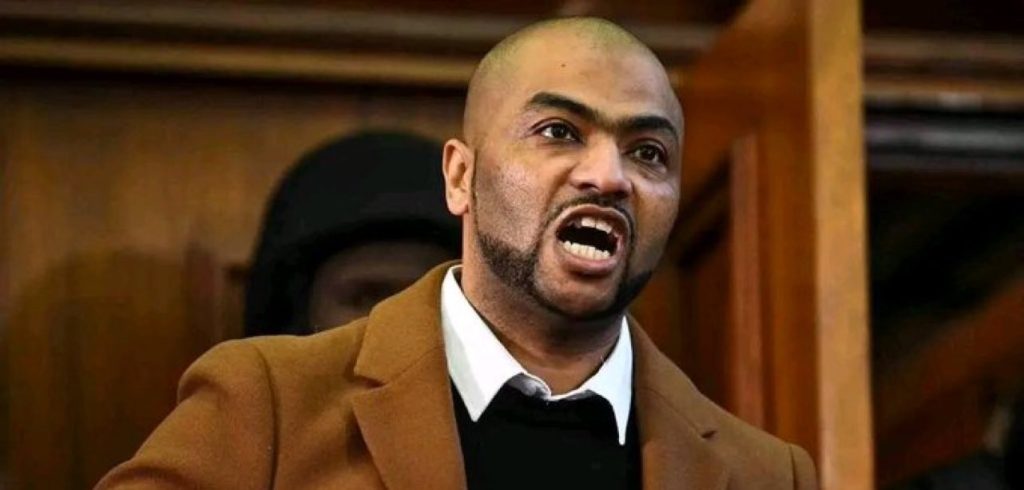
What message does the ‘catwalk dock’ send?
The legal answer and the social answer are different. Legally, the message should be: the system respects human rights even for those accused of the worst crimes. Socially, the message that actually lands is very different, and dangerous:
First, it tells society that crime pays. When a young person sees an accused tender fraudster dressed in R50,000 shoes while people are sick and dying at Tembisa Hospital, or the complainant is in rags, the conclusion is simple: this is the way to make it.
Second, it mocks equality before the law. Ordinary awaiting-trial prisoners, poor and black, appear in court in torn takkies and borrowed shirts. They sit in holding cells for months because they cannot afford bail. When a rich accused turns the dock into a fashion show, it shows two justice systems: one for the rich and another for the poor.
Third, it intimidates justice. Expensive clothes are a language. They say: I am still powerful. I am still connected. I am still rich enough to hire the best lawyers. You cannot touch me. That message is not lost on witnesses, investigators and junior prosecutors.
Fourth, it erodes public confidence. The criminal justice system depends on the public believing that a trial is serious, solemn, and fair. When it looks like a VIP meet-and-greet, the public stops believing.
Courts have recognised this. In several high-profile cases, judges have warned accused persons and their supporters not to turn courts into political rallies. The court has inherent power to control its own process.
What should happen next?
The law should not and cannot force an awaiting-trial prisoner into sackcloth. The presumption of innocence matters. But three things can and should happen within the law:
- Correctional Services should enforce strict rules that private clothing for awaiting-trial detainees must be modest, not extravagant displays of alleged illicit wealth, especially when there is a preservation order.
- Parliament’s Ethics Committee should call out members who publicly glorify accused persons facing corruption charges. It is not illegal, but it is incompatible with an oath to uphold the Constitution.
- The NPA and AFU should move faster to attach assets that are prima facie the proceeds of crime, so that those assets cannot be used to fund a catwalk defence.
Justice must not only be done, but it must also be seen to be humble. The dock is not a runway. It is a place where society says: you are accountable, no matter how expensive your suit is.
Get your news on the go. Click here to follow the Conviction WhatsApp channel.
The opinions expressed in this article are solely those of the author and do not necessarily reflect the views of Conviction.co.za
