

Skip to content
Close Menu
ConvictionConviction
  • Home
  • Law & Justice
  • Special Reports
  • Opinion
  • Ask The Expert
  • Get In Touch

Subscribe to Updates

Get the latest creative news from FooBar about art, design and business.

What's Hot

Meaning and intention behind Zuma-Sambudla’s social media posts must be tested at trial

November 6, 2026

Consultation is over, but who takes responsibility for the final workplace decision?

November 6, 2026

A sexual harassment complaint, the wrong court and a costly legal outcome

November 6, 2026
Facebook X (Twitter) Instagram
Trending
  • Meaning and intention behind Zuma-Sambudla’s social media posts must be tested at trial
  • Consultation is over, but who takes responsibility for the final workplace decision?
  • A sexual harassment complaint, the wrong court and a costly legal outcome
  • Emmanuel Assemblies church founders ordered to surrender offices amid takeover
  • Attorney fails to halt LPC removal proceedings despite pending Ombud complaint
  • Former boyfriend who moved into girlfriend’s family home to prepare for exams kicked out
  • Politics must be about human dignity, not just service delivery and voting
  • Police record 85 incidents during local government elections with 27 suspects arrested
Facebook X (Twitter) Instagram
ConvictionConviction
Sonneblom
  • Home
  • Law & Justice
  • Special Reports
  • Opinion
  • Ask The Expert
  • Get In Touch
ConvictionConviction
Home » Duduzile Zuma-Sambudla social media posts
Criminal Law

Meaning and intention behind Zuma-Sambudla’s social media posts must be tested at trial

The prosecution’s evidence raises questions about the context and interpretation of posts made during the July 2021 unrest.
Kennedy MudzuliBy Kennedy MudzuliNovember 6, 2026Updated:November 6, 2026No Comments
Facebook Twitter Pinterest LinkedIn WhatsApp Reddit Tumblr Email
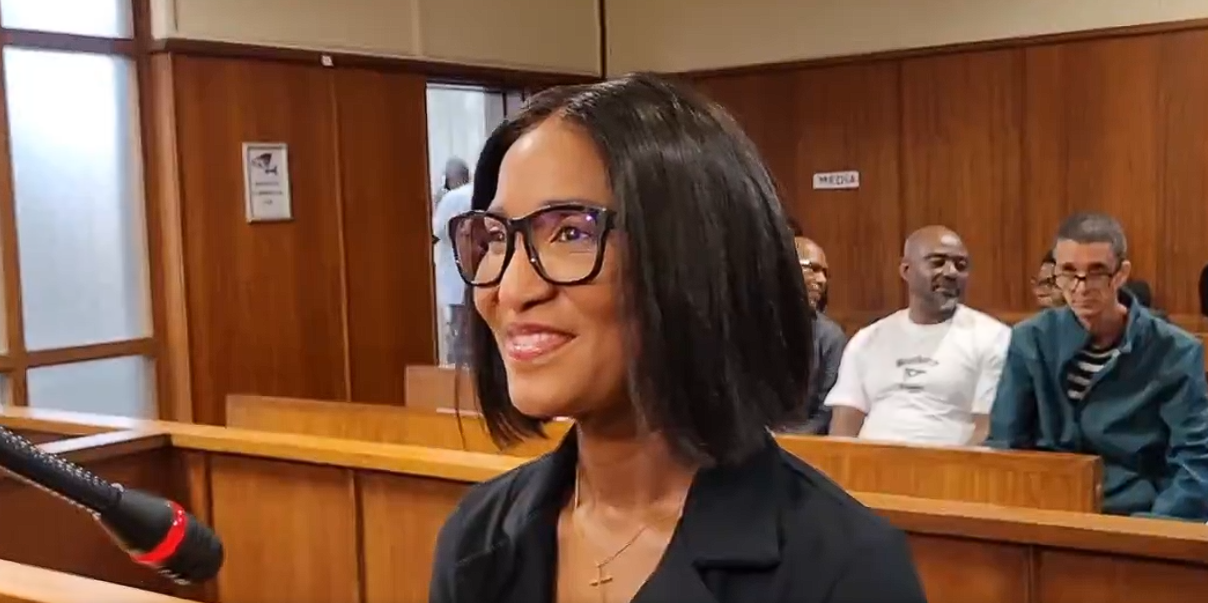
Duduzile Zuma-Sambudla, accused of incitement to commit terrorism and public violence.
Duduzile Zuma-Sambudla faces charges of incitement to commit terrorism and public violence arising from social media publications during the July 2021 unrest.
Share
Facebook Twitter LinkedIn Pinterest Email
  • Zuma-Sambudla admitted posting the disputed messages and statements on her public Twitter account.
  • Some State witnesses conceded that individual posts did not, on their own, amount to incitement.
  • The judge found that the different interpretations of the posts, their context and the accused’s intention required a holistic assessment of the evidence.

The meaning of Duduzile Zuma-Sambudla’s social media posts, the context in which they were published and her intention are among the questions that must be resolved at trial after the State presented evidence linking her posts to alleged incitement during the July 2021 unrest.

The charges arise from posts made between 7 and 17 July 2021, when widespread unrest unfolded in KwaZulu-Natal and Gauteng. Zuma-Sambudla faces one count of incitement to commit terrorism under the Protection of Constitutional Democracy Against Terrorist and Related Activities Act 33 of 2004 and two counts of incitement to commit public violence under the Riotous Assemblies Act 17 of 1956.

The disputed social media publications

Among the statements at the centre of the case were “We see you”, “I see you, Amandla”, “your struggle continues from the outside and we must intensify Amandla” and “take the day off from being the bigger person and choose violence, you deserve it”.

The State also relied on a call for a total shutdown in KwaZulu-Natal, as well as images and videos showing burning infrastructure, people firing guns, barricaded roads and AmaZulu regiments in traditional attire with traditional weapons. One video showed a person shooting at images of the president wearing an African National Congress T-shirt.

Zuma-Sambudla admitted posting the messages and statements under Section 220 of the Criminal Procedure Act 51 of 1977. The prosecution also presented comments from her followers, some of whom warned that she was inciting violence, while others voiced their support.

Why the defence sought a discharge

The State called seven witnesses, including investigators and translators who helped with statements in English and isiZulu. Their evidence supported the prosecution’s claim that the posts amounted to incitement to terrorism or violence.

However, some witnesses admitted during cross-examination that certain posts, considered on their own, did not amount to incitement. The defence argued that these concessions showed the State had not made a prima facie case and that Zuma-Sambudla should be discharged without having to present a defence.

The State opposed the application, saying it had presented enough evidence for the proceedings to continue.

Why the judge found a holistic assessment necessary

In considering the application, Judge M Mathenjwa explained that Section 174 of the Criminal Procedure Act allows a court to discharge an accused person at the end of the State’s case if there is no evidence that the accused committed the offence or any other offence on which they could be convicted.

The judge clarified that the words no evidence do not mean there is nothing at all. “The question is whether there is any evidence on which a reasonable court, acting carefully, might convict. The State must have presented evidence on each part of the charges which, if left unanswered, could lead to a conviction,” Judge Mathenjwa ruled.

The judge also stressed that an accused should be discharged where there is no possibility of conviction unless they give evidence against themselves. At this stage, the court does not make final findings on witness credibility or decide whether guilt is proved beyond reasonable doubt.

Judge Mathenjwa said the central difficulty was the completely different interpretations given by the State and defence about the meaning of the posts, the accompanying statements, whether the conduct was lawful and Zuma-Samdula’s intention.

The judge found that the concessions made by some witnesses about individual posts did not resolve these broader disputes. Given the nature of the evidence and the different interpretations, the interests of justice required a holistic look at everything at the end of the trial.

This would allow the court to assess the credibility of the witnesses, decide how strong the evidence is and determine whether the prosecution had proved its case beyond reasonable doubt.

Conviction.co.za

Get your news on the go. Click here to follow the Conviction WhatsApp channel.

criminal law Incitement July 2021 unrest Public violence Terrorism
Share. Facebook Twitter Pinterest LinkedIn Tumblr Telegram Email
Kennedy Mudzuli

Multiple award-winner with passion for news and training young journalists. Founder and editor of Conviction.co.za

Related Posts

Justice Mokgoro’s partner gets suspended sentence for car crash that killed her

November 5, 2026

Jailed for three life terms and a further 653 years for 119 sexual offences against three children

November 5, 2026

Life sentence and 20-year jail term for rape overturned amid serious flaws in prosecution

November 3, 2026
Leave A Reply Cancel Reply

Prove your humanity: 5   +   4   =  

Subscribe to our newsletter:
Top Posts

Your driving licence at the gate: What estates can actually legally scan

Sponsor: My Estate LifeSeptember 6, 2026

Making sectional title rules that work: A practical guide

January 17, 2025

Protection order among the consequences of trespassing in an ‘Exclusive Use Area’

December 31, 2024

Between a rock and a foul-smelling place

November 27, 2024
Don't Miss
Criminal Law
4 Mins Read

Meaning and intention behind Zuma-Sambudla’s social media posts must be tested at trial

By Kennedy MudzuliNovember 6, 20264 Mins Read

Disputed statements, images and videos published during the July 2021 unrest have raised questions about the meaning and intention behind Zuma-Sambudla’s social media activity.

Consultation is over, but who takes responsibility for the final workplace decision?

November 6, 2026

A sexual harassment complaint, the wrong court and a costly legal outcome

November 6, 2026

Emmanuel Assemblies church founders ordered to surrender offices amid takeover

November 6, 2026
Stay In Touch
  • Facebook
  • Twitter
  • WhatsApp
Demo
About Us
About Us

Helping South Africans to navigate the legal landscape; providing accessible legal information; and giving a voice to those seeking justice.

Facebook X (Twitter) YouTube WhatsApp Twitch RSS
Latest posts

Your driving licence at the gate: What estates can actually legally scan

Sponsor: My Estate LifeSeptember 6, 2026

Making sectional title rules that work: A practical guide

January 17, 2025

Protection order among the consequences of trespassing in an ‘Exclusive Use Area’

December 31, 2024
OUR PICKS

Legal battle erupts over disputed agreement allowing mining at Vlakfontein

August 20, 2026

Festive chicken workers secure protection against dismissal in Labour Court strike dispute

November 5, 2026

Legal crackdown sees attorney struck off, another suspended, and fees pursued

April 30, 2026
© 2026 Conviction.
  • Home
  • Buy Now
  • Law & Justice

Type above and press Enter to search. Press Esc to cancel.

Powered by
Necessary cookies enable essential site features like secure log-ins and consent preference adjustments. They do not store personal data.
None
Functional cookies support features like content sharing on social media, collecting feedback, and enabling third-party tools.
None
Analytical cookies track visitor interactions, providing insights on metrics like visitor count, bounce rate, and traffic sources.
None
Advertisement cookies deliver personalized ads based on your previous visits and analyze the effectiveness of ad campaigns.
None
Unclassified cookies are cookies that we are in the process of classifying, together with the providers of individual cookies.
None
Powered by