


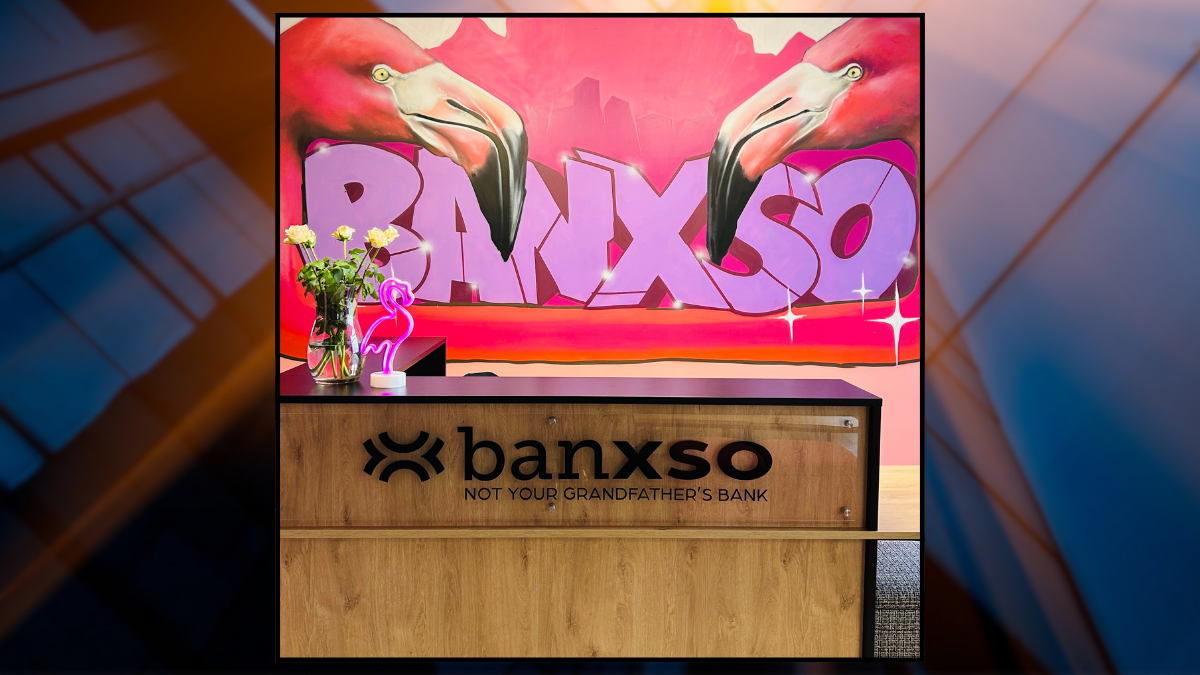
- Court finds Banxso commercially insolvent; liabilities exceed available funds; investor losses significant.
- Judge accepts strong evidence of illegality, misrepresentation, and regulatory breaches affecting thousands of investors.
- Business found to have lost substratum as licence withdrawn, operations ceased, and trading platform shut down.
A major financial services collapse has culminated in the final liquidation of Banxso (Pty) Ltd after the High Court in the Western Cape concluded that the company was both commercially insolvent and operating in a manner tainted by systemic illegality.
The ruling follows months of litigation brought by 12 investors who suffered substantial losses while trading Contracts for Difference on Banxso’s platform.
The court found that Banxso’s operations had effectively ceased, its licence had been withdrawn, and its financial position had deteriorated to the point where continuation of business was no longer legally or practically possible. The decision places Banxso into final liquidation in one of the most significant retail trading-related insolvency matters in recent years.
Return day and legal threshold
Judge A Le Grange opened by stating, “This is the return day following the provisional winding-up order granted against the First Respondent, Banxso, on 22 August 2025.”
The court was required to determine whether a final liquidation order should follow on a balance of probabilities, applying established principles, including the Plascon-Evans approach and the Badenhorst rule, where appropriate disputes of debt cannot be resolved in winding-up proceedings.
Judge Le Grange explained, “The test for a final winding-up order is trite. The onus is on the Applicants to satisfy the court on a balance of probabilities that it is indeed just and equitable within the meaning of Section 344 read with Section 345 of the Companies Act to finally wind up Banxso.”
The applicants included investors such as Carol Margaret Wentzel, David van der Merwe, Nick Richard Weggelaar, Leon Albertus de Man, Saul Geoffrey Rudolph, and others who collectively alleged losses exceeding R70 million arising from their trading activity on the platform.
Inability to pay debts
A central finding was that Banxso was unable to meet its financial obligations. The court accepted that the applicants had established claims against Banxso totalling R70,371,175, based on Banxso’s own refund policy and its admission that post-licence withdrawal trades were simulated and funds are repayable.
A previously undisclosed claim by Flamingo Clearing House Limited, Banxso’s liquidity provider, in the amount of R67,239,005, significantly increased the company’s exposure. The court noted that this liability had not been previously disclosed, despite Banxso’s sole shareholder also being the shareholder of Flamingo. When added together, the total admitted liabilities exceeded R137 million.
Judge Le Grange noted, “Banxso’s available funds in its bank accounts amount to approximately R69.97 million, leaving a shortfall of over R67 million.”
The court also rejected Banxso’s reliance on disputed liability arguments and offers of security, finding that these did not overcome the broader picture of financial collapse. The judgment emphasised that the business had ceased normal operations, with no employees, no trading capability, and no functional premises. Significantly, one of Banxso’s own stakeholders had gone on oath in the Flamingo ex parte application to record that Banxso was unable to pay its debts, which the court found directly undermined Banxso’s solvency assertions.
Judge Le Grange found that, “Banxso is factually and commercially hopelessly insolvent.” The court further considered that even though security had been offered for certain claims, this did not materially alter the conclusion that the company was unable to meet its obligations in the ordinary course of business.
Illegality and fraud findings
The court placed significant weight on regulatory findings and forensic analysis conducted by the Financial Sector Conduct Authority, which had previously withdrawn Banxso’s licence and, by press statement dated 9 December 2025, imposed severe administrative penalties of approximately R2 billion on Banxso and two of its directors, Sekler and Sneider, jointly and severally.
The Financial Sector Conduct Authority also imposed fines of R20 million on director De Andrade, and R10 million and R5 million respectively on key individuals Mr Bux and Mr Simpson. De Andrade and Bux were debarred for 30 years, while Simpson was debarred for 10 years.
Judge Le Grange recorded, “The evidence of alleged illegality and fraudulent conduct is overwhelming in this instance.”
The judgment detailed findings relating to misleading marketing practices, including deepfake advertisements, misrepresentations by representatives, and assurances to investors that contradicted regulatory reality. By way of example, the court noted that a Banxso representative, David Hoffman, made false statements to the first applicant, including that he had been employed full-time by Banxso for five years; that Banxso held the same licence as a bank and provided 8.7% interest to clients; and that there was no difference between Banxso and companies such as Sanlam, Capitec, and Absa.
The court also noted that after the provisional suspension of Banxso’s licence on 15 October 2024, representative Lexi Hadid informed a client on 8 November 2024 that Banxso’s licence was no longer suspended, while another representative, Henrik Pedersen, on the same day told a different client that Banxso anticipated resuming normal business operations the following week. The court also considered evidence that client funds were co-mingled and used in a manner inconsistent with a standard straight-through processing model.
Judge Le Grange observed, “the co-mingling of funds, the utilisation of client money for operational expenses, and the channelling of substantial sums into cryptocurrency wallets under its control fundamentally undermines the so-called Straight Through Processor model.”
The court further noted that representations made to investors regarding licensing status and returns were demonstrably false in several instances, reinforcing the conclusion that the business model was not operating lawfully.
The court also found that the requirements for a claim under the condictio ob turpem vel iniustam causam had been met on a balance of probabilities, there being a strong prima facie case that the underlying agreements were illegal due to multiple statutory contraventions and fraudulent misrepresentations. On the issue of enrichment, while Banxso argued that the liquidity provider was enriched, the related-party structure and the flow of funds to cryptocurrency wallets linked to Banxso’s operations suggested that the Banxso group as a whole was unjustly enriched at the expense of investors.
Judge Le Grange stated, “The scale of the alleged illegality here, affecting thousands of investors and involving hundreds of millions of Rands, is vast.”
Loss of substratum and abuse of process
The court also found that Banxso had lost its substratum, meaning its core business purpose could no longer be fulfilled due to regulatory and operational collapse.
Judge Le Grange explained that “it is trite that a company’s substratum is lost when it becomes impossible to achieve the main object for which it was formed.”
The judgment emphasised that Banxso no longer held a valid licence, had ceased operations, and had no practical means of continuing its core financial services activities.
Judge Le Grange stated that “Banxso’s main object was to act as a licensed financial services provider. Its licence has finally been withdrawn, its operations have ceased, and its assets are frozen.”
Allegations of abuse of process were also raised. Banxso argued vigorously that the application had been driven by the applicants’ attorneys, Mostert and Bosman, for their own financial gain and that of friendly liquidators, and that the firm had a serious conflict of interest by representing both the provisional liquidators and the creditor-clients whose claims were being scrutinised.
Banxso also contended that its offer of full security showed that liquidation was not in the creditors’ best interests, drawing a comparison to the Mirror Trading International matter, where creditor funds were allegedly depleted by legal and liquidation fees. These allegations, along with a request to revisit the earlier strike-out decision from the provisional proceedings, were dismissed as irrelevant to the substantive liquidation inquiry.
Judge Le Grange concluded that “the court’s primary concern is whether the company should be wound up based on its financial state and conduct.”
The court held that even if ancillary complaints existed, they could not override the decisive evidence supporting liquidation.
Conclusion and order
The court ultimately granted a final liquidation order, finding that the applicants had met the required legal threshold on all three primary grounds, namely insolvency, just and equitable considerations, and loss of substratum. The applicants relied on sections 344(h) and 345 of the Companies Act 61 of 1973, read with item 9 of Schedule 5 of the Companies Act 71 of 2008.
Judge Le Grange ordered that Banxso (Pty) Ltd be placed under final liquidation, with the applicants’ costs of the application, including the costs consequent upon the employment of two counsel, to be treated as costs in the liquidation.
Get your news on the go. Click here to follow the Conviction WhatsApp channel.
