

Skip to content
Close Menu
ConvictionConviction
  • Home
  • Law & Justice
  • Special Reports
  • Opinion
  • Ask The Expert
  • Get In Touch

Subscribe to Updates

Get the latest creative news from FooBar about art, design and business.

What's Hot

More than maintenance: Rand Water building trust through action

June 3, 2026

Farm for sale advert slammed for misleading jacuzzi, workshop and three-phase power claims

June 3, 2026

TVET college ordered to apologise for sharing personal information of employees

June 3, 2026
Facebook X (Twitter) Instagram
Trending
  • More than maintenance: Rand Water building trust through action
  • Farm for sale advert slammed for misleading jacuzzi, workshop and three-phase power claims
  • TVET college ordered to apologise for sharing personal information of employees
  • Judge calls for investigation into claims of body corporate capture in Maboneng
  • Company fails bid to escape contract clause buried in terms and conditions
  • Tribunal dismisses Bogdanov’s PhD defence, upholds 10-year JSE ban
  • South Africa cannot afford to lag while youth nicotine addiction escalates
  • Evicted Durban tenants win urgent court order pending eviction challenge
Facebook X (Twitter) Instagram
ConvictionConviction
Sonneblom
  • Home
  • Law & Justice
  • Special Reports
  • Opinion
  • Ask The Expert
  • Get In Touch
ConvictionConviction
Home » Constitutional Court urged to protect asylum seekers from return to danger
Human Rights

Constitutional Court urged to protect asylum seekers from return to danger

Hearing tests South Africa’s duty to safeguard people facing new risks of persecution.
Conviction Staff ReporterBy Conviction Staff ReporterNovember 10, 2025Updated:November 10, 2025No Comments
Facebook Twitter Pinterest LinkedIn WhatsApp Reddit Tumblr Email
Share
Facebook Twitter LinkedIn Pinterest Email
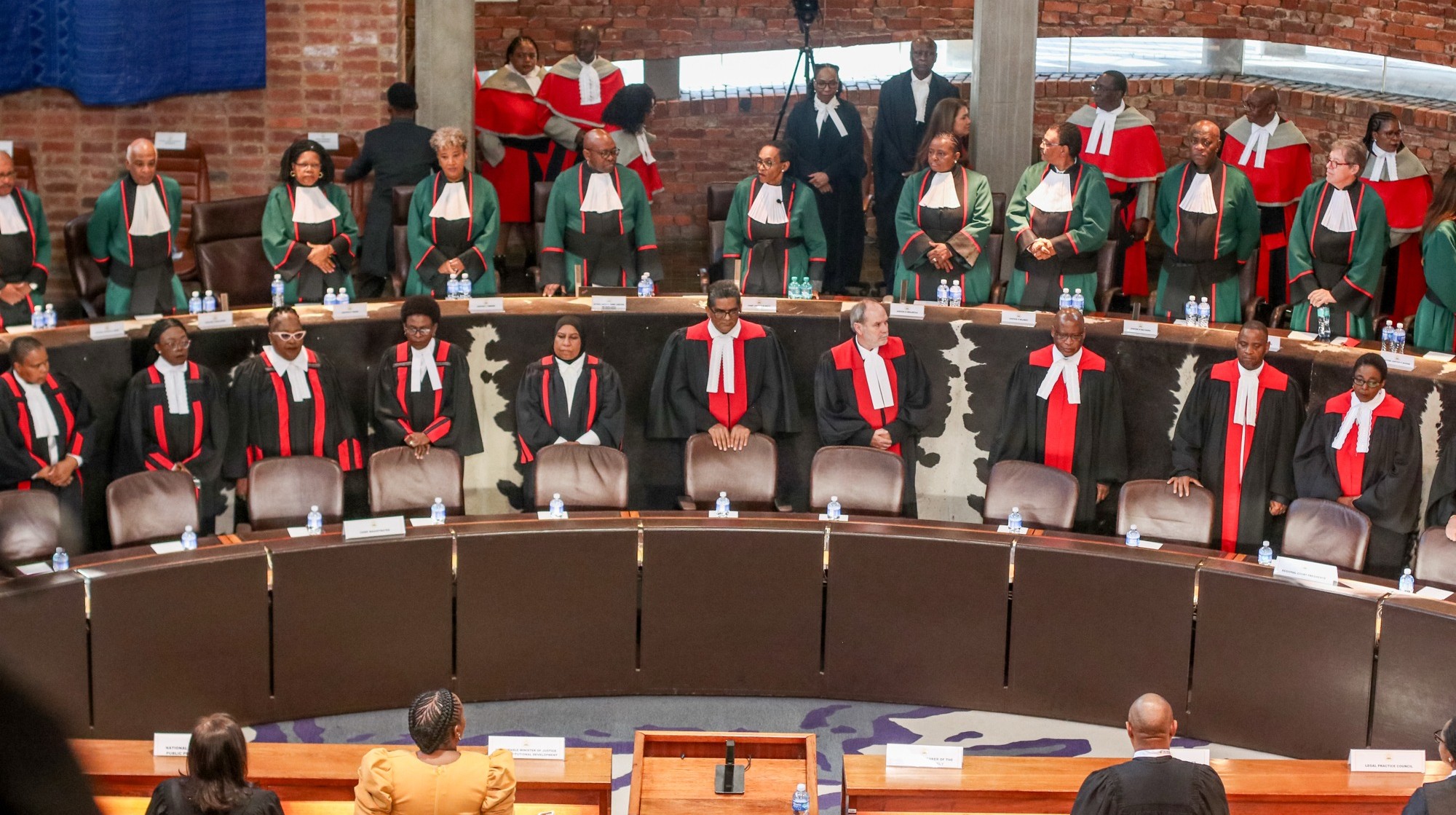
  • The Constitutional Court is being asked to decide whether South Africa’s duty to protect asylum seekers must adapt as global conflicts and risks of persecution change over time.
  • Lawyers for Human Rights and the Scalabrini Centre of Cape Town argue that the principle of non-refoulement is absolute, and that administrative or procedural barriers should never justify sending people back to harm.
  • With humanitarian crises intensifying in places like Sudan, the Democratic Republic of Congo and Palestine, the outcome of this case will help shape the future of refugee protection and dignity in South Africa.

South Africa’s highest court is now at the centre of a case that could redefine the country’s responsibilities towards people seeking refuge from danger.

The matter involves a group of asylum seekers who claim their risk of persecution has increased since arriving in South Africa, raising urgent questions about whether the state can lawfully deny protection when conditions in their home countries deteriorate. At stake is South Africa’s promise, enshrined in both domestic law and international agreements, never to return someone to face serious harm.

Lawyers for Human Rights represented the Scalabrini Centre as amicus curiae in the matter of Director-General: Department of Home Affairs and Others v AI and Others, heard by the Constitutional Court on 10 November 2025. The case focuses on South Africa’s obligations to individuals at risk of persecution, violence or harm due to changes in their home countries after they have fled.

As the organisations put it, “the case therefore goes to the heart of South Africa’s domestic and international legal obligation of non-refoulement, which prohibits the return of a person to a country where they may face persecution or serious harm.”

Non-refoulement and international law

The organisations point out that South Africa is bound by the 1951 Refugee Convention, the 1967 Protocol, the 1969 OAU Refugee Convention, Section 2 of the Refugees Act, and Section 12 of the Constitution. “The State may not deny individuals protection where there is the reasonable possibility of persecution or harm upon return,” their statement insists.

Lawyers for Human Rights and the Scalabrini Centre emphasise that “non-refoulement is absolute and applies regardless of procedural status.” They argue that South Africa must provide “fair, accessible, and meaningful procedures to assess new or changed circumstances,” and that “the Constitution requires a purposive and protective interpretation of the Refugees Act in line with international law.”

Human impact and the stakes

“In a world where conflict shifts rapidly, protection must shift with it,” they warn, urging the court not to view danger as a fixed point in time. The organisations caution that “administrative or procedural barriers cannot be used to justify the forced return of people facing serious harm.” They stress that “it is the risk that matters, not the paperwork,” a sentiment that resonates for those whose permits expired while they were hiding, healing or escaping renewed threats.

With humanitarian crises and displacement on the rise, the statement concludes that “South Africa’s commitment to protection is more critical than ever.” Lawyers for Human Rights have told the court that returning people to conflict zones “would betray the spirit of dignity that underpins our Constitution.”

Conviction.co.za 

Get your news on the go. Click here to follow the Conviction WhatsApp channel.

Asylum Seekers Constitutional Court Human Rights non-refoulement refugees
Share. Facebook Twitter Pinterest LinkedIn Tumblr Telegram Email
Conviction Staff Reporter

Conviction.co.za — Towards a Positive Impact on People

Related Posts

Evicted Durban tenants win urgent court order pending eviction challenge

June 2, 2026

Constitutional Court clears path for retrenched workers to approach Labour Court directly

June 1, 2026

Mbeki and Mabandla accuse TRC Commission of sidestepping court challenge

May 29, 2026
Leave A Reply Cancel Reply

Prove your humanity: 7   +   1   =  

Subscribe to our newsletter:
Top Posts

Making sectional title rules that work: A practical guide

January 17, 2025

Protection order among the consequences of trespassing in an ‘Exclusive Use Area’

December 31, 2024

Between a rock and a foul-smelling place

November 27, 2024

Irregular levy increases, mismanagement, and legal threats in a sectional title scheme

June 2, 2025
Don't Miss
Opinion
5 Mins Read

More than maintenance: Rand Water building trust through action

By Professor Anja Du PlessisJune 3, 20265 Mins Read

Prof Anja du Plessis argues that Rand Water’s recent maintenance programme demonstrates how planning, transparency and collaboration can strengthen public trust while securing Gauteng’s long-term water supply.

Farm for sale advert slammed for misleading jacuzzi, workshop and three-phase power claims

June 3, 2026

TVET college ordered to apologise for sharing personal information of employees

June 3, 2026

Judge calls for investigation into claims of body corporate capture in Maboneng

June 3, 2026
Stay In Touch
  • Facebook
  • Twitter
  • WhatsApp
Demo
About Us
About Us

Helping South Africans to navigate the legal landscape; providing accessible legal information; and giving a voice to those seeking justice.

Facebook X (Twitter) YouTube WhatsApp Twitch RSS
Latest posts

Making sectional title rules that work: A practical guide

January 17, 2025

Protection order among the consequences of trespassing in an ‘Exclusive Use Area’

December 31, 2024

Between a rock and a foul-smelling place

November 27, 2024
OUR PICKS

R13,914 debt triggers sale of R380 000 home, transfer halted amid execution flaws

April 20, 2026

Understanding employee rights, workplace protections and grievance resolution in South Africa

June 8, 2025

Agricultural advisors declared scientists in landmark Labour Court ruling

February 17, 2026
© 2026 Conviction.
  • Home
  • Law & Justice
  • Special Reports
  • Opinion
  • Ask The Expert
  • Get In Touch

Type above and press Enter to search. Press Esc to cancel.

Powered by
►
Necessary cookies enable essential site features like secure log-ins and consent preference adjustments. They do not store personal data.
None
►
Functional cookies support features like content sharing on social media, collecting feedback, and enabling third-party tools.
None
►
Analytical cookies track visitor interactions, providing insights on metrics like visitor count, bounce rate, and traffic sources.
None
►
Advertisement cookies deliver personalized ads based on your previous visits and analyze the effectiveness of ad campaigns.
None
►
Unclassified cookies are cookies that we are in the process of classifying, together with the providers of individual cookies.
None
Powered by