


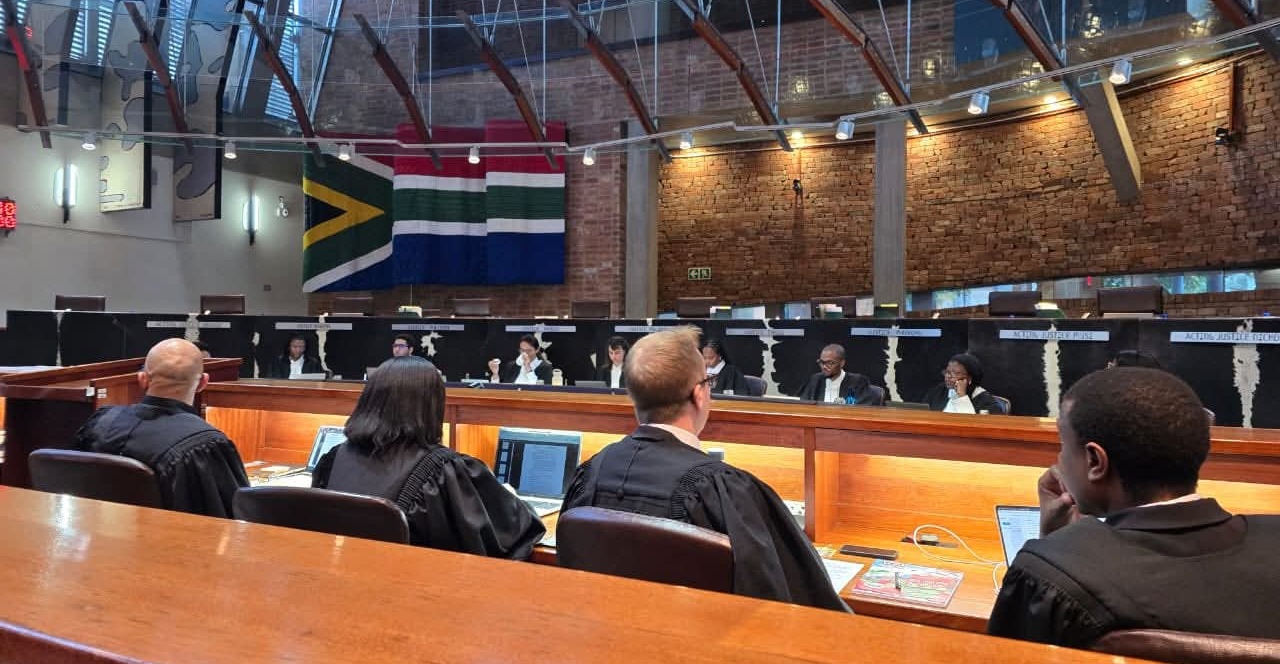
- These landmark cases changed core rights and set limits on how the State can use its power.
- They changed the law in areas such as criminal justice, housing, healthcare, equality, customary marriage, and government accountability.
- The principles from these cases still shape South African law and protect the rights of everyday people.
South Africa’s constitutional democracy has been shaped not just by the Constitution, but by landmark court cases where judges have had to interpret and enforce it.
Since the Constitutional Court’s first hearing in 1995, its decisions have changed the law on criminal justice, equality, housing, healthcare, and government accountability.
The cases below are among the most important decisions of the constitutional era. Some struck down laws. Others forced the government to change its policies, and some set out principles that still guide courts today, decades after South Africa transitions to democracy.
Together, these cases show how the Constitution moved from being a promise on paper to a tool that can change people’s lives.
1. S v Makwanyane: The death penalty declared unconstitutional
This landmark case questioned whether the State could impose the death penalty under the new Constitution. Makwanyane and Mchunu, both sentenced to death, challenged capital punishment as unconstitutional.
The court unanimously ruled the death penalty unconstitutional, emphasising the rights to life and dignity and the ban on cruel punishment. This established that the State’s power to punish must always respect constitutional rights.
2. S v Zuma: Presumption of innocence became a constitutional shield
This early case addressed a law that forced accused people to prove their confessions were not coerced. The burden of proof rested on the accused rather than the State.
The court struck down this provision, affirming the presumption of innocence as a core constitutional right. S v Zuma set the standard that the State must prove guilt and cannot shift this burden onto the accused.
3. Government of the Republic of South Africa v Grootboom: The right to housing became enforceable
Grootboom involved a community living in dire conditions and questioned whether the State was obliged to help those in urgent need of housing. Irene Grootboom and others demanded that the government fulfil their right to housing.
The court held that the State must take reasonable steps to realise the right to adequate housing, especially for people facing crises. This case set the standard for how socio-economic rights like housing must be realised.
4. Minister of Health v Treatment Action Campaign: HIV treatment became a constitutional battle
The Treatment Action Campaign challenged the government’s restrictions on giving nevirapine, a drug that reduced mother-to-child HIV transmission, to public patients. The case tested the right to healthcare against government policy.
The court found the government’s policy unreasonable and compelled it to expand access to treatment. This landmark ruling showed that courts can ensure government policies meet constitutional standards and directly improve people’s lives.
5. National Coalition for Gay and Lesbian Equality v Minister of Justice: Homosexuality could no longer be a crime
This case challenged laws criminalising consensual sex between adult men, arguing they were discriminatory and violated constitutional equality. It brought sexual-orientation discrimination directly before the court.
The court struck down the law, affirming equality, dignity, and autonomy for all. The ruling made clear that long-standing discrimination could not be justified under the Constitution.
6. Hoffmann v South African Airways: HIV status could not become a reason to deny employment
Jacques Hoffmann was denied a job as a flight attendant by South African Airways solely because he was HIV-positive, despite being medically fit. He challenged this as unfair discrimination under the Constitution.
The court agreed and ruled that SAA’s policy was unfair and based on prejudice. The judgment affirmed that employment decisions must be based on actual ability, not stereotypes or stigma around HIV.
7. Minister of Home Affairs v Fourie: Same-sex couples won the right to marry
Although the Constitution banned discrimination by sexual orientation, marriage laws still excluded same-sex couples. In Fourie, the Constitutional Court was called to decide if this exclusion could stand.
The court ruled the exclusion unconstitutional and gave Parliament time to fix the law, resulting in the Civil Union Act. This case secured the right for same-sex couples to marry and set a milestone for equality.
8. Gumede v President of the Republic of South Africa: Customary marriage could not mean unequal property rights for women
Elizabeth Gumede challenged the property rules in customary marriages that left women with unequal rights compared to men. The case focused on marriages before the Recognition of Customary Marriages Act.
The court found these rules discriminated against women and declared them invalid. Gumede confirmed that customary law must align with the Constitution’s principles of equality and dignity.
9. Glenister v President: Fight against corruption became a constitutional obligation
Glenister challenged whether the government’s anti-corruption body was independent and effective enough to meet constitutional requirements. The main issue was whether the State’s anti-corruption measures truly met its obligations.
The court ruled that South Africa must have a genuinely independent anti-corruption body as a constitutional duty. Glenister established that effective anti-corruption institutions are not optional but required by the Constitution.
10. Economic Freedom Fighters v Speaker: The President could be held accountable
The Nkandla case tested if the President could be held accountable for failing to implement the Public Protector’s remedial action around spending on Jacob Zuma’s private residence. The Economic Freedom Fighters and others took the matter to court.
The court found the president had violated his constitutional duties and reinforced that no one, not even the President, is above the law. This ruling strengthened democratic accountability and the authority of oversight institutions.
Get your news on the go. Click here to follow the Conviction WhatsApp channel.
