


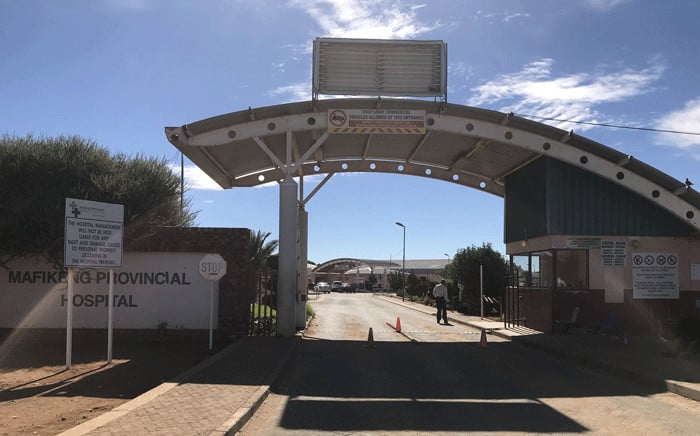
- The High Court in Mahikeng overturned a trial court ruling that had dismissed a teacher's medical negligence claim.
- Judges found that repeated treatment failures at two public hospitals were negligent, not just simple errors of judgment.
- The North West Health MEC has been declared fully liable for the teacher's proven or agreed damages
A schoolteacher who was left permanently brain damaged after delays in treating stab wounds has won his appeal against the North West MEC for Health and Social Development. The High Court in Mahikeng ruled that public hospitals cannot escape liability by describing negligent treatment as an "error of judgment".
Judge A Reddy, with Acting Judge JT Maodi and Acting Judge G Maree concurring, found that the trial court materially misdirected itself by characterising the failures of medical staff at Gelukspan District Hospital and Mafikeng Provincial Hospital as errors of judgment rather than negligence.
The appeal court upheld Tebogo Joseph Koboyatau's appeal, set aside the earlier judgment and held the MEC liable for 100% of his proven or agreed damages.
Stabbing led to prolonged delays
Koboyatau, then a 29-year-old teacher at Ikopanyeng Secondary School, was stabbed in the left upper chest and arm on 28 June 2014.
After receiving initial treatment at Setlagole Clinic, he was transferred to Gelukspan District Hospital. The referral letter described him as seriously ill, suffering from shortness of breath, weakness and bleeding, and warned that internal bleeding was suspected.
Despite those warning signs, no chest X-ray was performed on the evening of his admission, and no intercostal drain (ICD) was inserted until about 12 hours later. The appeal court found that this delay allowed blood to accumulate and clot inside his chest.
Hospital records later showed that the ICD had become non-functional, while an X-ray taken on 1 July 2014 revealed opacity of the lower lobe of the left lung and that the lung had failed to expand. The judges found there was no evidence that any doctor intervened to correct the problem during the following four days.
When Koboyatau was eventually transferred to Mafikeng Provincial Hospital on 5 July 2014, doctors recorded that he had a retained and infected haemothorax with mediastinal shift after pus was discovered in the chest drain.
Although surgery was required, a thoracotomy was only performed on 21 July 2014, 23 days after the original stabbing. Shortly after the operation, Koboyatau suffered a cardiorespiratory arrest that caused hypoxic ischaemic brain damage.
He was left with permanent cognitive impairment, neuropsychological and neuro-behavioural disorders, visual impairment and partial incontinence.
Appeal court draws the line
The central issue before the appeal court was whether the failures by hospital staff amounted to negligence or were merely errors of judgment. The judges concluded that the trial court had applied the wrong legal standard.
"The trial court's characterisation of the hospital personnel's conduct as mere errors of judgment, rather than negligence, constituted a demonstrable and material misdirection," Judge Reddy wrote.
The judgment emphasised that not every medical mistake amounts to negligence. However, an error that no reasonably competent medical practitioner would have made crosses the line into negligence.
The judges said five medical experts concluded that the treatment provided to Koboyatau was negligent and substandard, while only one expert substantially disagreed. That expert, Professor Koto, had already been criticised by the trial court itself.
"The trial court criticised Professor Koto as a less impressive witness who attempted to usurp the function of the court and who was 'a lone wolf in the desert' in opining that Koboyatau did not constitute a medical emergency," the appeal judgment noted.
Treating doctor's explanation rejected
The court also rejected evidence from Dr Motsei, who treated Koboyatau when he arrived at Gelukspan District Hospital. Motsei claimed Koboyatau had been too restless to undergo an X-ray or have an ICD inserted immediately.
The judges found that explanation was contradicted by the medical records, which recorded the instruction, "For chest X-ray when awake." Judge Reddy said the explanation was "an afterthought designed retrospectively to justify the failure to perform an urgent chest X-ray and insert an ICD".
The court noted that Motsei conceded that, had an X-ray been performed earlier and confirmed a haemothorax, he would have inserted the drain immediately. He also accepted that once the drain stopped functioning, the patient should ideally have been referred to a higher-level hospital.
Failures at both hospitals
The appeal court identified multiple acts of negligence during Koboyatau's treatment. These included failing to perform an immediate chest X-ray and insert an ICD when he arrived at Gelukspan District Hospital, failing to monitor and deal with the blocked drain after 1 July 2014, failing to refer him promptly for specialist treatment and failing to perform urgent surgery after his transfer to Mafikeng Provincial Hospital.
The judges found the delay in surgery particularly troubling. "We take the position that the delay in performing the thoracotomy after Koboyatau's admission to the Mafikeng Hospital was unprecedented and constitutes negligence," the judgment states.
The court also accepted unchallenged expert evidence that a rupture of Koboyatau's urethra during catheter insertion reflected substandard care.
Experts linked delays to devastating outcome
Medical experts agreed that prompt treatment would probably have prevented the complications that followed. The appeal court found that the delayed insertion of the chest drain allowed blood to clot, the failure to deal with the blocked drain led to infection, and the prolonged delay before surgery caused Koboyatau's condition to deteriorate over 23 days.
By the time surgery was eventually performed, he had become a high-risk patient. "The cardiorespiratory arrest that followed the thoracotomy was the direct and foreseeable consequence of 23 days of progressive deterioration attributable to negligent inaction," Judge Reddy wrote.
The judges also drew an adverse inference against the MEC because medical staff who treated Koboyatau during critical periods of his hospitalisation were not called to testify.
Similarly, the MEC failed to call two expert witnesses whose reports supported findings of negligence, without providing any explanation. The court concluded that their evidence would likely have been unfavourable to the MEC's case.
Appeal upheld
The appeal court overturned the trial court's judgment and declared the North West MEC for Health and Social Development liable for 100% of Koboyatau's proven or agreed damages arising from negligent treatment at Gelukspan District Hospital and Mafikeng Provincial Hospital.
The MEC was also ordered to pay the costs of the trial, the application for leave to appeal and the appeal, including the costs of senior counsel and the appellant's expert witnesses on Scale C.
Get your news on the go. Click here to follow the Conviction WhatsApp channel.
