


- The "mandament van spolie" is about restoring possession, not deciding who owns or deserves the property.
- Police presence alone does not make an eviction lawful. A court order is always required.
- Courts may structure how restoration happens in difficult cases, but they cannot refuse restoration.
If you are removed from your home without a court order in South Africa, the law gives you a quick and powerful remedy known as the “mandament van spolie.”
This remedy is intentionally strict to prevent people from taking the law into their own hands. Its purpose is to uphold legal process and the rule of law, rather than to resolve arguments about fairness or ownership.
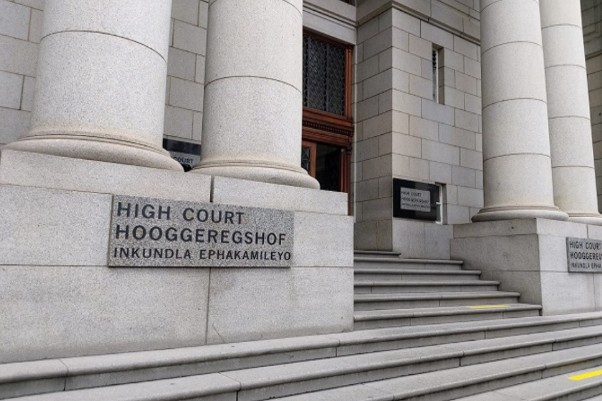
A recent Western Cape High Court case, Muhammad and Others v John and Others, shows how the courts apply this remedy. Even when children are involved, police are present, or there is real hardship, the courts require that illegal evictions be reversed first. Only then do they consider the human consequences.
What the “mandament van spolie” actually protects
The “mandament van spolie” does not care who owns the property, who pays the bond, or who has the better legal right to live there. The only question is whether the applicants, Hamid Alli Muhammad, Ahmed Fraz Talib, Hamza Shahbaz and Hammad Ali Cheema, were in peaceful and undisturbed possession, and whether that possession was taken away unlawfully.
Acting Judge A Bhoopchand described it as “a summary remedy designed to restore factual possession without regard to the merits of the underlying dispute, the lawfulness of the occupation, or the contractual rights of the parties.”
Even someone who may be lawfully evicted later is entitled to immediate restoration if they were removed without a court order. The law insists that disputes are settled by following due legal process, not by force or shortcuts.
The court emphasised that it is not about sympathy or blame. “It is not a remedy for who deserves to be in the house,” Judge Bhoopchand said. Instead, it is the legal system’s firewall against self-help, making sure that unlawful acts are undone first and that arguments about fairness come later.
How the Bothasig dispute happened
In this case, the applicants were living in a property in Bothasig with a main dwelling, a garage, and an outhouse. The fourth applicant, Cheema, had signed the lease in 2023 but was later incarcerated, so he was not there at the time. The first, second, and third applicants, along with others, were living in the main house peacefully.
On 1 January 2026, the respondents, Linda and Augustine John, returned from overseas and, with the help of the South African Police Service, removed the applicants and other occupants from the property. No court order authorising eviction had been granted.
The respondents said the occupants left voluntarily, but the court found otherwise. “The presence of SAPS and the fact that several occupants fled or sought refuge on the roof strongly suggest the departure was not voluntary,” Judge Bhoopchand said. Without a court order, the removal was unlawful, triggering the “mandament van spolie.”
“The unlawful act has to be undone, and then everything else can be considered subsequently,” the court said, showing how strict this rule is.
Hardship and children do not stop restoration
This judgment is also important for how it deals with hardship, especially when children are involved. The respondents told the court they had two children and could not afford to keep living in temporary accommodation while paying their mortgage. The court recognised these problems but said hardship cannot justify breaking the law.
“The mandament van spolie remains one of the law’s most unyielding remedies,” Judge Bhoopchand said. Courts cannot refuse restoration just because it would be difficult or painful.
But the court also rejected the idea that it must act with mechanical indifference to human dignity. While the law cannot change the substance of the remedy, the court has some discretion to structure how restoration happens, especially to avoid immediate hardship to children.
In this case, the court ordered the applicants’ possession of the main dwelling restored under the Sheriff’s supervision. To reduce immediate hardship, the respondents could occupy the outhouse and garage for a temporary period of 21 days.
The court made clear this did not create any rights of occupation and could not be relied on in future. “Such a limited, humane accommodation does not alter the substance of the remedy, nor does it legitimise self-help,” Judge Bhoopchand said.
Spoliation is not eviction under PIE
The judgment also draws a clear line between spoliation and eviction under the Prevention of Illegal Eviction from and Unlawful Occupation of Land Act. Spoliation is only about restoring possession when it was taken unlawfully. Eviction cases require notice, municipal involvement, and the court must decide if the eviction is just and equitable.
The respondents tried to bring an urgent eviction application under Section 5 of PIE, but the court struck it from the roll due to lack of urgency and other requirements, such as not joining the municipality. The court said the respondents could bring a proper eviction application under Section 4 of PIE if they followed the law.
Get your news on the go. Click here to follow the Conviction WhatsApp channel.
