


- A woman who spent nearly three decades in a permanent life partnership obtained interim maintenance after the relationship ended, with the court finding she had established a prima facie right to support pending trial.
- The respondent attempted to resist the application through legal objections without filing an answering affidavit, but the court held that factual disputes about the relationship must be resolved at trial.
- Judge G Da Silva Salie ruled that preserving the status quo was necessary because the applicant had historically been financially supported and faced hardship if interim maintenance stopped.
A woman who spent nearly three decades in a permanent life partnership has secured interim maintenance after the relationship ended, and she turned to the courts for support.
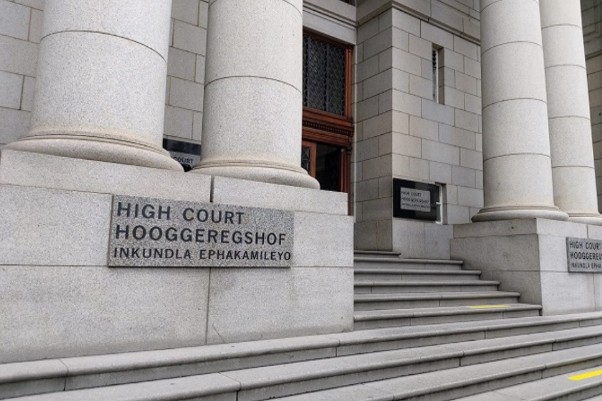
TheHigh Court in the Western Cape ruled that her uncontested evidence of a long-term relationship, shared children, and financial dependence established a prima facie right to interim maintenance while her main claim proceeds to trial.
Judge G Da Silva Salie rejected the respondent’s challenge to the court’s jurisdiction, stating that legal objections cannot substitute for an answering affidavit when factual disputes must be resolved at trial.
A longstanding relationship
The dispute centred on whether a woman was entitled to temporary financial support after the end of a 29-year permanent life partnership. She approached the court for interim maintenance while her primary action for maintenance and patrimonial relief is pending.
Judge Da Silva Salie made it clear that the court was not deciding the parties’ final legal rights at this stage. Instead, the question was whether the applicant had shown enough to justify temporary relief while the main dispute is resolved.
The judge noted, “This application concerns interim maintenance pendente lite arising from the termination of a long-standing life partnership of some 29 years.”
Key facts before the court
According to the undisputed facts, the parties began their relationship in 1984 and entered into a life partnership in 1991. They lived together, raised two children, and presented themselves publicly as spouses.
The applicant said she devoted her time primarily to caring for the home and children, while the respondent was the main breadwinner, providing financial support for decades.
The judgment records that the couple conducted themselves much like married spouses, sharing a home and financial responsibilities while raising their children.
The applicant also alleged that the respondent described her as his “lifelong partner” in his will and referred to her as his wife in several documents.
Their relationship ended in October 2020. The applicant claimed that when the partnership ended, the respondent gave a written undertaking to continue maintaining her financially, and that he did so for approximately three years before reducing and ultimately stopping some payments.
This prompted her to bring a civil action for maintenance and patrimonial relief arising from the life partnership.
Jurisdiction challenge dismissed
The respondent did not file an answering affidavit disputing the applicant’s account. Instead, he raised legal objections under Rule 6(5)(d)(iii), including that the court lacked jurisdiction because he now lives in Tanzania. Judge Da Silva Salie dismissed this argument, noting that the respondent had already participated in the main action and filed a counterclaim, effectively submitting himself to the court’s jurisdiction.
The judgment states, “Where a court has jurisdiction in the principal action, it retains jurisdiction in ancillary or incidental matters arising therefrom.” Because the interim maintenance application was linked to the main action, the jurisdiction objection was dismissed.
Legal objections cannot replace factual disputes
The respondent attempted to challenge the legal basis of the applicant’s claim without responding to her factual allegations. The court held that while Rule 6(5)(d)(iii) allows legal points to be raised, it does not allow a party to sidestep key factual disputes.
Judge Da Silva Salie explained that the applicant’s claim was grounded in a decades-long life partnership, an alleged promise to maintain her, and reciprocal duties of support—matters requiring factual determination, not just legal argument.
As a result, the court accepted the applicant’s factual allegations for the purposes of the interim application: “In the absence of an answering affidavit, the applicant’s factual averments stand for purposes of interim relief.”
Prima facie right to interim maintenance
To obtain interim maintenance, the applicant had to demonstrate a prima facie right to relief, a risk of harm if maintenance was not granted, and that the balance of convenience favoured granting the order.
She relied on two legal grounds: that the respondent expressly undertook to maintain her after their relationship ended, and that permanent life partnerships may create reciprocal duties of support.
The court referred to Constitutional Court decisions recognising that permanent life partnerships may attract legal recognition when constitutional rights require protection.
Judge Da Silva Salie found that the uncontested facts showed a long relationship involving shared children, cohabitation, and financial dependence. At this stage, the applicant was not required to prove her full claim, only that she had a prima facie right, even if open to some doubt. The judge concluded, “On the undisputed papers, she has done so.”
Preserving the status quo
The court also found that the applicant faced financial hardship if the respondent’s maintenance payments stopped. The respondent had provided no evidence to challenge his previous support or his ability to continue making payments.
Judge Da Silva Salie stated, “The deprivation of established maintenance in circumstances of dependency constitutes sufficient apprehension of harm to justify interim protection.” The balance of convenience, therefore, favoured preserving the existing financial position between the parties until the trial determines their final rights.
The court dismissed the respondent’s jurisdiction objection and ordered him to continue making payments in terms of the interim maintenance order, pending the outcome of the main action.
Get your news on the go. Click here to follow the Conviction WhatsApp channel.


