


- The High Court finds that using isiXhosa in court is not inherently disrespectful and was “not shown to be wilful misconduct undermining proceedings”.
- The magistrate “purported to exercise a jurisdiction that the court did not have” by relying on common law contempt and an unlawful summary process.
- Proceedings ruled materially irregular, with “cumulative defects” that made the case “unjust and incapable of being salvaged”, leading to it being set aside in full.
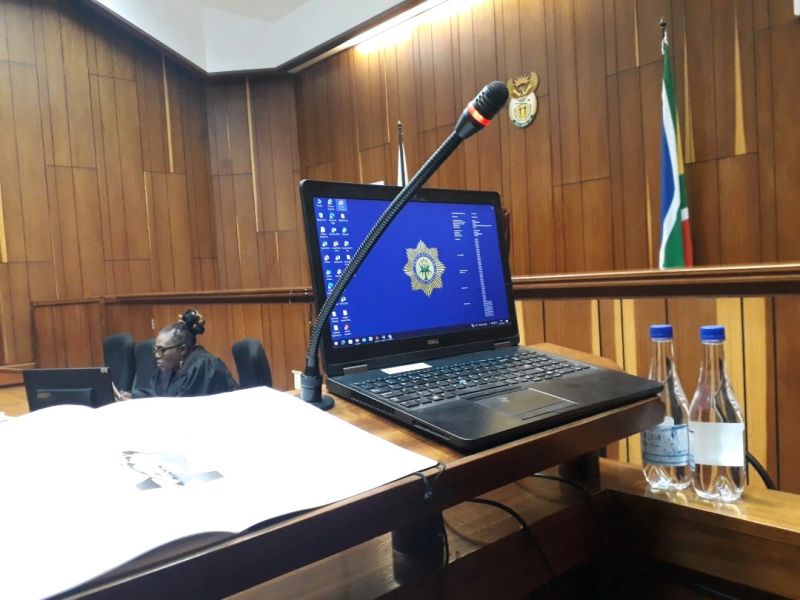
A magistrate tried to hold a Legal Aid lawyer in contempt simply for speaking isiXhosa during a court hearing. The High Court in Bhisho has thrown out the case, ruling that using one of South Africa’s official languages in court is not disrespectful and cannot be treated as misconduct.
The review court found that the process was legally unsound from the start and based on a mistaken belief that speaking a vernacular language amounted to disrespect. It held that the use of an official language cannot, without more, constitute contempt.
Judge B Hartle concluded that the magistrate exceeded her authority, confused common law and statutory contempt procedures, and initiated a process the lower court had no jurisdiction to pursue. Judge Hartle said the presiding officer “purported to exercise a jurisdiction that the court did not have”, describing this as “a gross irregularity in the proceedings”.
At the centre of the matter was Legal Aid attorney Luvuyo Melani, who switched to isiXhosa during a noisy bail hearing when the magistrate repeatedly indicated she could not hear him over the sound of an air conditioner.
Instead of facilitating interpretation, the magistrate warned that speaking isiXhosa was “bringing this court into disrepute” and moved to invoke contempt proceedings. The High Court found that the reaction was legally misplaced and unsupported by the facts.
Contempt powers are strictly limited
Judge Hartle stressed that magistrates’ courts do not possess broad or inherent contempt powers. Their authority is confined to Section 108 of the Magistrates’ Courts Act, which allows summary punishment only for clearly defined, wilful conduct such as insults, deliberate interruptions, or behaviour that genuinely disrupts proceedings. A lower court, Judge Hartle emphasised, “has no inherent right to punish an offender summarily for contempt of court.”
Despite this, the magistrate told Melani she was acting under the common law while employing a summary procedure. The High Court found that this conflation was fatal. “Without even going further,” Judge Hartle wrote, “this constitutes a gross irregularity in the proceedings inasmuch as she purported to exercise a jurisdiction that the court did not have.” The absence of lawful authority meant the process could not stand.
Language rights and courtroom reality
The court also rejected the assumption that vernacular speech is inherently improper. South Africa’s constitutional framework recognises multiple official languages and protects the right of court users to understand and be understood. While English may serve as the language of record for practicality, that does not prohibit litigants or practitioners from addressing the court in another official language where interpretation is available.
Judge Hartle observed that the episode illustrated how “tone deaf courts have become to other languages intruding into the monolingual court space”, warning that such attitudes risk marginalising those who rely on interpretation to participate meaningfully in proceedings. Treating isiXhosa as misconduct, Judge Hartle suggested, undermines access to justice rather than protecting the dignity of the court.
On the facts, the court found no evidence of deliberate disruption. Speaking isiXhosa “in circumstances of communication difficulty”, Judge Hartle held, was “not shown to be wilful misconduct undermining proceedings”.
A moment that escalated too fast
The transcript reflected confusion rather than defiance. Both the magistrate and the practitioner struggled to hear each other over background noise. Melani’s request to use the interpreter was an attempt to ensure he was properly understood, not to challenge the authority of the bench.
Judge Hartle remarked that “a little forethought and patience might have saved the day”, noting that an adjournment or proper interpretation could easily have resolved the problem. There was no indication that the bail proceedings were actually disrupted or that the administration of justice was threatened. Summary contempt powers, the court emphasised, are meant for immediate and serious disruptions, not misunderstandings.
Fair trial safeguards ignored
Even if Section 108 had applied, the process still failed basic safeguards. Melani was not clearly informed which statutory category of contempt he allegedly violated or why his conduct qualified. The magistrate shifted between legal bases and later referred the incomplete matter to the High Court for “advice”, something Judge Hartle said is not the purpose of review proceedings.
Taking everything together, the judge concluded that “the cumulative defects rendered the process unjust and incapable of being salvaged”. The only appropriate remedy was to set the proceedings aside entirely.
The Eastern Cape High Court accordingly declared the contempt proceedings irregular and overturned them in full.
Get your news on the go. Click here to follow the Conviction WhatsApp channel.
