


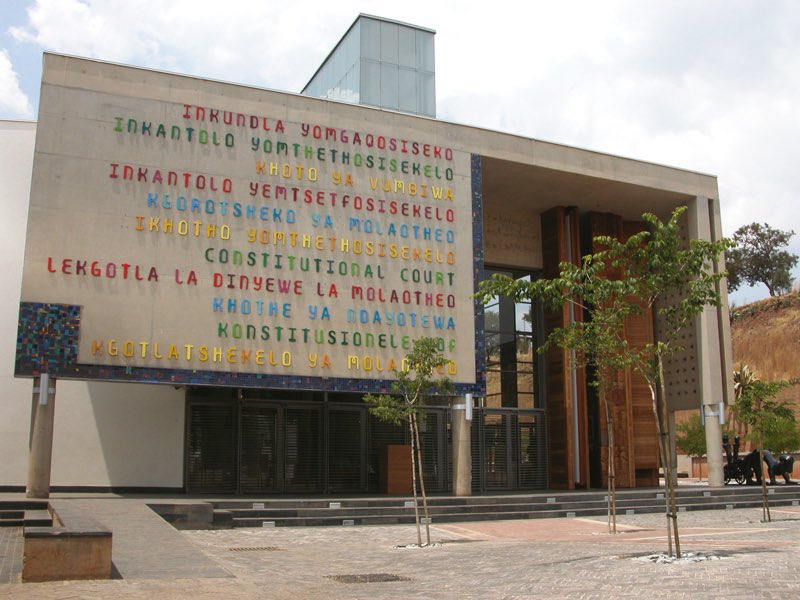
- The asylum seeker judgment has intensified debate about whether judicial decisions adequately reflect South Africa’s social and economic realities.
- Public confidence in the judiciary depends on balancing constitutional obligations with an awareness of social cohesion, state capacity and national stability.
- Judicial independence remains essential, but clear communication and greater sensitivity to the consequences of rulings could help sustain public trust.
Mahatma Gandhi, who was a lawyer, an anti-colonial nationalist, and a political ethicist, once opined that “there is a higher court than courts of justice, and that is the court of conscience. It supersedes all other courts.”
At this critical moment of a Constitutional Court judgment on asylum seekers, many South Africans seem to align themselves with that dictum. It is a widely accepted fact that South Africa’s judiciary, particularly the Constitutional Court, is rightly celebrated as the guardian of constitutional democracy. Its central duty is to uphold the Constitution, protect rights, and act as a check on executive and legislative excesses.
But society is seized with an unavoidable question regarding the role of the judiciary, and the Constitutional Court in particular: can the courts faithfully apply the law while appearing increasingly disconnected from the lived realities of the people in whose name justice is administered?
Constitutional rights and the realities of everyday life
Pointedly, South Africans are pondering whether, while these decisions are grounded in constitutional and international legal obligations, they are cognisant of the realities of unemployment, limited public services, housing shortages, crime, and economic exclusion. The lived reality across communities is that there is real competition for scarce economic opportunities, and rulings perceived to expand protections for non-citizens often generate resentment and deepen social tensions.
While it may not be fair to blame the courts directly for outbreaks of violence or unjustified attacks on foreign nationals, it would be equally naïve to pretend that judicial decisions exist in a vacuum. Judgments have political, social, and economic consequences, particularly in a society as fragile and unequal as South Africa.
Public confidence and the legitimacy of the courts
Understandably, the role of the judiciary and the courts is concerned with the application of the law and the administration of justice, not with public opinion.
Constitutionally, that is correct. But constitutionalism cannot survive on legal reasoning alone. Courts derive their authority not merely from the text of the Constitution, but also from public confidence in the legitimacy of their role. When large segments of society begin to perceive the judiciary as indifferent to their concerns, that legitimacy comes under strain.
The problem is not that courts protect rights. The problem is the growing perception that they frequently elevate abstract rights above practical realities. In migration-related matters, courts may correctly identify legal entitlements without giving sufficient weight to questions of state capacity, social cohesion, or the cumulative effects of their decisions on already overburdened communities.
The result is a widening gap between constitutional ideals and public sentiment. Let’s face it, South Africa’s constitutional project was never intended to be a purely legal exercise. It was also a nation-building exercise. The Constitution seeks to unite a divided society, not merely regulate it. Every institution of state, including the judiciary, carries a responsibility to contribute to social cohesion and national stability.
The unfortunate position we face now is that some court decisions, such as the current one, are increasingly viewed as reflecting a form of judicial universalism that prioritises broad human rights principles while paying insufficient attention to the obligations of citizenship, national interest, and the state’s capacity to fulfil competing obligations. Believe it or not, this is a real perception that prevails under the circumstances in our society today.
Judicial independence without social isolation
The reality that our legal fraternity must face is that a judiciary that is legally correct but socially isolated risks losing the moral authority on which its effectiveness ultimately depends. The commitment that endures across society is not to weaken judicial independence or subordinate courts to populist pressures. That would be disastrous. The challenge is to cultivate a judiciary that remains constitutionally faithful while becoming more attuned to social realities.
The message that society is sending is that courts should be more willing to consider the practical consequences of their rulings, particularly where issues of immigration, resource allocation, and public administration are concerned. They should recognise that rights are exercised within a real society, not an abstract constitutional laboratory. Judicial reasoning should reflect a deeper appreciation of how legal outcomes affect social stability, public trust, and the state’s ability to govern effectively.
Rebuilding trust through clearer judicial communication
We cannot overemphasise the need for the judicial fraternity to communicate more persuasively and simply with the public. Too often, controversial judgments are delivered in highly technical language that fails to address the legitimate anxieties of ordinary citizens. A court that explains not only what it has decided, but also why its decision serves both constitutional values and the broader public good is more likely to maintain public confidence.
Protecting the Constitution and South Africa’s social compact
We accept the fact that South Africa does not need activist courts that govern from the bench, nor does it need courts that surrender to public anger. It needs courts that understand the difference between independence and isolation. Judicial independence is strengthened, not weakened, when judges demonstrate an awareness of the social consequences of their decisions. In the end, the greatest danger facing the judiciary is not criticism. It is irrelevance.
If citizens increasingly conclude that the courts are more responsive to legal abstractions than to national realities, public trust will steadily erode. The judiciary’s long-term legitimacy depends not only on defending constitutional rights but also on convincing South Africans that those rights can coexist with social cohesion, national stability, and the legitimate aspirations of citizens.
A responsible judiciary in twenty-first-century South Africa must therefore be more than the guardian of the Constitution. It must also be a conscious steward of the nation’s fragile social compact, ensuring that justice strengthens, rather than inadvertently weakens, the bonds that hold the country together.
Get your news on the go. Click here to follow the Conviction WhatsApp channel.
The opinions expressed in this article are solely those of the author and do not necessarily reflect the views of Conviction.co.za
