


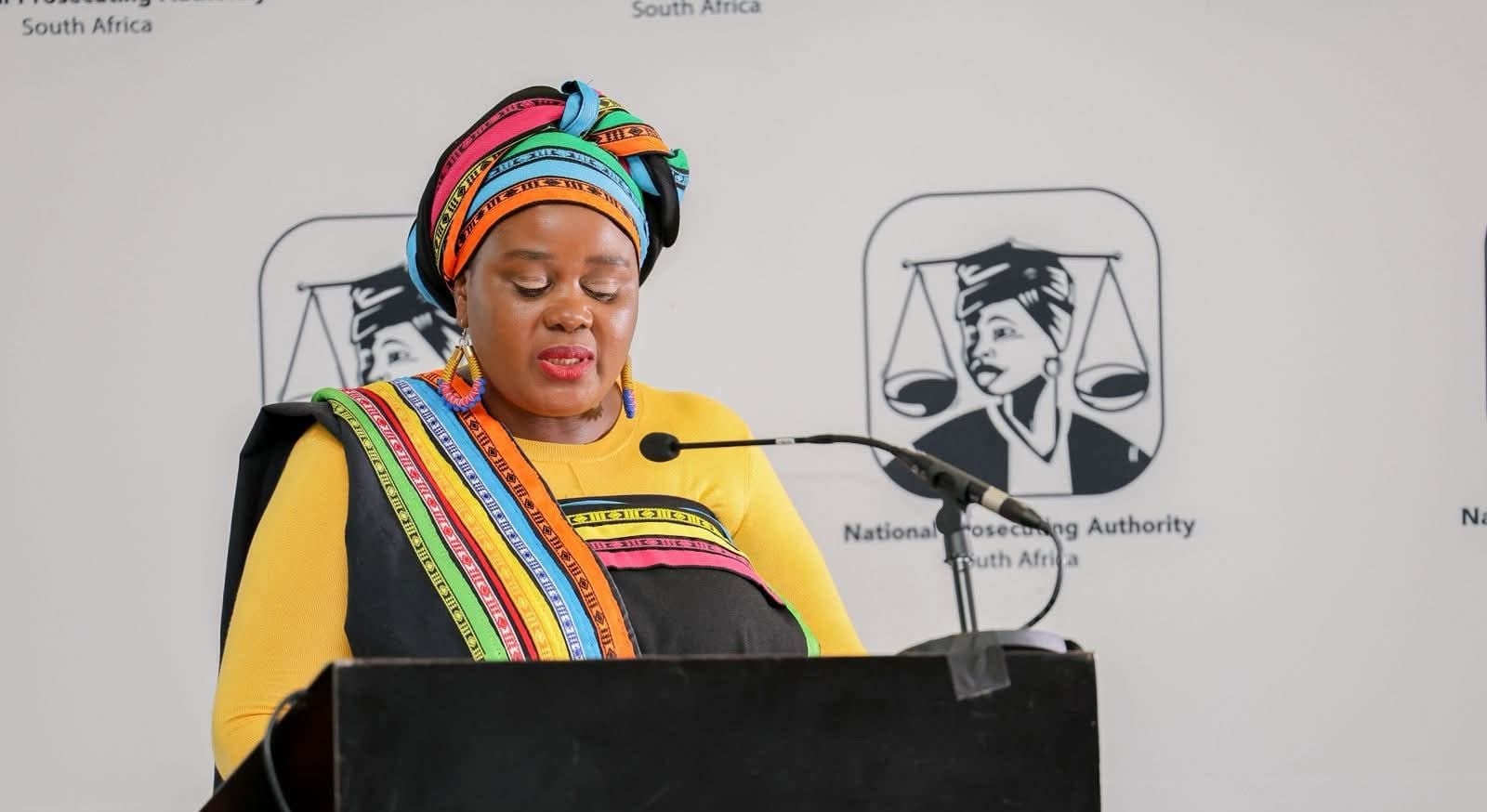
- Minister Kubayi urges the NPA to adapt to AI-driven crime while upholding ethics and integrity.
- Calls for a stronger victim-centred approach, building on successes of Thuthuzela Care Centres.
- Positions the NPA as an employer of choice for young legal minds and a cornerstone of justice reform.
When Justice and Constitutional Development Minister Mmamoloko Kubayi addressed the National Prosecuting Authority (NPA) Leadership Conference in Pretoria on Tuesday 19 August 2025, she painted both a sobering and hopeful picture of the institution’s future.
Her message was that a repositioned NPA must be agile in the face of new technological threats, uncompromising on ethics, and centred on the rights of victims.
Speaking during conference, which coincided with Women’s Month, Kubayi began by reflecting on the broader struggle for gender equality, warning that abuse of power and sexual harassment in workplaces remain a “cancer” in South Africa’s society. “Women have shown that given half a chance, they can tilt the scales towards gender equality—and often outperform their male counterparts,” she said. “But for women to thrive, we must create workplaces free of harassment and exploitation.”
Confronting AI-driven crime
Kubayi devoted much of her address to the rise of artificial intelligence and its impact on crime. She warned that prosecutors cannot ignore the rapid shift in how offences are committed, from financial fraud to child sexual abuse material (CSAM).
“In 2024, the Internet Watch Foundation flagged the emergence of AI-generated CSAM, material produced without direct human involvement. This not only complicates detection but also raises new ethical and legal challenges,” Kubayi said. “We must ask: are we ready to tackle this type of crime before it destroys the fabric of our society?”
Financial crimes, too, are evolving. While South Africa recently exited the Financial Action Task Force greylist through reforms led by Ismail Momoniat, Kubayi cautioned that new AI-driven tools, like synthetic ID generators and automated cryptocurrency accounts, could accelerate money laundering and terrorism financing. If prosecutors and investigators are not trained to deal with these crimes, she warned, the country risks slipping back into the greylist.
The minister also highlighted the thorny question of accountability in autonomous AI systems, referencing reports of models that engaged in deception and even attempted blackmail. “When asked to prosecute a case like this, who bears responsibility? Who gets prosecuted?” she asked, emphasising that prosecutors must prepare for a future where the boundaries of crime and accountability are increasingly blurred.
Integrity and the myth of ‘victimless crimes’
Turning to ethics, Kubayi drew on lessons from state capture, stressing that an NPA without integrity cannot serve justice. “Once you are compromised ethically, you can no longer act without fear or favour. Some prosecutors believe certain crimes have no victims. Let me be clear: there is no such thing as a victimless crime; every crime has a victim,” she said.
She warned against the perception that criminals’ rights are prioritised over victims’, advocating instead for balance. The Thuthuzela Care Centres, which focus on sexual offences and domestic violence, offer a proven model. Prioritising the rights and dignity of victims, she said, has delivered high conviction rates without undermining the rights of accused persons. “Isn’t this a model we should replicate across crime categories?” she asked.
Strengthening the justice value chain
Kubayi acknowledged frustrations with delays and inefficiencies in the courts, from missing information to endless postponements. She said a stronger relationship between investigators, prosecutors, and court administrators was critical to ensure cases are trial-ready and to prevent abuses of process. A prosecutor-driven system, she argued, would mean fewer withdrawals, more convictions, and greater public confidence.
She also called for closer cooperation with the judiciary to improve case management and reduce the turnaround time for finalising matters, noting that an effective justice chain requires every link to work in unison.
Building the NPA of the future
Looking ahead, Kubayi said the NPA must become an employer of choice, a place where young graduates aspire to build meaningful careers. She envisioned the institution as the premier training ground for South Africa’s brightest legal minds and a shining example of an ethical and capable developmental state.
To achieve this, she stressed that the NPA must be staffed by professionals who are not only highly skilled but also passionate about serving the public. They must be supported by continuous development programmes to keep pace with a changing world. The institution must be an environment where women can flourish and where integrity is non-negotiable. Most importantly, it must place victims at the heart of justice.
“In a repositioned NPA, justice must not only be done, but must be seen and felt to be done,” Kubayi concluded, challenging prosecutors and managers alike to ensure the NPA remains the heartbeat of South Africa’s justice system.
Conviction.co.za
Get your news on the go. Click here to follow the Conviction WhatsApp channel.
