


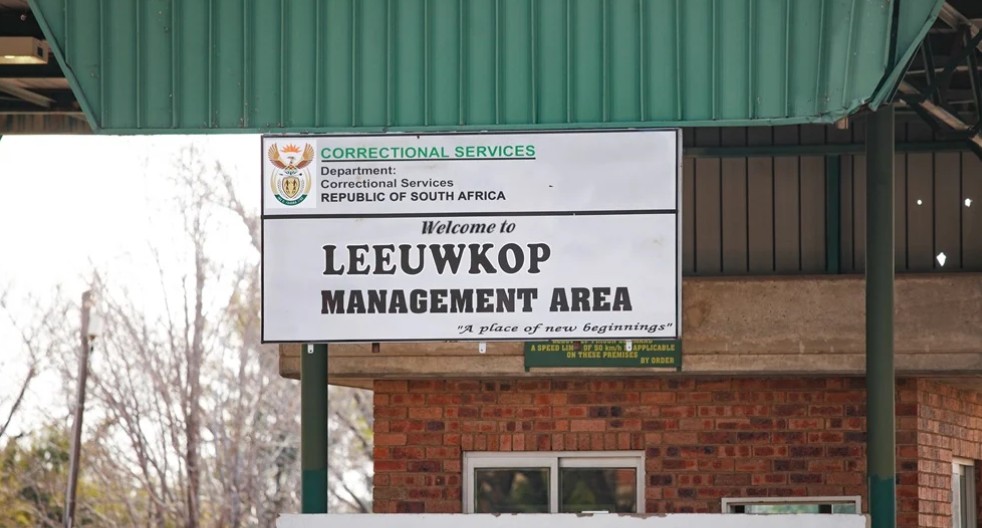
- Lawyers for Human Rights and Webber Wentzel are back in court defending five former inmates in the Leeuwkop torture appeal.
- The Johannesburg high court previously found the minister fully liable for assault and torture under the Prevention and Combating of Torture of Persons Act.
- The Supreme Court of Appeal will now decide whether that finding of state accountability will stand.
Lawyers for Human Rights and Webber Wentzel returned to the Supreme Court of Appeal on 17 February 2026, determined to defend a hard-won victory for five former inmates who were brutally tortured at Leeuwkop Correctional Centre.
The appeal has been brought by the Minister of Justice and Constitutional Development, challenging a ruling of the High Court in Johannesburg that held the Ministry fully liable for the abuse.
The case stems from events in August 2014, when the five men, all incarcerated at Leeuwkop at the time, were subjected to extreme physical and psychological abuse by correctional services officials. The High Court accepted evidence that they were stripped naked and electrocuted under water, forced to squat and perform exhausting physical acts for prolonged periods, attacked with dogs, and made to lie down while an official walked on their necks and applied electric shocks to their backs.
Four of the men were unlawfully placed in solitary confinement, shackled, and denied bedding and medical treatment despite visible injuries.
In 2015, the men initiated civil action against the Minister, as the employer of the officials involved. The court was required to consider intentional state conduct under the Prevention and Combating of Torture of Persons Act and to determine whether the minister bore vicarious liability for the acts committed by correctional officials.
A High Court rebuke
On 31 August 2023, Judge Ellem Francis delivered a strongly worded judgment in favour of the inmates, holding the Ministry fully liable for damages arising from assault and torture.
Judge Francis reflected that it was “rather sad and disturbing that some of the events that took place during the dark days of Apartheid continue to take place in our beloved country at correctional facilities where some of the people in charge have learnt from their former masters about how to treat inmates who do not toe the line”.
She described it as “shocking that some officials would gang together to come up with a version in an attempt to mislead the courts about what really happened at their facility” and concluded that the matter was “a typical case of mob justice that still plagues our country, only that in this case the officials wanted and had applied mob justice against the plaintiffs”.
The judgment emphasised that torture is absolutely prohibited and non-derogable in South African law, and that the state bears a heightened duty of care toward people it detains.
Continuing the fight at the Supreme Court of Appeal
The Ministry has now appealed the ruling. International human rights organisation REDRESS has been admitted as a friend of the court.
Get your news on the go. Click here to follow the Conviction WhatsApp channel.
