


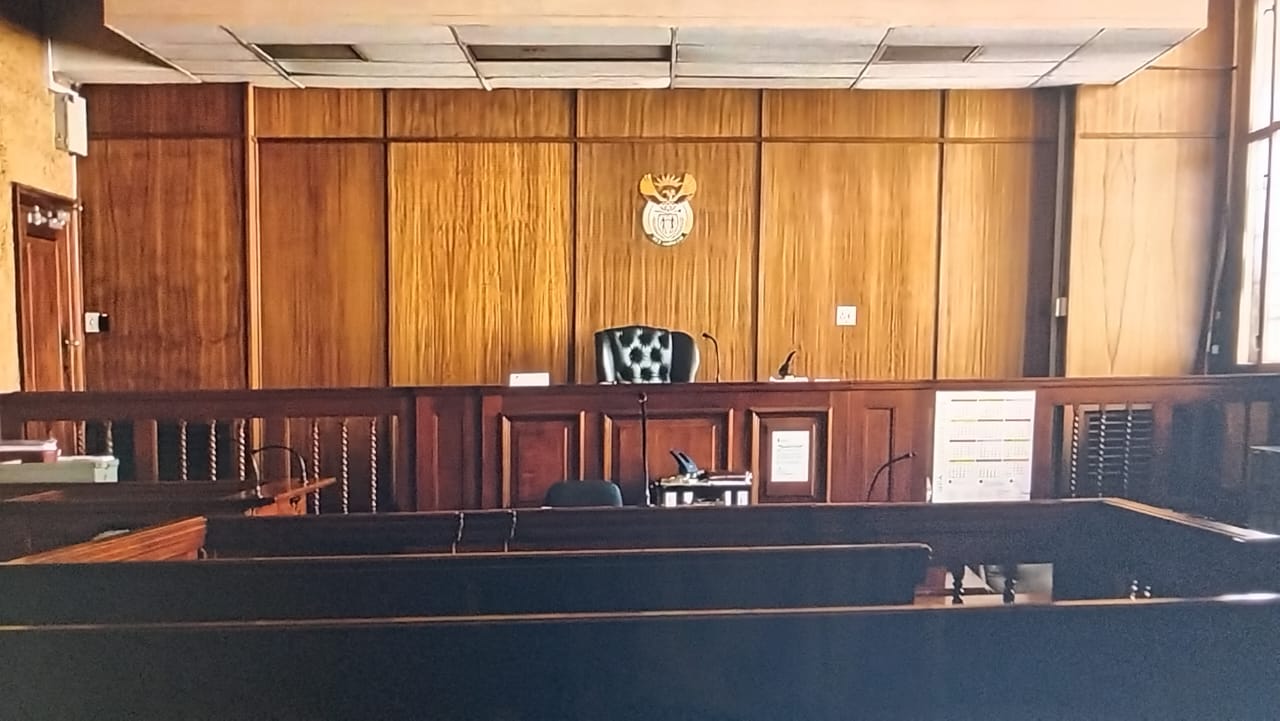
- A magistrate revealed someone tried to bribe him regarding an accused person’s sentence.
- The accused claimed bias and requested a special review.
- The appeal court ruled the referral was irregular and confirmed the conviction.
A criminal case in Mbombela took an unusual turn when the magistrate who convicted Albert Sibusiso Tshabalala disclosed that attempts had been made to bribe him while sentencing was still pending.
The magistrate was considering having the sentencing proceedings continued before another presiding officer under Section 275 of the Criminal Procedure Act when Tshabalala raised allegations of bias and sought to have his conviction set aside through a special review.
The magistrate recused himself for the reasons he had already placed on record and referred the matter to another magistrate for sentencing. He did not respond to Tshabalala's allegations, instead indicating that Tshabalala should bring a review application, after which he would respond to the complaints.
What followed became a dispute about the correct review procedure, the role of Section 304A of the Criminal Procedure Act and whether Tshabalala had established grounds for interfering with a conviction before sentencing had been completed.
Conviction led to a disputed recusal
Tshabalala had stood trial in the Specialised Commercial Crimes Court sitting in the Regional Court at Mbombela. His trial began on 11 March 2021 and remained incomplete more than five years later. After several appearances, he was convicted on some of the charges, and the matter was postponed for sentencing. The judgment does not identify those charges.
Following the conviction, the presiding magistrate placed on record that a person known to him had approached him and attempted to bribe him to impose a non-custodial sentence on Tshabalala. The magistrate indicated that he wanted the proceedings finalised before a different magistrate, to the extent permitted by Section 275 of the Criminal Procedure Act.
Both the State and defence preferred that he recuse himself and that the matter proceed before another magistrate. The defence also indicated that it would establish whether only sentencing could continue before another magistrate or whether the entire trial would have to start afresh. The magistrate postponed the matter to allow the record to be transcribed.
Tshabalala raised bias allegations
When the matter was called on 1 December 2022, the defence placed an affidavit on record raising concerns about the magistrate's conduct. Tshabalala alleged that several incidents created a perception of bias. One complaint concerned the complainant, who was allegedly seen attending the magistrate's chambers alone after Tshabalala's conviction.
Tshabalala also referred to an incident in which the magistrate had told his former attorneys and the prosecutor that he had been attacked by unknown perpetrators while driving home. Tshabalala claimed this created the impression that the magistrate believed he was responsible.
Another complaint concerned an alleged indication by the magistrate that a postponement sought by Tshabalala's legal representatives would upset the complainant. Tshabalala asked that the matter be sent to the High Court on special review under Section 304A “for consideration by the High Court, and for the conviction to be set aside”.
The magistrate recused himself and referred the matter under Section 275 to another magistrate for sentencing. He also indicated that Tshabalala should bring a review application, to which he would respond.
Tshabalala took a different review approach
The appeal court found that the magistrate had been referring to a Rule 53 review application, which is the procedure available when an accused seeks a High Court review of criminal proceedings. Tshabalala did not bring that application.
Instead, after the record was placed before the new magistrate for sentencing, he again sought a Section 304A special review on essentially the same grounds. But one allegation had changed.
The original complaint said the complainant visited the trial magistrate's chambers after Tshabalala's conviction. Before the new magistrate, the allegation was changed to say the visit occurred before the conviction.
The appeal court described these as “misrepresented facts”. The new magistrate accepted the request and referred the matter for special review. The Review Court refused to set aside the conviction but ordered that sentencing continue before a different magistrate.
Section 304A could not be used directly by the accused
The appeal was heard by Acting Judge President TV Ratshibvumo, Acting Judge M Malangeni and Acting Judge HF Fourie in the High Court in Mbombela. The judges distinguished between a Rule 53 review and a special review under Section 304A.
Section 304A allows a magistrate, after conviction but before sentence, to refer proceedings to the High Court where the magistrate has doubts about whether they were conducted in accordance with justice.
The magistrate must form that opinion independently and record the reasons for it. The court stressed that Section 304A is not a procedure an accused person can invoke directly.
“It is not available for utilisation by an accused person,” the court held. A magistrate may act mero motu or after being persuaded by a party, but must still form an independent opinion that the proceedings were not conducted in accordance with justice.
The judges held that Tshabalala's challenge to the trial magistrate's conduct should instead have been brought under Rule 53.
New magistrate did not provide reasons
The full court found that the special-review referral was procedurally defective. Section 304A required the new magistrate to record the reasons for his opinion. He did not. The closest he came was a letter stating that he “agrees with the defence”.
The court found this insufficient, particularly because the allegations had previously been raised before the trial magistrate, who had indicated that he would respond if a proper review application was brought.
The original magistrate had therefore not been allowed to answer the allegations, leaving important questions about the alleged incidents unanswered.
Incorrect facts affected the referral
The changed allegation about the complainant's visit was central to the appeal court's reasoning. The original version placed the visit after the conviction. The later version placed it before the conviction. The allegation was subsequently repeated in a supplementary affidavit supporting Tshabalala's petition to the Supreme Court of Appeal.
The appeal court found that the new magistrate's failure to provide reasons meant the misrepresented facts formed part of the basis for the special-review referral. The referral was therefore irregular.
The court held that “a judgment procured by the fraud committed by one of the parties, or by fraudulently withholding material information, cannot be allowed to stand.” The judges did not determine whether the change had been deliberate.
Bias claims did not justify overturning the conviction
The court also considered Tshabalala's allegations of bias. The test is whether a reasonable, objective and informed person would reasonably apprehend that a judicial officer would not bring an impartial mind to the case.
But Tshabalala had never brought a formal recusal application based on these complaints. By then, the trial magistrate had already recused himself following the bribery attempts, with sentencing to continue under Section 275 before another magistrate.
The court found that Tshabalala had not shown that the alleged irregularities had deprived him of a fair trial or justified setting aside his conviction.
Possible imprisonment was not enough
Tshabalala argued that he faced direct imprisonment if sentencing continued. The court rejected this as sufficient grounds for interfering with incomplete criminal proceedings.
The judges said the possibility of imprisonment was a risk faced by every accused person and would remain even if the trial were restarted de novo. More was required to establish irreparable harm or substantial prejudice.
High Courts generally avoid interfering in incomplete criminal proceedings except in rare cases where grave injustice might otherwise result, or justice could not be achieved by other means.
Sentencing will continue before a different magistrate
The full court dismissed Tshabalala's appeal and confirmed the Review Court's order.
The case was remitted to the Regional Court for the further hearing and conclusion of the sentencing proceedings before a different magistrate.
Get your news on the go. Click here to follow the Conviction WhatsApp channel.
