

Skip to content
Close Menu
ConvictionConviction
  • Home
  • Law & Justice
  • Special Reports
  • Opinion
  • Ask The Expert
  • Get In Touch

Subscribe to Updates

Get the latest creative news from FooBar about art, design and business.

What's Hot

From newsroom deadlines to the Bar, Rorisang Kgosana pursues a higher calling

June 13, 2026

Sexual harassment at work: Employer duties, liability and the rights of employees

June 12, 2026

Phumeza Shoba loses maintenance claim after court finds distorted picture of her finances

June 12, 2026
Facebook X (Twitter) Instagram
Trending
  • From newsroom deadlines to the Bar, Rorisang Kgosana pursues a higher calling
  • Sexual harassment at work: Employer duties, liability and the rights of employees
  • Phumeza Shoba loses maintenance claim after court finds distorted picture of her finances
  • Batohi cannot meddle with enquiry procedures after abandoning testimony, panel rules
  • Municipality liable for shutting down businesses in R18.6 million damages claim
  • Health Department ordered to repay doctor after unlawful R105,000 salary deduction
  • Intimidating parent ordered to remain 100 metres from Hendrik Louw Primary School
  • Our silent shame: Why South Africans must pay heed to elder abuse
Facebook X (Twitter) Instagram
ConvictionConviction
Sonneblom
  • Home
  • Law & Justice
  • Special Reports
  • Opinion
  • Ask The Expert
  • Get In Touch
ConvictionConviction
Home » Competition Commission calls for social media Ombud to hold digital platforms accountable
Regulatory Law

Competition Commission calls for social media Ombud to hold digital platforms accountable

MDPMI calls for urgent regulation of content moderation and public complaints under South Africa’s digital law.
Kennedy MudzuliBy Kennedy MudzuliNovember 13, 2025Updated:November 13, 2025No Comments
Facebook Twitter Pinterest LinkedIn WhatsApp Reddit Tumblr Email
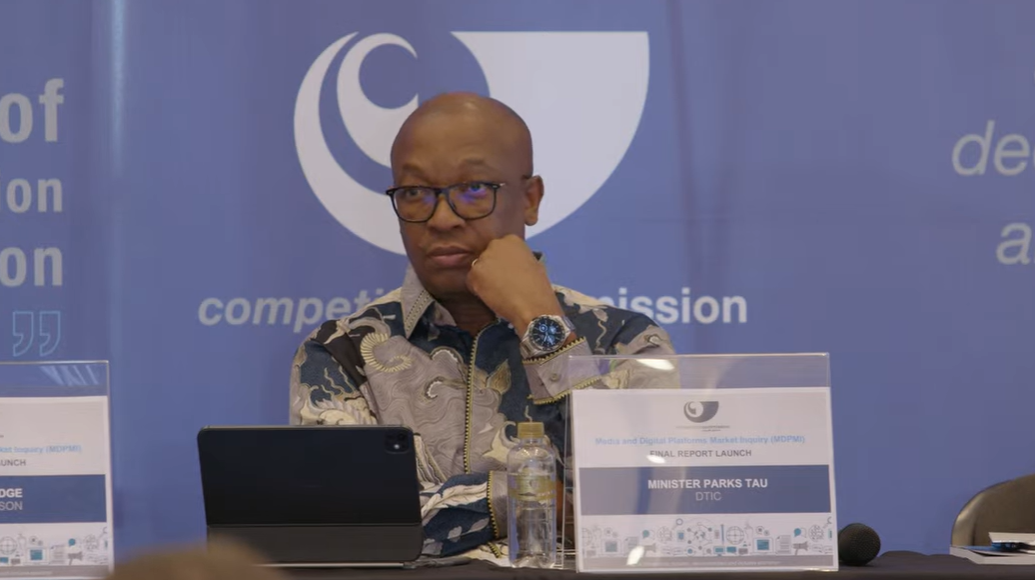
Minister of Trade, Industry and Competition Parks Tau during the launch of the MDPMI Final Report on 13 November 2025.
Share
Facebook Twitter LinkedIn Pinterest Email
  • Commission urges creation of a social media Ombud to oversee platform conduct and public complaints.
  • Department of Communication and Digital Technology is called to regulate content moderation under Electronic Communications and Transactions Act.
  • Platforms found to suppress journalism, distort revenue, and exclude community media from monetisation.

The Competition Commission has called for the urgent creation of a social media Ombud to oversee public complaints against digital platforms.

In its Final Report on the Media and Digital Platforms Market Inquiry (MDPMI), the Commission recommends that the Department of Communication and Digital Technology “develop content moderation regulations under the Electronic Communications and Transactions Act, including the establishment of a Social Media Ombud to oversee public complaints”.

This recommendation follows extensive evidence that platforms such as Meta, YouTube, TikTok, and X distort visibility, suppress credible journalism, and amplify misinformation. The Commission found that “social media platforms offer limited monetisation options and deprioritise news content, particularly from local and community publishers”.

Platforms dominate access but offer little in return

The MDPMI confirms that global platforms have concentrated market power across search, social media, and digital advertising. “Google holds a significant share of the search engine market, affecting local media referral traffic and revenue,” the report states. “There is a notable algorithmic bias against local, vernacular, and community media”.

Social media platforms play an outsized role in distributing news but offer limited monetisation options. The SABC relies heavily on YouTube for reach but earns minimal revenue. Community media face technical and financial barriers to accessing monetisation programmes even as their stories circulate widely. AI-powered tools add another layer of exploitation, the inquiry found.

The Commission found that “generative AI systems have used South African news content to train models and generate responses, without licensing or compensation”. While news comprises a small portion of training data, the practice undermines the value of original journalism and raises serious questions about consent and control.

In digital advertising, the Commission found that “Google’s dominance across the AdTech stack has entrenched dependency and limited competition”. Its bundled systems “give preferential treatment to its own exchange, reducing transparency and inflating costs for publishers”.

The Commission recommends that the Department of Trade, Industry and Competition issue a block exemption under the Competition Act to allow collective bargaining by South African media. This would cover “platform monetisation, AI licensing, AdTech pricing and joint ad-sales for community media”.

Remedies offer relief, but regulation must follow

Following two months of negotiation, the Commission secured a R688 million Media Support Package with Google and YouTube. This includes content licensing, innovation grants, and funding for vernacular-language training through the Media Development and Diversity Agency. Google will also introduce tools to prioritise local news, provide technical assistance, share audience data, and establish an African News Innovation Forum.

Microsoft will expand its MSN contracts to five additional national publishers. Meta will open a Media Liaison Office in South Africa and remove monetisation barriers through workshops and ad credits. YouTube will grant automatic Partner Programme access to all South African media and support the SABC with direct ad sales and archive digitisation. TikTok will roll out its Publisher Support Suite, and X Corp will localise monetisation programmes and offer training.

AI companies will offer South African media the same content controls and opt-out mechanisms available in the EU, alongside biannual training to support a fair market for licensed content. Google will extend EU-style transparency measures and remove self-preferencing in its ad systems.

Oversight is overdue and the public deserves protection

The Commission’s call for a Social Media Ombud is part of a broader effort to ensure that platforms operating in South Africa are subject to public accountability. Without regulation, platforms will continue to operate without consequence. The MDPMI concludes that “news media is essential for democracy, serving as the cornerstone of public accountability and informed citizens”.

Reflecting on the significance of these actions, MDPMI Chair James Hodge said: “The Final Report and these remedies represent a landmark step toward rebalancing digital markets, protecting fair competition, and rebuilding the long-term sustainability of South Africa’s news media. They reaffirm that a healthy, independent, and diverse press is essential to democracy, and that collective action, equitable regulation, and platform accountability are vital to safeguarding that principle for the digital future.”

The final report of the MDPMI will be handed over by Competition Commissioner Doris Tshepe to Honourable Minister of Trade, Industry and Competition, Parks Tau.

Conviction.co.za 

Get your news on the go. Click here to follow the Conviction WhatsApp channel.

Competition Commission digital regulation journalism MDPMI social media
Share. Facebook Twitter Pinterest LinkedIn Tumblr Telegram Email
Kennedy Mudzuli

Multiple award-winner with passion for news and training young journalists. Founder and editor of Conviction.co.za

Related Posts

From newsroom deadlines to the Bar, Rorisang Kgosana pursues a higher calling

June 13, 2026

Standard Bank tops banking complaints list as NFO recovers R442.9 million for consumers

June 6, 2026

FSCA imposes R5.39 million in penalties on financial services firms

June 5, 2026
Leave A Reply Cancel Reply

Prove your humanity: 6   +   8   =  

Subscribe to our newsletter:
Top Posts

Making sectional title rules that work: A practical guide

January 17, 2025

Protection order among the consequences of trespassing in an ‘Exclusive Use Area’

December 31, 2024

Between a rock and a foul-smelling place

November 27, 2024

Irregular levy increases, mismanagement, and legal threats in a sectional title scheme

June 2, 2025
Don't Miss
Special Reports
13 Mins Read

From newsroom deadlines to the Bar, Rorisang Kgosana pursues a higher calling

By Kennedy MudzuliJune 13, 202613 Mins Read

From late-night newsroom shifts to taking the oath as an advocate, Rorisang Kgosana’s journey is a story of resilience, loss, motherhood and an unwavering commitment to making a difference.

Sexual harassment at work: Employer duties, liability and the rights of employees

June 12, 2026

Phumeza Shoba loses maintenance claim after court finds distorted picture of her finances

June 12, 2026

Batohi cannot meddle with enquiry procedures after abandoning testimony, panel rules

June 12, 2026
Stay In Touch
  • Facebook
  • Twitter
  • WhatsApp
Demo
About Us
About Us

Helping South Africans to navigate the legal landscape; providing accessible legal information; and giving a voice to those seeking justice.

Facebook X (Twitter) YouTube WhatsApp Twitch RSS
Latest posts

Making sectional title rules that work: A practical guide

January 17, 2025

Protection order among the consequences of trespassing in an ‘Exclusive Use Area’

December 31, 2024

Between a rock and a foul-smelling place

November 27, 2024
OUR PICKS

Agricultural advisors declared scientists in landmark Labour Court ruling

February 17, 2026

FSCA imposes R5.39 million in penalties on financial services firms

June 5, 2026

Standard Bank should have investigated mental health concerns before dismissal, CCMA finds

June 10, 2026
© 2026 Conviction.
  • Home
  • Law & Justice
  • Special Reports
  • Opinion
  • Ask The Expert
  • Get In Touch

Type above and press Enter to search. Press Esc to cancel.

Powered by
►
Necessary cookies enable essential site features like secure log-ins and consent preference adjustments. They do not store personal data.
None
►
Functional cookies support features like content sharing on social media, collecting feedback, and enabling third-party tools.
None
►
Analytical cookies track visitor interactions, providing insights on metrics like visitor count, bounce rate, and traffic sources.
None
►
Advertisement cookies deliver personalized ads based on your previous visits and analyze the effectiveness of ad campaigns.
None
►
Unclassified cookies are cookies that we are in the process of classifying, together with the providers of individual cookies.
None
Powered by