






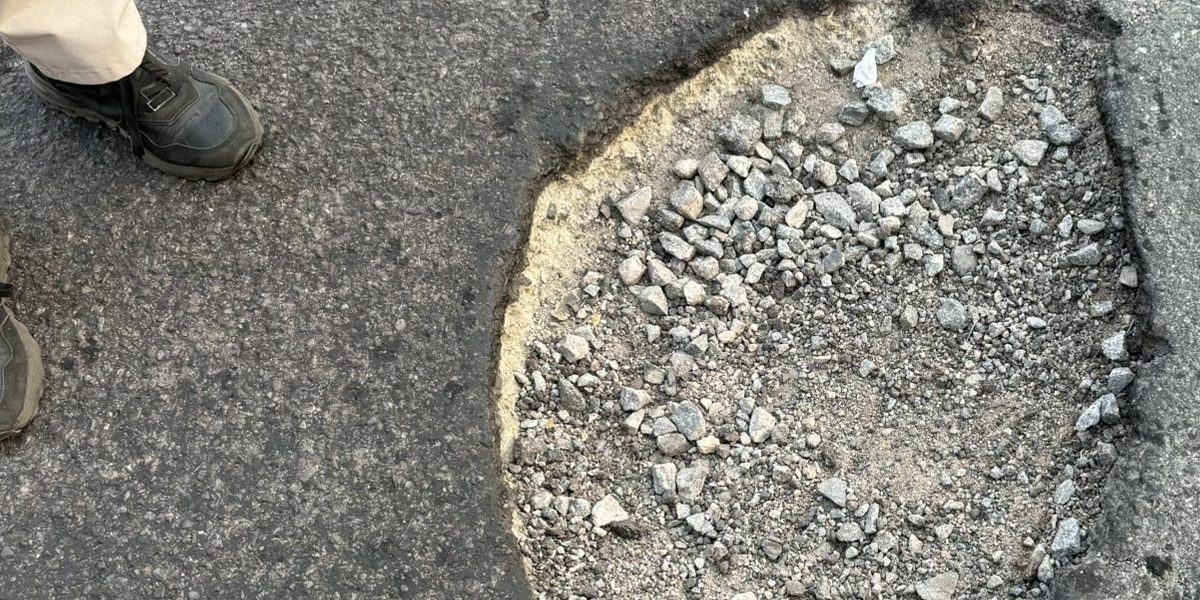
- Anton Steenkamp stopped at a traffic light and chose what he believed was the safest way through the potholes and loose gravel.
- His motorcycle’s rear wheel lost traction. He fell, suffered serious injuries, and lost consciousness.
- The High Court found that the municipality failed to keep the road reasonably safe or warn motorists about the danger.
Anton Steenkamp saw the danger ahead when the traffic light at an intersection in Mashishing turned green. The road was badly damaged, with potholes and loose gravel spread across his path.
Instead of just riding through the worst part, Steenkamp said he tried to find the safest way across. But when he tried to avoid the danger, his motorcycle lost control, and he was left injured on the road. The crash happened on 9 December 2017 at the intersection of Viljoen and Potgieter Streets in Mashishing, formerly Lydenburg.
Steenkamp fractured his left kneecap and tibia, among other injuries, after falling from the motorcycle. The High Court in Mbombela has now found that the condition of the road caused the crash.
He saw the potholes before riding through
Steenkamp told the court he had been riding motorcycles since 1986 and had owned the bike involved in the accident since 2012. He was familiar with both motorcycles and the road, which he used often.
On the day of the crash, he stopped at the red traffic light. While waiting, he saw the road ahead was filled with potholes and gravel. He said some of the gravel was meant to repair potholes but had been left inside the holes and scattered across the road.
When the light changed, Steenkamp looked for a way through. He chose a pothole that seemed more filled and rode through it. The motorcycle’s front wheel made it across, but the rear wheel started to wobble. Steenkamp explained that the rear wheel is what drives the bike, and it lost traction when it hit the loose gravel.
He fell, hit his head and lost consciousness. Steenkamp denied that he was speeding or had accelerated too quickly.
His daughter witnessed the crash
Steenkamp’s daughter, Nelmarie Steenkamp, was riding with him when the accident happened. She told the court they had stopped at the intersection because the light was red. When it turned green, they set off as usual.
After they entered the intersection, she felt the motorcycle’s back wheel swaying from side to side. She lost her grip and fell. She described the road as being in terrible condition, with lots of potholes.
Sergeant Mohale of the South African Police Service, who arrived at the scene shortly after the accident, also found a large pothole and loose gravel at the intersection. He described the road as badly damaged.
The road had to be crossed by motorists
The municipality accepted that it was responsible for maintaining public roads and owed road users a duty to make sure they were reasonably safe.
Its witness, roads and stormwater manager Clement Mashigo, explained that the municipality’s usual procedure was to repair reported potholes. If a pothole couldn’t be fixed right away, it would be barricaded.
But Mashigo had only joined the municipality in February 2019, more than a year after Steenkamp’s accident, so he couldn’t say what the road was like in December 2017. There was also no evidence that the municipality had repaired or barricaded the damaged part before Steenkamp’s accident.
Acting Judge Zodwa Gumede found that it was foreseeable someone could be harmed by the damaged road, and the municipality should have either fixed the problem or barricaded it.
Choosing the safest route was not accepting the risk
The municipality argued that Steenkamp saw the pothole and gravel but still chose to ride through them, which they said meant he accepted the risk of injury.
Judge Gumede rejected that argument. She found that Steenkamp was faced with a broken road surface and chose what he thought was the safest way through. That didn’t mean he agreed to be injured.
The court also rejected the municipality’s claim that Steenkamp had been negligent by speeding, not paying attention, or accelerating too quickly. The evidence showed he had stopped at the traffic light, seen the potholes, and carefully chosen his path. Mashigo also agreed that Steenkamp couldn’t have been speeding in those circumstances.
Judge Gumede found that the municipality’s negligence caused the accident and that Steenkamp had not contributed to it.
The municipality was held liable for 100% of his proven or agreed damages. The amount will be decided separately.
Get your news on the go. Click here to follow the Conviction WhatsApp channel.


