


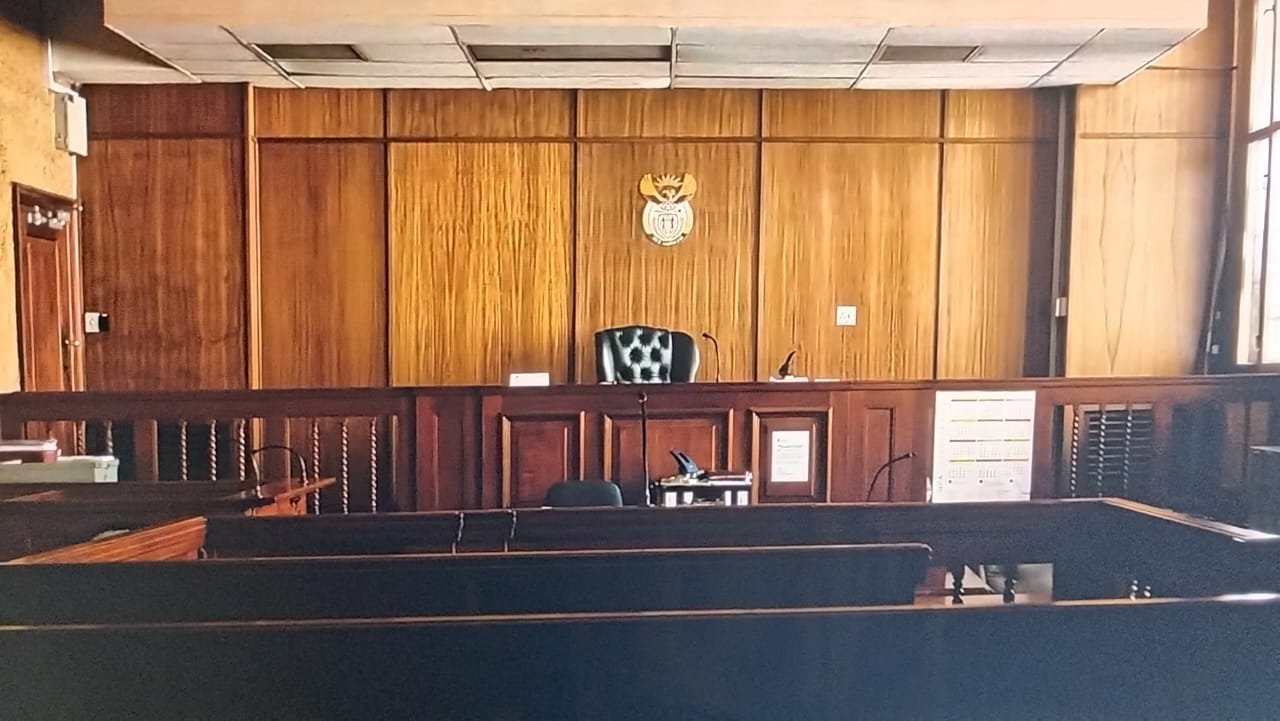
- A Mashishing woman was wrongfully detained as a State patient due to a series of administrative errors and lack of judicial scrutiny.
- The Mpumalanga High Court set aside the erroneous order after an in-depth review, highlighting the consequences of failing to exercise proper legal discretion.
- The judgment serves as a cautionary lesson for South Africa’s legal system about diligence, responsibility, and the profound impact of judicial decisions.
A routine criminal case in Mashishing became a cautionary tale about the far-reaching effects of administrative errors and the vital importance of judicial vigilance, as exposed in a subsequent review judgment by the Mpumalanga High Court.
The case began on 3 August 2025, when a woman referred to as ASM was arrested and charged with assault by threats and malicious damage to property after damaging a neighbour’s door. As the matter came before the Mashishing Magistrate's Court, concerns about her mental health were quickly raised. The court ordered a psychiatric evaluation, which concluded that she suffered from a mental illness and lacked criminal capacity at the time of the offence.
Administrative missteps and judicial inattention
This assessment set in motion a process governed by the Criminal Procedure Act and the Mental Health Care Act. The psychiatrist explicitly recommended that Form MC 21 be completed, a step intended to facilitate her involuntary admission to a mental health institution as an ordinary patient. However, a series of oversights soon complicated the case.
On 1 September, the Deputy Director of Public Prosecutions instructed the Public Prosecutor to complete Form MC 20 instead. Unlike MC 21, Form MC 20 is used to commit a person as a State patient, a more restrictive and potentially indefinite status. The Public Prosecutor did not question the discrepancy, and the magistrate signed MC 20 without engaging with the psychiatric report or considering the implications.
Deputy Judge President TV Ratshibvumo, who authored the review judgment, described the result as “a plethora of mistakes [that] has marred this case from its inception to this date”. He said, “What is saddening is that these errors could have been avoided if just one of the numerous role players in the adjudication of this matter had been vigilant enough.”
Special review
After the error was discovered, the prosecution attempted to correct it, but the damage had already been done. The Control Prosecutor submitted the matter for special review, seeking to have the MC 20 order set aside and replaced with the correct form. Unfortunately, the file was processed as a routine automatic review, and the acting judge simply signed off without reading the special review request or providing any reasons.
It was only after the Acting Chief Magistrate wrote to the Judge President that the gravity of the case was finally understood and the High Court intervened. Judge Ratshibvumo’s judgment details how the system failed at multiple points, from prosecution to the magistracy and even during High Court review.
The judge was frank in his criticism, noting that the magistrate “did not exercise the discretion expected of him as a judicial officer” and that “a simple perusal of section 77 of the Act would have prepared him to exercise that discretion better when asked to sign a form.”
He warned that “this is a perfect example of how a valued signature, such as that of a judicial officer, can have enormous and sometimes undesired consequences when applied without careful consideration or discretion. Some of those consequences could be irreversible.”
Setting the record straight for justice
The legal importance of the distinction between the two forms is significant. As the judgment explains, “a continuous stay in a mental institution as a State patient could see her detained longer than she would as an involuntary patient.”
The judge ruled that remitting the case back to the magistrate would only create further delays, stating, “Any approach other than remedying the situation by correcting these errors immediately would not be in the interests of justice.”
Both the prosecution and the magistrate admitted their mistakes and consented to the correction.
In a pointed reflection on the responsibilities of judicial officers, Judge Ratshibvumo wrote, “It is incumbent on us as judicial officers to be diligent and always remember that the accused persons who appear before us, some of whom have waited several days, weeks or months, and in some cases, in detention, to have us make that one-line pronouncement on their fate, which for them, could mean life or death. If we remain conscious of this, applying our minds to such matters would be an effort worth taking.”
Exercising the High Court’s inherent powers to correct the record, Judge Ratshibvumo set aside the magistrate’s original decision to sign Form MC 20 and substituted it with the signing of Form MC 21, as originally recommended by the psychiatrist. The judgment was agreed to by Acting Judge P Venter.
The Deputy Judge President concluded, “The interest of justice demands that the accused in this case be freed of the State patient title without delay.”
Get your news on the go. Click here to follow the Conviction WhatsApp channel.


