


- The court found that the independent panel wrongly applied a prima facie case to answer test instead of determining whether sufficient evidence existed.
- It identified material legal and factual errors in the panel’s assessment of all four allegations against Ramaphosa.
- The panel report and all National Assembly steps taken pursuant to it were declared unlawful and set aside.
The independent panel that investigated allegations against President Cyril Ramaphosa arising from the Phala Phala farm scandal fundamentally misunderstood its mandate, applied the wrong legal test, and made material errors when assessing the evidence, a full bench of judges has found.
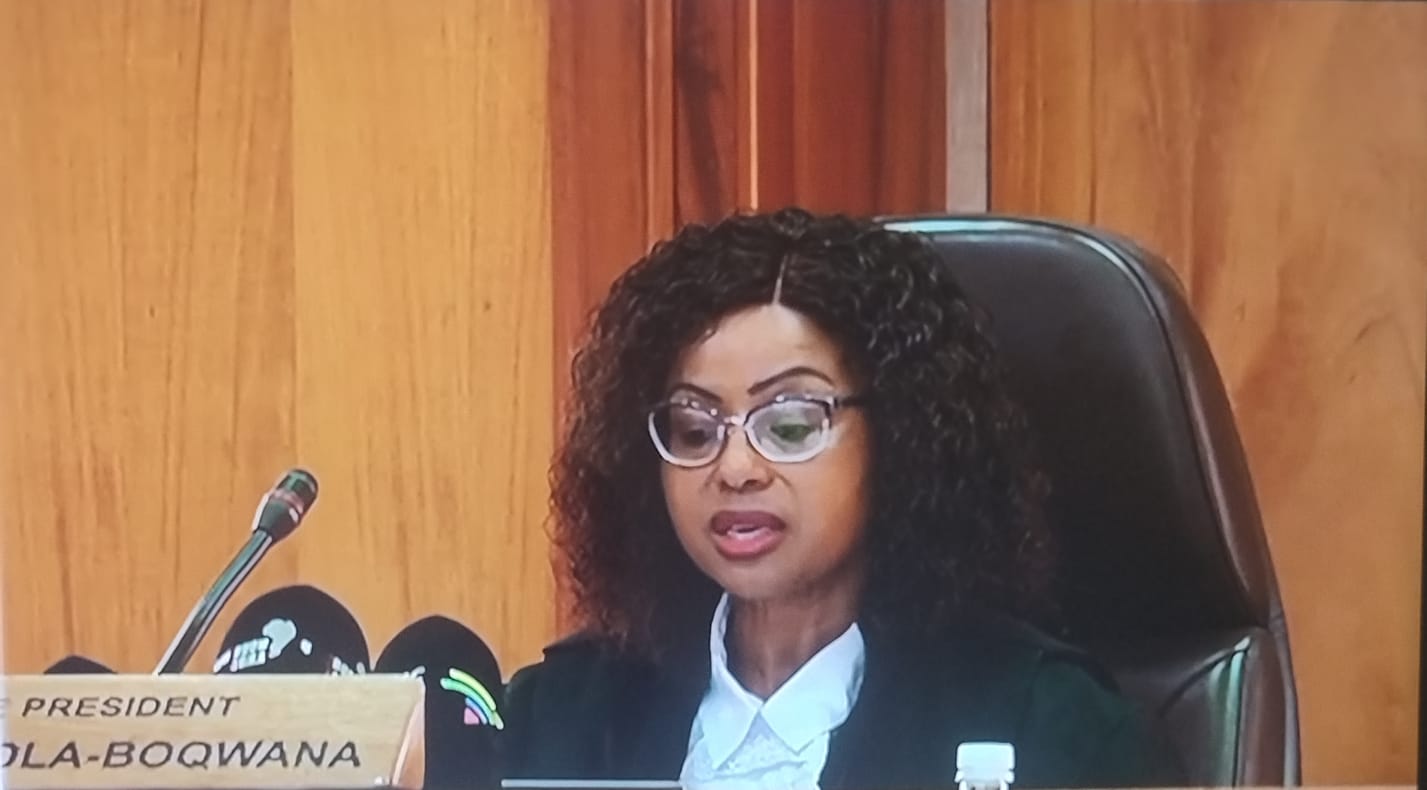
In a judgment delivered by Western Cape Judge President Nolwazi Penelope Mabindla-Boqwana, the court concluded that the panel went beyond its lawful mandate and reached conclusions not rationally connected to the requirements for a preliminary inquiry into possible presidential impeachment.
These findings formed the basis for setting aside the panel’s report in its entirety, as well as all steps subsequently taken by the National Assembly based on it.
The panel misunderstood the evidence threshold
At the centre of the dispute was the meaning of sufficient evidence under Rule 129G(1)(b) of the National Assembly rules. The court found that the panel was required to determine whether there was enough relevant and admissible material which, if accepted as true, could establish that the President had personally and in bad faith committed a serious violation of the Constitution or the law, or serious misconduct.
Instead, the panel asked whether the information before it disclosed a prima facie case for the President to answer. The court found that this was a significant error in law.
“A preliminary inquiry is not an adjudicative process in which one party must answer a case presented by another,” Judge President Mabindla-Boqwana read. “The panel’s responsibility was to assess whether sufficient evidence existed to justify further parliamentary consideration, rather than simply identifying allegations that required a response.”
The judges also emphasised the difference between information and evidence, noting that not everything placed before the panel counted as relevant and admissible evidence.
The panel also relied on information that went beyond the actual charges, including issues about the source of the foreign currency and events in Cape Town and Namibia.
Errors in assessing the four charges
The court identified separate problems in the panel’s assessment of each of the four allegations. On the allegation that Ramaphosa had engaged in paid work while serving as President, the panel relied on a directive that applies to public servants, rather than properly considering the Executive Members Ethics Act and the Executive Ethics Code.
The court found that the panel had wrongly concluded that the President’s involvement in the farming business and entitlement to financial benefits amounted to prohibited paid work. On the allegation that he failed to report a suspected corruption offence, the panel did not properly consider whether the President had acted intentionally, maliciously, and in bad faith.
The court said that establishing a serious violation of the law required more than showing a breach of a statutory provision. The circumstances and the requirement of bad faith had to be considered.
For the third charge, concerning the President’s alleged instruction to Major-General Wally Rhoode to deal with security matters at his private residence, the court found that the panel’s conclusion was irrational.
There was no information before the panel contradicting the President’s explanation that the security of his private residence was the responsibility of the Presidential Protection Unit. The panel also wrongly considered the third and fourth charges together, failing to give proper attention to the President’s response to the third charge.
On the fourth charge, concerning the investigation into the burglary, the panel concluded that the President had placed himself in a conflict between his official responsibilities and private interests.
However, the court found that the panel had not directly considered whether he had acted in bad faith. It also found errors in the panel’s interpretation of the President’s media statement about his communication with the Namibian President.
Court rejects preliminary objections
Before considering the merits, the court addressed several preliminary objections raised by the respondents, including challenges to its jurisdiction and the timing and reviewability of the application.
The MK Party argued that the Constitutional Court had already dealt with the relevant issues in the earlier EFF 3 judgment and that the review fell within the Constitutional Court’s exclusive jurisdiction under Section 167(4)(e) of the Constitution.
The court rejected these arguments, finding that the earlier judgment did not decide whether the independent panel correctly understood and carried out its mandate.
It also found that the independent panel was not a committee of the National Assembly and that its independence did not exempt it from compliance with the Constitution, the law, and parliamentary rules.
The court further found that the President had not unreasonably delayed in bringing the review, which followed the Constitutional Court’s EFF 3 judgment handed down on 8 May 2026.
Report and parliamentary steps set aside
In its final findings, the court said the panel had fundamentally misunderstood its functions, the nature of the inquiry it was conducting, and the recommendations it was supposed to make to the Speaker.
It had exceeded its lawful mandate, asked itself the wrong questions, and made several significant legal errors. The court accordingly declared the independent panel’s report unlawful and set it aside in its entirety. Any steps taken by the National Assembly based on the report were also declared unlawful and set aside.
Each party was ordered to pay its own costs relating to the review application, the related interdict application under case number 2026-13828, and the subsequent application for leave to appeal.
Get your news on the go. Click here to follow the Conviction WhatsApp channel.
