


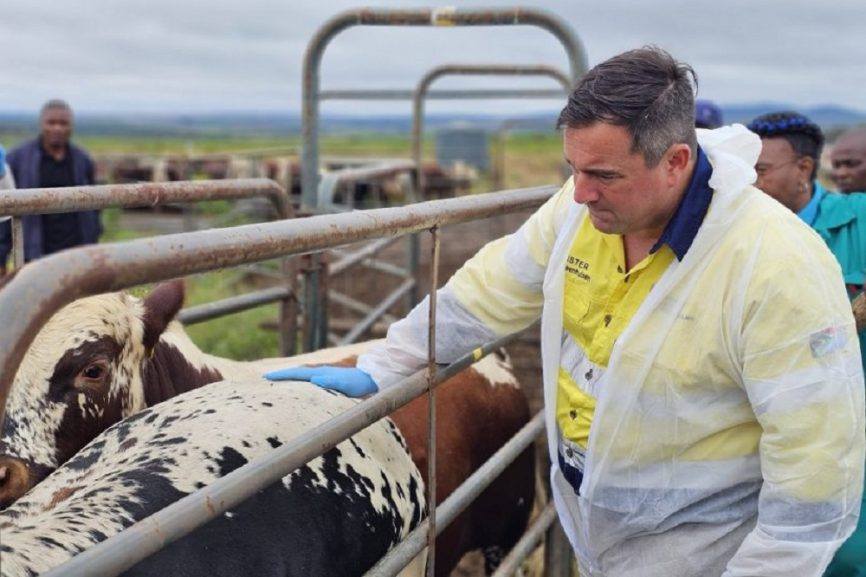
- Acting Judge CJ van der Westhuizen ruled that there is no clear legal prohibition on private Foot and Mouth Disease vaccinations.
- Livestock owners can obtain and use lawfully imported or manufactured vaccines if they follow reporting and notification requirements.
- The Minister of Agriculture and two senior officials were ordered to cover the costs of the application.
Farmers and livestock owners across South Africa have received permission to vaccinate their animals against Foot and Mouth Disease (FMD) after the High Court in Pretoria ruled that the government had not identified any law prohibiting private vaccination programs.
This ruling follows an urgent application filed by Sakeliga NPC, Suider-Afrika Agri Inisiatief NPC, and Free State Agriculture against the Minister of Agriculture, the Director General of the Department of Agriculture, the Director of the Directorate of Animal Health, and several others involved in managing the FMD outbreak.
Acting Judge CJ van der Westhuizen provided interim relief that allows owners and managers of cloven-hoofed livestock to obtain and administer lawfully imported or manufactured vaccines while a larger legal challenge is ongoing.
The applicants approached the court after the government stated that vaccinations against FMD should only occur through state-controlled processes. They argued that this position lacked legal support and hindered efforts to control the disease during outbreaks that impacted farming communities and the agricultural sector.
The applicants believed that private vaccination would support, rather than replace, government disease control efforts. They informed the court that vaccines could be obtained through legal channels, and livestock owners were willing to follow all necessary regulations regarding their use.
No legislation was identified banning private vaccination
Judge Van der Westhuizen reviewed the Animal Diseases Act, relevant regulations, and other measures cited by the respondents. He concluded that none of the provisions cited by the government created a clear ban on private vaccination against FMD.
The judge stressed that South African law typically allows actions unless specifically prohibited by legislation or lawful regulation.
Referring to one of the documents used by the government, Judge Van der Westhuizen noted, "It has not been published in the Government Gazette and is clearly marked as a 'secret' document."
The court also dismissed the argument that a recently published vaccination scheme prevented private vaccination. Judge Van der Westhuizen found that participating in the scheme was voluntary and did not create the prohibited status claimed by the respondents.
"The controversial new scheme does not provide for any 'controlled purpose or for the improvement of animal health'," the judge stated.
The judgment indicated that if the government wanted to prohibit private vaccination, it would need to do so through a lawful measure authorised by legislation.
Court says private vaccination could help contain disease
The court recognised that the ongoing spread of FMD created an urgent situation, and any delay in accessing vaccines could lead to serious consequences for livestock owners.
"The risk of irreparable harm exists when FMD spreads rapidly outside the designated controlled areas," Judge Van der Westhuizen said.
In weighing the convenience, the court concluded that allowing private vaccination would not hinder government efforts to manage the outbreak. Instead, it could help authorities limit the spread of the disease.
"The interim relief would not negatively affect the respondents in fulfilling their obligations to contain FMD. On the contrary, it would aid them in fighting FMD," the judge noted.
The court ultimately decided that the applicants had established a preliminary right to relief and had shown reasonable chances of success in the proceedings that will finally resolve the matter.
Strict conditions remain in place
While granting relief, the court set several requirements. Livestock owners intending to vaccinate animals must inform veterinary authorities at least five days before the vaccination.
The notice must include details about the vaccination program's location, the number and type of animals, the identity of the person administering the vaccine, and the measures to maintain the vaccine cold chain.
Within 14 days of vaccination, owners must submit sworn declarations confirming compliance with relevant regulations and providing details about the vaccine used, dosage given, storage conditions, and the animals vaccinated.
This order does not change existing movement restrictions or reporting obligations related to suspected FMD outbreaks. It also does not allow anyone to manufacture or import vaccines without obtaining the necessary legal approvals.
Judge Van der Westhuizen instructed the applicants to file for final relief within 20 days and ordered the Minister of Agriculture, the Director General of the Department of Agriculture, and the Director of the Directorate of Animal Health to pay the costs of the application, including the expenses for two counsel if hired.
Get your news on the go. Click here to follow the Conviction WhatsApp channel.
