


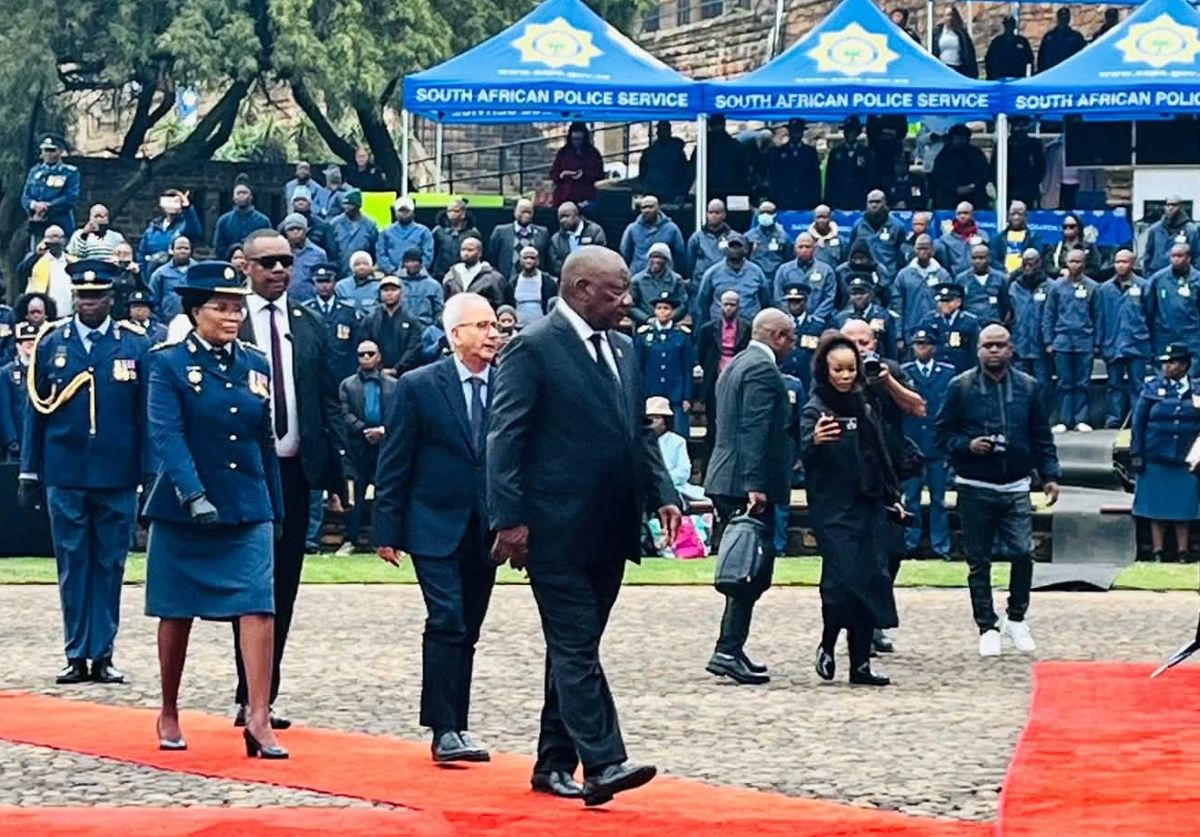
- Official line-of-duty statistics tell only part of the story, masking the scale of off-duty police killings.
- Many officers live in the same high-crime communities they police, leaving them and their families dangerously exposed.
- Protecting police requires stronger policies, safer communities, and sustained public commitment, not only memorials.
Every year, South Africa pauses to honour police officers who have paid the ultimate price in service of the Republic. Wreaths are laid, candles are lit, names are read aloud, and solemn promises are made that their sacrifice will never be forgotten.
Yet beyond the ceremonies and tributes lies an uncomfortable truth: we have become a nation far better at mourning our police officers than protecting them. While we publicly celebrate their courage in death, too many of those entrusted with defending our communities remain dangerously exposed in life, often living among the very criminal networks they confront daily.
The true measure of a society is not how eloquently it commemorates its fallen heroes, but how effectively it prevents their names from ever being added to the Roll of Honour. By that standard, South Africa faces a painful question: are we genuinely protecting our protectors, or have we become increasingly comfortable with burying them?
The statistics tell only half the story
The question is particularly important because police officers occupy a unique position in a constitutional democracy.
Recent statistics presented during police commemorative events may suggest progress. The number of officers officially killed in the line of duty has declined compared with previous years. While any reduction in line-of-duty deaths should be welcomed, focusing solely on these figures risks creating a false sense of security.
The official statistics tell only part of the story. They record officers who died while performing official duties, but they fail to capture the broader reality of police victimisation in South Africa.
The hidden crisis of off-duty killings
The bigger picture reveals a far more disturbing truth. Historically, a significant proportion of police officers murdered in South Africa have been killed while off duty.
These are officers who are not included in line-of-duty commemorations because they were not wearing a uniform, attending a crime scene, or participating in an official operation when they were attacked. Many were travelling home, visiting shops, spending time with family, or sleeping at home.
Yet their deaths were often directly linked to their occupation as police officers. Criminals knew who they were, where they lived, and what role they played in enforcing the law.
This distinction is critically important. Criminals do not stop viewing an officer as a threat simply because the shift has ended. A gang member arrested during the day may seek revenge after hours. A criminal syndicate may target an officer’s service firearm when the officer is away from the relative security of a police station.
Living where the danger never ends
The existence of so many off-duty killings exposes deeper structural failures that extend beyond policing itself.
Many lower-ranking officers cannot afford to live in secure neighbourhoods far removed from the environments they police. Limited salaries, inadequate danger allowances, and broader economic realities often force them to reside in crime-ridden communities, informal settlements, or high-risk urban areas.
Consequently, some officers spend their working hours combating criminals, only to return home to the same neighbourhoods where those same criminals operate.
From a criminological perspective, these conditions create predictable vulnerabilities. Criminals rely on intelligence, surveillance, and opportunity. Officers who live in known locations within high-crime environments become easier to identify, monitor, and target. Their movements become predictable. Their families become exposed. Their homes cease to be places of refuge and instead become extensions of the risk environment associated with policing.
When officers are murdered under such conditions, the responsibility cannot rest solely with individual offenders. It also reflects a collective failure to provide adequate protection for those tasked with protecting society.
A collective failure with national consequences
The problem is not merely that officers are being killed. The problem is that society has slowly normalised the conditions that make these killings possible.
Communities often know where illegal firearms are stored, who is involved in organised criminal activities, and who may be threatening local officers. Yet fear, mistrust, and silence frequently prevent information from reaching authorities.
The result is that criminal networks continue to grow stronger while community cooperation weakens. A society that refuses to support the safety of its protectors cannot reasonably expect sustainable public safety.
The consequences extend far beyond individual victims. Every police officer who is murdered represents the loss of experience, institutional knowledge, and law-enforcement capacity. Families lose parents, spouses, siblings, and providers. Communities lose guardians. Police stations lose skilled personnel. The state loses part of its ability to maintain order and protect citizens.
When viewed collectively, police killings become more than isolated criminal incidents. They become indicators of broader institutional and societal weaknesses.
Beyond remembrance: protecting those who protect us
This is why the bigger picture matters. If we examine only officers killed while on duty, we may conclude that progress is being made. However, if we include officers targeted while off duty because they were police officers, a different reality emerges.
We begin to see a country where criminals are sufficiently emboldened to hunt law enforcement personnel beyond the workplace. We see a society that remembers fallen officers with dignity but often fails to protect them while they are alive. We see a state that expects extraordinary courage from its frontline personnel but does not always provide extraordinary protection in return.
President Cyril Ramaphosa once observed that a nation reveals its character not only in how it remembers those who serve it, but in what it does to protect them. Those words should challenge every South African. The true test of national character is not found in memorial ceremonies, speeches, or moments of silence. It is found in policies that protect officers and their families, communities that reject criminality, and institutions that recognise that police officers remain vulnerable long after they leave their stations.
Until we confront the full reality of both on-duty and off-duty police killings, we will continue to misunderstand the scale of the crisis. More importantly, we will continue to fail those who stand between society and lawlessness.
South Africa does not suffer from a shortage of memorials for fallen officers. What it suffers from is a shortage of sustained commitment to keeping them alive. Until that changes, we will remain a nation that mourns its police better than it protects them.
Get your news on the go. Click here to follow the Conviction WhatsApp channel.
The views expressed are his own and do not necessarily reflect the official policy or position of Unisa or Conviction.co.za
