


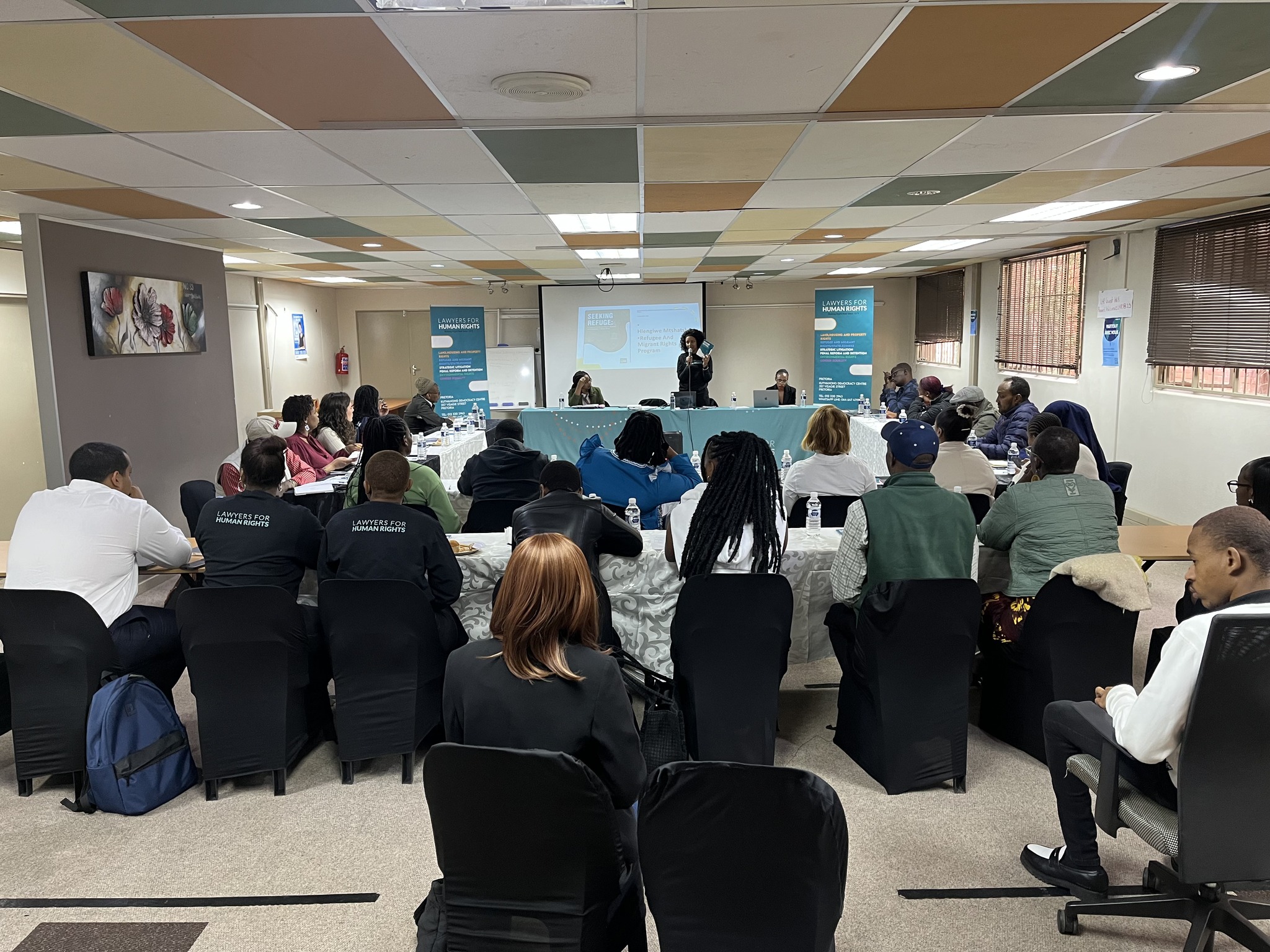
- The new guide from Lawyers for Human Rights gives refugees in South Africa clear, practical information about their rights and how the asylum process works.
- It includes real legal cases, actionable advice, and community tools to help prevent exploitation and strengthen support.
- The guide is designed for immediate use, empowering refugees and community leaders to organize, educate others, and advocate for fair treatment.
On 25 September 2025, Lawyers for Human Rights (LHR) launched a new Refugee Guide through its Refugee and Migrant Rights Programme. This isn’t just another booklet; it’s a lifeline.
It’s made for people who’ve fled danger and are trying to build a new life in South Africa. The guide explains how the asylum system works, what rights refugees have, and what they can do when those rights are ignored.
But it goes further than just information. It’s also a tool for action. Refugees and community leaders can use it to run workshops, train others, and organise support networks. It’s designed to help people protect themselves and each other, especially when the system fails them.
Laws that promise protection, but don’t always deliver
South Africa has strong laws that are supposed to protect refugees. The Constitution guarantees human rights for everyone. The Refugee Act (1998) and Immigration Act (2002) outline how asylum should work. But in reality, many refugees face long delays, confusing paperwork, and even unlawful arrests. Some are sent back to dangerous places, even though the law says that should never happen.
The guide doesn’t shy away from these issues. It includes real legal cases that have changed the system. One example is Lawyers for Human Rights v Minister of Home Affairs (2017), which challenged unfair detention of migrants. Another is Ruta v Minister of Home Affairs, where the Constitutional Court confirmed that refugees have the right to seek asylum and must not be sent back to danger. These cases show that change is possibl, and that legal action can make a difference.
Helping communities help themselves
The guide is being shared with refugee-led organisations and community leaders across the country. These groups are often the first point of contact for people who need help. By giving them clear, practical tools, the guide helps reduce exploitation and misinformation. It also supports people who want to apply for permanent residency or citizenship, something that’s still very difficult for many who were born outside South Africa.
The launch comes just after the release of the 2024 White Paper on Citizenship, Migration and Refugee Protection. That document admits there are serious problems in the system. The Refugee Guide responds directly to those problems, offering real solutions that come from the ground up.
A living document for a growing movement
This guide isn’t meant to sit on a shelf. It’s meant to be used, shared, and updated. Lawyers for Human Rights will keep improving it based on feedback from refugee communities and legal experts. It’s part of a bigger movement to make sure refugees are treated with dignity, respect, and fairness.
By launching this guide, LHR is sending a clear message that refugees are not alone. They have rights, they have support, and they have the power to stand up for themselves. The Refugee Guide is a step toward justice, and a tool for building a better future.
Get your news on the go. Click here to follow the Conviction WhatsApp channel.
