


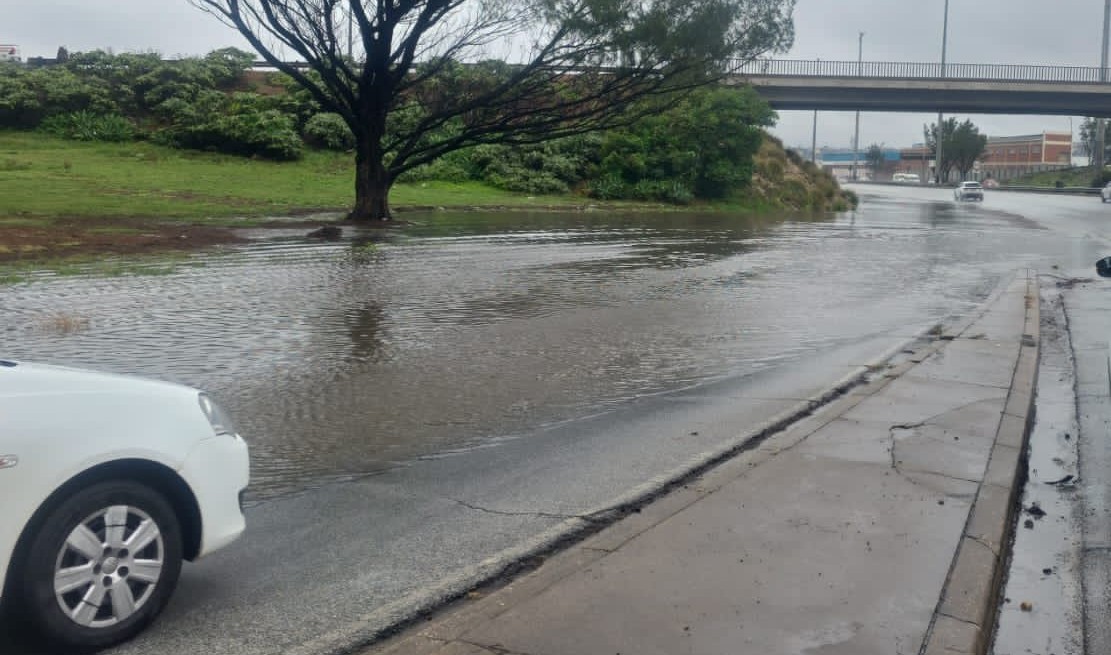
- SANRAL and two contractors were found jointly liable after driver Anton Hesse aquaplaned on pooled water on the N1 near the Okavango interchange.
- The court found that vegetation and soil build-up blocked drainage at a known low point, creating a dangerous pool of water in the fast lane.
- The court dismissed the prescription defence, ruling that the plaintiff only discovered key facts about the contractors’ roles in 2017.
A driver who lost control of his vehicle after hitting pooled water on the N1 near the Okavango interchange has successfully held the South African National Roads Agency Ltd (SANRAL) and two road maintenance contractors liable for his injuries.
The High Court in the Western Cape found that the accident happened because vegetation and soil build-up along the median edge blocked drainage at a known low point on the freeway, allowing water to collect in the right-hand lane during rainfall.
Acting Judge PD Andrews found that SANRAL and its contractors failed to take reasonable steps to prevent this hazard, despite being responsible for maintaining the national road network. The court held that these omissions were both wrongful and negligent, and directly caused the collision where Anton Hesse’s vehicle aquaplaned and spun off the road.
The defendants were found jointly and severally liable for the full extent of Hesse’s proven damages, with the question of quantum (the amount of damages) postponed for later determination.
Anton Hesse brought a claim for damages after a crash in the early hours of 15 May 2009 on the inbound carriageway of the N1 near the Okavango interchange outside Cape Town. The defendants were SANRAL, Kayad Consulting Engineering (Pty) Ltd (the consulting engineer responsible for supervising the road section), and Fountain Square Trading 71 CC, trading as MD Civils (the routine maintenance contractor for that section of the freeway).
SANRAL also pursued third-party claims against the contractors for indemnity or contribution, but these matters were postponed until the damages are determined.
Evidence and arguments
The incident happened at around 3am during heavy rain and darkness. Hesse testified, “As I was driving towards Cape Town in the right-hand lane, I hit a large pool of water. My vehicle aquaplaned, spun, and left the road before colliding with wooden poles and vegetation on the median.”
Emergency call records confirmed that water had pooled on the road in the same area shortly after the crash. Witnesses who arrived at the scene described standing water in the lane and in the median.
Engineering evidence established that the section of road between kilometre markers 21.85 and 21.88 formed a low point where surface water naturally collected. Shortly after the incident, SANRAL’s engineer instructed that vegetation and soil build-up along the median edge in that corridor be removed.
Hesse argued that SANRAL and its contractors had a legal duty to keep the freeway in a condition that would not allow dangerous water to accumulate. He alleged that the defendants failed to remove the edge build-up that blocked drainage, did not maintain the roadway properly, and did not prevent ponding at the known low point.
SANRAL admitted it was legally responsible for the road, but denied any wrongdoing, arguing that “maintenance duties had been given to competent independent contractors.” Kayad Consulting Engineering and MD Civils also denied negligence, suggesting that the water might have come from a municipal pipeline leak in the median. The contractors raised a prescription defence, arguing that Hesse knew about their involvement by 2015 but only joined them to the proceedings in 2019.
The court’s findings
Judge Andrews dismissed the prescription defence, finding that simply knowing the contractors’ identities was not enough to trigger prescription. The court held that the key facts needed to pursue the claim only became available after SANRAL disclosed the full maintenance contracts in 2017. The judge explained, “Prescription only begins when a claimant knows both the identity of the debtor and the facts giving rise to the claim.”
The court found that engineering evidence showed vegetation and soil build-up along the median edge prevented water from draining off the roadway. “This obstruction acted as a barrier, trapping rainwater on the paved surface.” The judge highlighted the significance of maintenance work ordered soon after the accident, noting that the instruction to remove about 200 metres of edge build-up supported a causal link to the crash. The court rejected the theory that the water came from a municipal pipeline leak, citing a lack of evidence.
The consulting engineer and maintenance contractor were held responsible because their contracts required them to manage drainage and vegetation. The court found that “the supervising engineer should have ordered the timely removal of the build-up at the low point,” and the maintenance contractor should have detected and eliminated the hazard earlier.
SANRAL could not escape liability by appointing contractors, as it still had a duty to monitor the work being done. The judge found that SANRAL’s oversight at the site was “reactive rather than preventative.”
The defendants argued that Hesse contributed to the accident by driving too fast and not keeping a proper lookout. The court rejected this, finding no evidence that Hesse’s driving fell below the standard of a reasonable motorist. “Aquaplaning can happen even at moderate speeds when vehicles unexpectedly encounter pooled water,” the judge noted. Testimony from another driver who encountered the same hazard reinforced the conclusion that the real danger was the road condition, not the driver’s behaviour.
Judgment
The court concluded that the defendants’ failure to manage the edge build-up at the low point most likely caused the water to pool and led to the crash. “The harm suffered by Hesse was the direct result of the very danger that the defendants were supposed to prevent through proper maintenance and supervision.”
SANRAL, Kayad Consulting Engineering, and MD Civils were declared jointly and severally liable for 100 percent of Hesse’s proven damages. The determination of damages and SANRAL’s third-party indemnity claims was postponed for later proceedings.
Get your news on the go. Click here to follow the Conviction WhatsApp channel.
