


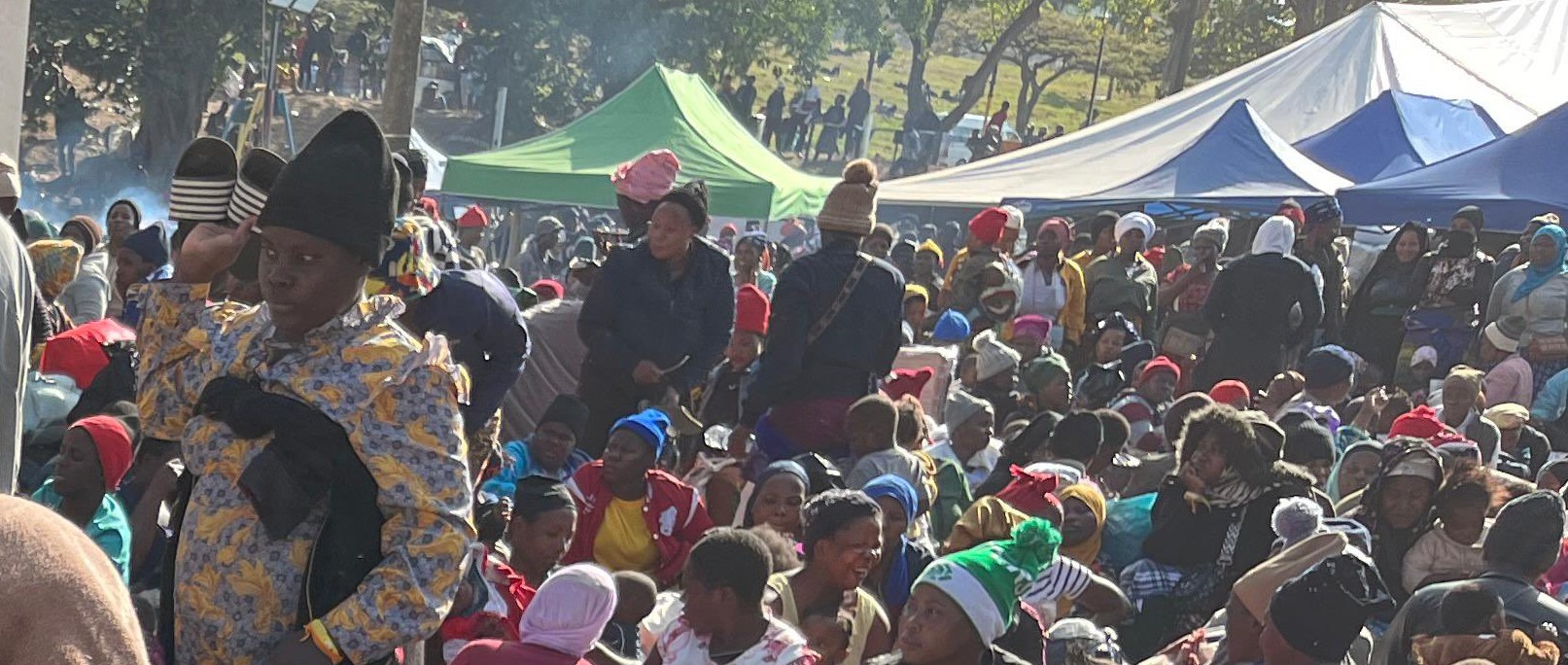
- Nearly 300 Ghanaians and 586 Nigerians have been helped to return home from South Africa.
- Some Malawian migrants are going back to Malawi or looking for shelter because they fear unrest against immigrants.
- The government warns against misinformation and says only law enforcement can enforce immigration laws
As South Africa approaches the planned 30 June 2026 nationwide march organised by March and March, growing numbers of foreign nationals are leaving the country or seeking protection amid fears that anti-immigrant sentiment could escalate into violence.
The planned march comes after weeks of demonstrations, petitions and public mobilisation by the March and March, which is calling for stricter enforcement of immigration laws and stronger action against undocumented foreign nationals.
The movement has organised marches in several provinces, launched a petition opposing any extension of the Zimbabwe Exemption Permit (ZEP) and is counting down to the 30 June action on its social media platforms.
Marches gain momentum as 30 June approaches
The planned march follows weeks of demonstrations organised by the March and March and affiliated groups in several provinces.
Marches have taken place in KwaZulu-Natal, Gauteng, Limpopo and the Eastern Cape, with participants calling for stricter immigration enforcement, stronger border controls and the deportation of undocumented foreign nationals.
The demonstrations have attracted growing public attention and have helped build momentum towards the nationwide action planned for the end of June.
The movement has used these marches to present memorandums to government departments and municipalities, arguing that illegal immigration is contributing to unemployment, pressure on public services and community safety concerns.
At the same time, the demonstrations have sparked debate among political parties, civil society organisations and human rights groups, with critics warning that anti-illegal immigration campaigns risk inflaming xenophobic sentiment if not carefully managed.
Foreign nationals leave South Africa
Almost 300 Ghanaian nationals recently returned home from Johannesburg as part of a voluntary repatriation process coordinated by Ghanaian and South African authorities.
The group, which included children, travelled to Accra after safety concerns intensified following anti-immigrant demonstrations.
South African and Ghanaian officials have reportedly been working on a list of approximately 800 people who indicated that they wished to return home.
The Department of Home Affairs has also confirmed that 586 Nigerian nationals found to be in South Africa illegally were processed for repatriation.
According to the department, all were issued with emergency travel documents by the Nigerian High Commission. The first repatriation flight departed on 11 June, carrying 268 passengers back to Nigeria.
Malawian migrants look for safety
In Durban, displaced Malawian nationals have been moved from temporary shelters established following recent anti-immigrant unrest. Some migrants have chosen to return to Malawi, saying they no longer feel safe in South Africa.
On 17 June, 19 buses carrying Malawian nationals were reportedly on their way to Malawi, with nearly 1,500 people having already left South Africa.
Reports from Durban indicate that conditions at temporary shelters have become increasingly difficult, with concerns raised about overcrowding and limited sanitation facilities.
The movement of migrants from shelters and the increase in voluntary repatriations have added to concerns about the atmosphere ahead of the planned march.
Petition challenges Zimbabwe Exemption Permit
As part of its campaign, the movement has launched a petition calling on the government not to extend the Zimbabwe Exemption Permit.
The petition argues that the permit was introduced as a temporary measure and that permit holders should regularise their status through existing immigration channels.
“We, the undersigned concerned citizens of South Africa, respectfully submit this petition to express our firm opposition to any further extension of the Zimbabwe Exemption Permit (ZEP),” the petition states.
The movement says it supports the Department of Home Affairs’ requirement that permit holders apply for alternative permits if they wish to remain in South Africa legally.
“We support the Department of Home Affairs’ directive that ZEP holders must transition to an alternative permit, such as a general work permit, critical skills permit, or business permit, to maintain their legal status in South Africa,” the petition states.
“We urge you to enforce the existing deadline of 28 November 2025, and to take decisive action to ensure that all ZEP holders either regularise their status through the appropriate legal channels or return to their home country,” the petition states.
Government warns against taking the law into your own hands
President Cyril Ramaphosa has repeatedly stated that immigration laws must be enforced by authorised law enforcement agencies and has warned against individuals taking the law into their own hands.
In a statement issued on 15 June, the Presidency cautioned against the spread of misinformation regarding migration-related incidents and ongoing investigations involving foreign nationals.
The Presidency said claims linking the deaths of Ethiopian nationals to anti-migrant violence were incorrect and that the matter was being investigated as organised crime. Incidents involving Mozambican nationals remain under investigation by the South African Police Service.
Ramaphosa and the Inter-Ministerial Committee on Migration have been unequivocal that only duly authorised law enforcement officials have the mandate to enforce the law.
The President has also previously stated that no person is entitled to stop others in the street or demand proof of identity.
Concerns rise ahead of 30 June
The South African Human Rights Commission has previously warned that inflammatory rhetoric and threats circulating on social media could contribute to a human rights crisis if tensions escalate.
Police have been placed on heightened alert ahead of the planned demonstrations.
Minister in the Presidency Khumbudzo Ntshavheni has also sought to reassure the public ahead of 30 June, stating that no national shutdown will be permitted.
Addressing concerns about the planned action, Ntshavheni said the government would not allow any disruption of normal economic activity or public life.
Her remarks came amid growing speculation about the scale of the planned demonstrations and their potential impact on communities, businesses and public services.
While acknowledging citizens’ constitutional right to protest peacefully, the government has stressed that any demonstrations must take place within the confines of the law and that law enforcement agencies will act against any unlawful conduct.
Gauteng police are also preparing for the possibility of large-scale demonstrations on 30 June.
Provincial authorities have confirmed that specialised law enforcement units will be deployed as part of a province-wide contingency plan aimed at maintaining public order and preventing violence.
Units expected to be on standby include Public Order Policing, Tactical Response Teams, mounted patrol units and K-9 units.
Get your news on the go. Click here to follow the Conviction WhatsApp channel.
