


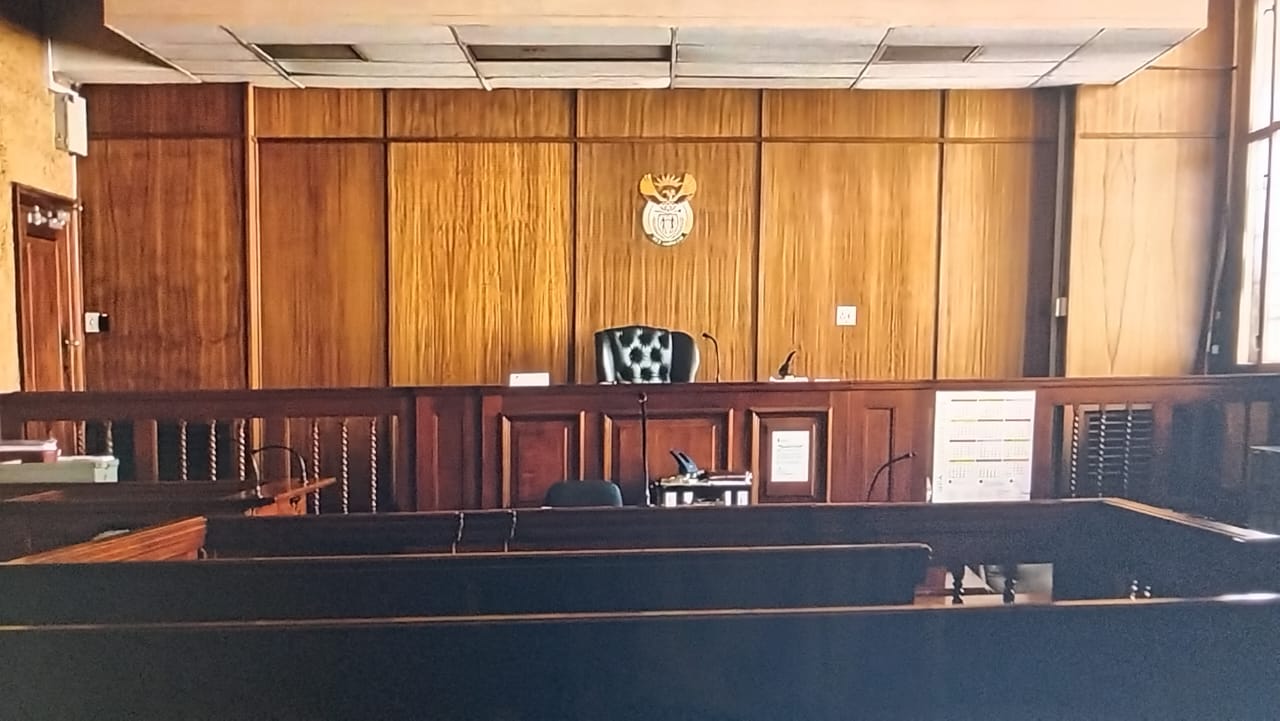
- The husband repeatedly ignored court orders, failed to comply with discovery and rescission applications, and caused prolonged delays in the divorce proceedings.
- Judge D Davis emphasised that non-compliance with court directives carries serious consequences, including the striking out of defences and financial penalties.
- The ruling underscores the importance of timely adherence to court orders in maintenance and asset division disputes.
The Western Cape High Court has issued a stern warning to parties who ignore court orders after a prolonged divorce dispute between a husband and wife married under Shariah law in 2009.
The couple had two minor children, a boy aged 13 and a girl aged 10. The wife, living in Cape Town with the children, filed for divorce on 12 May 2021. She sought maintenance for herself and the children, a 50 percent redistribution of the husband’s assets in terms of Section 7(3) of the Divorce Act 70 of 1979, and a parenting plan regulating parental responsibility.
The husband, residing in Sandton, challenged the validity of the Shariah marriage, alleging the wife had misrepresented her age. In his counterclaim, he sought sole custody and claimed the wife was emotionally unstable and abusive.
However, the courts repeatedly found the husband in contempt. Judge N Nuku declared him in contempt in October 2024 for failing to comply with a Rule 43 order requiring maintenance and legal cost contributions. His applications for leave to appeal were refused by Judge Nuku and the Supreme Court of Appeal. Judge V van Zyl later found him in contempt again in January 2025 for unpaid rental from December 2022 to December 2024.
Non-compliance with discovery orders
The wife repeatedly sought disclosure of the husband’s financial documents. When he failed to respond to Rule 35(3) notices, Judge M Thulare and Judge J Baartman issued orders compelling compliance. Despite these orders, the husband delayed filing his answering affidavit. On 17 October 2024, Judge Baartman granted an order by default directing him to reply within 10 days, yet he failed to do so.
The husband eventually filed a rescission application, arguing the marriage was invalid, alleging misrepresentation by the wife, and seeking condonation for failing to comply with court orders.
Judge D Davis described the rescission application as “merely part of an overall modus operandi aimed at delaying and frustrating the plaintiff’s claims in the divorce action”. The wife presented evidence of the husband’s substantial financial means, contradicting his claims of inability to comply.
During the hearing on 22 October 2025, the husband’s counsel sought to raise new legal arguments not previously included in the affidavits or heads of argument. Judge Davis rejected this, stating, “Litigation by ambush is manifestly unfair to opposing counsel, not to mention discourteous to the Court. It cannot be tolerated”.
He further emphasised, “The proper functioning of the administration of justice requires that courts be able to rely implicitly on the correctness of the information conveyed by legal practitioners”.
The judgment also referenced ethical obligations, quoting Section 57.1 of the Legal Practice Council Code of Conduct, which provides, “A legal practitioner shall take reasonable steps to avoid, directly or indirectly, misleading a court or tribunal on any matter of fact or question of law. In particular, a legal practitioner shall not mislead a court or a tribunal in respect of what is in papers before the court or tribunal, including any transcript of evidence”.
Consequences of non-compliance
Judge Davis emphasised the consequences of ignoring court orders. “Parties must understand that ignoring court directives carries serious consequences, including the striking out of defences and financial penalties”.
He found that the husband had failed to provide a reasonable explanation for multiple defaults, including late filings and ignoring chamber book orders, and that the rescission application was not bona fide.
Citing precedent, Judge Davis reiterated, “A litigant cannot escape the obligation adequately to explain his default by showing prospects of success on the merits”, referencing a Jacob Zuma case.
He further noted from Judge A Miller in Chetty v Law Society, Transvaal, “It is not sufficient if only one of these two requirements is met; for obvious reasons a party showing no prospect of success on the merits will fail in an application for rescission of a default judgment against him, no matter how reasonable and convincing his explanation of his default”.
The High Court struck out the husband’s defence due to repeated non-compliance, allowed the counterclaim to proceed, and ordered him to pay costs on an attorney-and-client scale.
Get your news on the go. Click here to follow the Conviction WhatsApp channel.
