



- Donald Trump’s boycott of the 2025 G20 summit in South Africa challenges colonial power structures and exposes US hegemony.
- South Africa pursues a genocide complaint at the ICJ, asserting counter-sovereignty and epistemic resistance to Western-centric law.
- These dual acts highlight a decolonial politics of refusal, reclaiming justice, cultural sovereignty, and pluriversal futures.
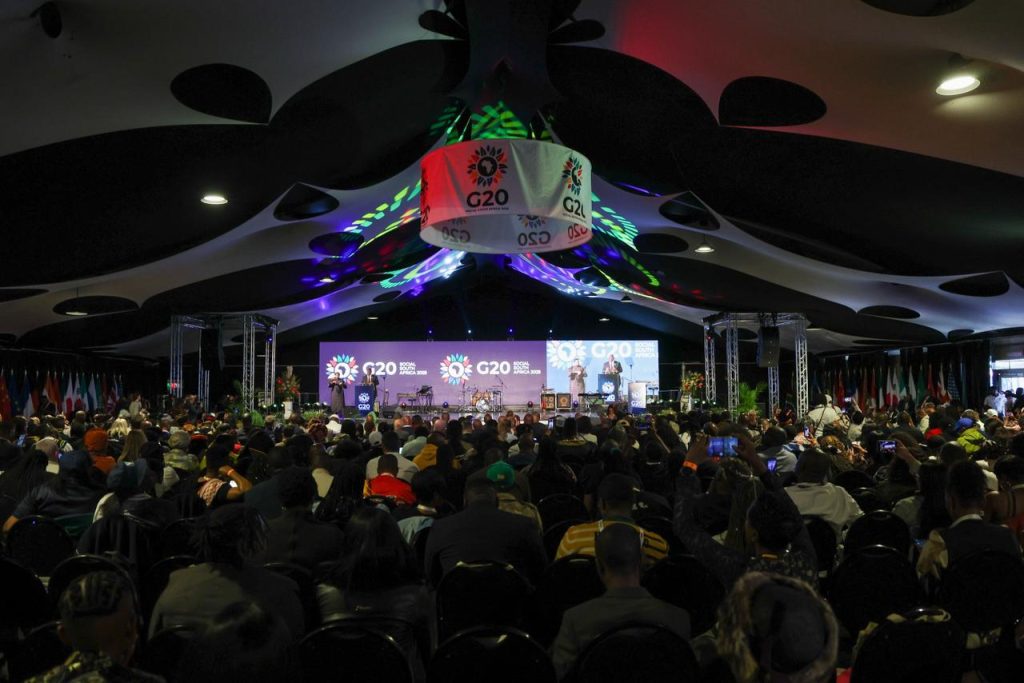
The decision by United States President Donald Trump to boycott the 2025 G20 summit in South Africa signifies more than just a political gesture; it symbolises a profound rupture within the global colonial power structure.
This action calls for a decolonial analysis, showing how it disrupts and redefines mechanisms of power rooted in what Quijano describes as coloniality, the ongoing system of racialised, economic, and epistemic domination. Drawing on Foucault’s concept of discursive regimes further helps unpack the complex interaction of power, knowledge, and exclusion that shapes modern global governance.
The G20 summit, which gathers the world’s leading economies, must be recognised as a vital node of postcolonial power deeply rooted in the colonial matrix. This institutional framework is not merely a historical remnant but a dynamic system through which coloniality persists, blending economic dominance, racial hierarchies, geopolitical influence, and epistemic control into an interconnected nexus.
Donald Trump’s political persona demonstrates a resurgence of hypermasculine settler-colonial discourse, evident in nationalist rhetoric and economic protectionism. His leadership and political language operate within a racialised discursive regime grounded in exclusionary sovereignties and nationalist myths that systematically reproduce imperial power structures.
Within this context, boycotting Trump’s presence must be understood as an insurgent challenge to the coloniality of power. This refusal destabilises normalised imaginaries that depict US hegemony and its representatives as natural and legitimate arbiters of international order. Decolonial theory requires a decentring of such hegemonies, disrupting the taken-for-granted knowledge and power circulated within dominant discursive regimes.
The boycott, therefore, undertakes a dual action. It addresses the epistemic violence of coloniality, its silencing and marginalisation of alternative sovereignties and embodied subjectivities, while simultaneously revealing the fractures and contradictions inherent in the G20’s governance structure.
Boycotting Trump is a strike against colonial power
The boycott of Trump’s presence at the G20 summit in South Africa is more than a political snub; it is a direct challenge to a global order based on racialised hierarchies and imperial mythologies. Donald Trump embodies a resurgence of hypermasculine settler-colonial nationalism, sustaining exclusionary sovereignties and protectionist economic policies that disadvantage the Global South.
By excluding Trump, South Africa destabilises normalised ideas of US hegemony as the “natural” arbiter of international order. This refusal is a form of political protest and epistemic dissent, denouncing the racialised discursive regime that anoints certain voices as legitimate while silencing others. In Foucauldian terms, it interrupts dominant discursive regimes that regulate what is sayable and knowable in global politics.
The boycott follows Trump’s announcement that the US government would not send any officials to the summit, citing discredited claims of persecution against white Afrikaners and accusing South Africa of mismanagement. This act represents a political attempt to delegitimise South Africa’s sovereignty and its role as the first African host of the G20. South Africa’s refusal to accept this boycott and instead assert its sovereignty through symbolic and political resistance marks a critical rupture with imperial power dynamics.
Legal nonalignment contesting the empire at the ICJ
Beyond the political boycott, South Africa’s approach to the International Court of Justice exemplifies a juridical form of decolonial refusal. By submitting a genocide complaint against Israel at the ICJ, South Africa challenges Western-centric international law that often sidelines postcolonial states.
This nonalignment is not mere legal manoeuvring; it is a conscious refusal to fully submit to a legal system imbued with the coloniality of knowledge and power. It aligns with what border-thinking theorists Gloria Anzaldúa and Walter Mignolo describe as epistemic resistance from the “borderlands,” where alternative knowledges and sovereignties emerge outside imperial frameworks.
This strategy challenges the necropolitics Mbembe describes as the politics of death, through which modern sovereignty decides who lives and who dies. By opposing international legal orders that implicitly condone political violence and dispossession, South Africa asserts a counter-sovereignty that rejects violence rooted in racialised global governance.
Intersecting epistemologies of resistance
South Africa’s dual stance at both the G20 and the ICJ highlights the intersection of race, gender, and geopolitics shaping modern decolonial struggles. The boycott opposes hypermasculine nationalist discourses, while the legal challenge counters epistemic violence within international law. Both actions embody the principles of epistemic disobedience, a refusal to accept imposed knowledge hierarchies that diminish subaltern identities and sovereignties.
These refusals resonate with Ngũgĩ wa Thiong'o’s critique of cultural and linguistic imperialism, demanding the reclamation of cultural sovereignty within global forums. They also echo the affirmations of Negritude and Africana Critical Theory, emphasising Black dignity and intersectional resistance to colonial legacies.
Reclaiming justice and pluriversality
Together, these acts establish a powerful decolonial politics of refusal that challenges the legitimacy of imperial logics embedded in global governance, economics, and law. South Africa’s strategies reveal cracks within the colonial matrix, creating spaces to assert pluriversal futures grounded in justice, cultural sovereignty, and reparative visions.
These refusals are not isolated acts of defiance. They represent a growing global movement challenging empire across multiple levels, from geopolitical summits to international courts of law. They call for urgent recognition of alternative sovereignties and ways of governing that bypass the monolithic, racialised, and economic hierarchies still dominating the global order.
Conclusion: A call for reparative futures
Donald Trump’s decision to boycott the 2025 G20 summit in South Africa, along with the absence of US government officials, signifies a deliberate political move to undermine South Africa’s sovereignty and leadership on the global stage. However, South Africa’s response, which refuses to accept this boycott while simultaneously pursuing a strategic legal challenge at the International Court of Justice, represents a converging act of decolonial resistance confronting intertwined systems of racialised and colonial power.
Together, these actions challenge hegemonic visions of sovereignty and knowledge, highlighting the visibility and legitimacy of subaltern voices too often silenced in global governance. They represent a broader resistance to imperial logics embedded in global economics, law, and politics.
In a world still dominated by colonial legacies, South Africa’s stance illuminates the path towards a plural, fair, and inclusive global governance. It argues that the future is not fixed but must be actively reclaimed as a reparative future where sovereignty, justice, and cultural dignity belong to all peoples, not solely to empire.
Get your news on the go. Click here to follow the Conviction WhatsApp channel.
