


- Trustees can impose special contributions for necessary repairs without obtaining 75% approval from owners.
- The statutory 75% threshold applies to certain alterations and improvements, not necessary maintenance.
- The appeal was dismissed, with no order as to costs.
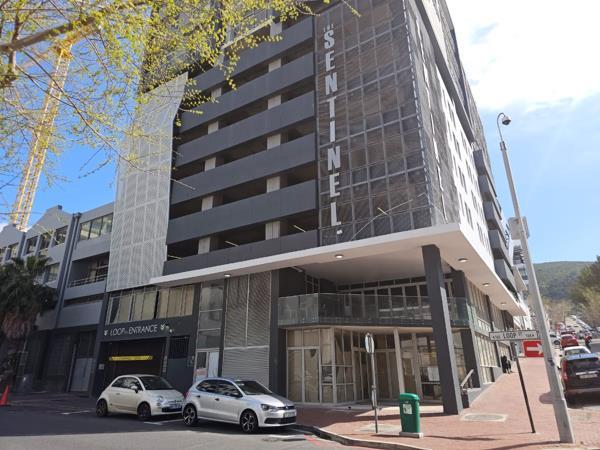
Ocean Echo Properties 1203 CC has failed to overturn a special contribution imposed by the Sentinel Body Corporate to fund repairs and maintenance estimated to cost at least R6 million.
The company owns three units in the sectional title scheme SS The Sentinel and holds about 15.3% of its total participation quota. It argued that the contribution was unlawful because members had not approved it by special resolution.
The dispute arose from a special general meeting held on 4 June 2025. Only 36 of the scheme’s 101 members attended. The minutes recorded an approval margin of 77.7%, but the appellant disputed the voting figures and argued that the required 75% threshold had not been reached.
The company approached the Community Scheme Ombud Service (CSOS), arguing that the contribution required a special resolution under the Sectional Titles Schemes Management Act 8 of 2011 (STSMA). The adjudicator dismissed the application on 2 July 2026, prompting the appeal.
Difference between maintenance and improvements
In a judgment delivered on 13 November 2026, Judge ED Wille, with Acting Judge ZL Mapoma concurring, found that the central issue was whether the work involved improvements to common property or necessary maintenance and repairs.
The judgment distinguished between alterations and improvements, which may require a special resolution under Prescribed Management Rule 29, and necessary maintenance and repairs, which fall within the trustees’ statutory powers.
Section 3(3) of the STSMA provides that a special contribution becomes due and payable when the trustees pass a resolution to that effect. Prescribed Management Rule 21(3)(a) also allows trustees to raise special contributions for necessary expenses that cannot reasonably be postponed until the next budget.
Judge Wille found that neither the STSMA nor the management rules require members to pass a special resolution when a contribution is raised to fund necessary maintenance. The 75% threshold applies instead to specific transactions, including certain alterations and improvements to common property.
Nature of the work determined the outcome
The appellant relied on the portfolio manager’s description of the project as a redecoration exercise. The judge found, however, that the label did not determine the legal nature of the work. The work involved addressing water ingress, failed waterproofing and structural concrete spalling.
These were remedial measures intended to preserve the common property, not to add to or improve it. The judgment found that the work constituted necessary maintenance and repairs falling within the body corporate’s obligations under Section 3(1)(a)(i) of the STSMA.
The 75% approval threshold therefore did not apply. Whether the meeting achieved 51% or 77% approval was irrelevant to the trustees’ authority to impose the contribution. The judge also found that consulting members at a special general meeting did not create a special resolution requirement where the legislation did not prescribe one.
The trustees’ subsequent implementation of the levy and the debits to members’ accounts were a valid exercise of their authority under Section 3(3) of the STSMA.
Preliminary objections and costs
The body corporate raised several preliminary objections, including that the appeal was late, that the appellant lacked legal standing, that its legal representatives lacked authority and that the appeal record was incomplete. On the time limit, the court found that the appeal had been submitted to the registrar within the 30 days prescribed by Section 57(2) of the CSOS Act.
The CSOS order was transmitted on 2 July 2026, and the appeal was submitted on 31 July 2026. Although the order was formally issued on 4 August 2026, the subsequent issuing process was administrative and did not constitute a late appeal.
The court also rejected the objection concerning the appellant’s registration number. It found that the discrepancy in the earlier CSOS proceedings was a clerical error that caused no prejudice. The challenges to the authority of the appellant’s legal representatives and to the completeness of the record were also dismissed.
On costs, Judge Wille noted that the appellant had been led up the garden path by the body corporate’s portfolio manager and had not known precisely what case it had to meet. The judge considered it grossly unfair to order the appellant to pay the costs of the appeal.
The High Court in Western Cape dismissed the appeal and confirmed the CSOS adjudicator’s order of 2 July 2026, although for entirely different reasons. There was no order as to costs.
Get your news on the go. Click here to follow the Conviction WhatsApp channel.
