


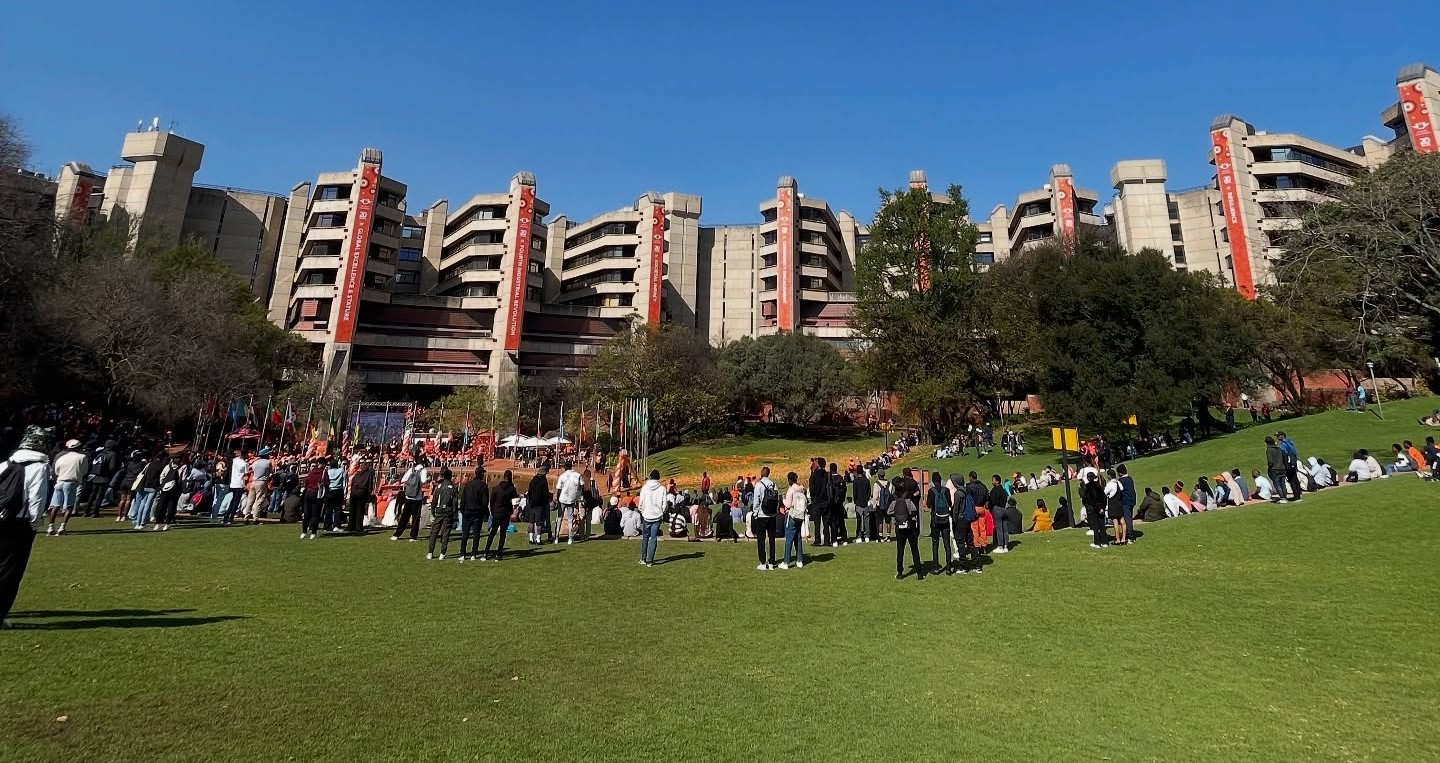
- Three students tried to stop their disciplinary hearings after leading a campus protest about financial aid.
- The court said their right to protest at universities is protected, but rules can still be enforced if disruption threatens order.
- Judge Wilson called the protest “time-honoured” yet refused to halt the university’s internal process.
The finance office at the University of Johannesburg was the main site of a conflict between student activists and university leaders.
Three student leaders, Siyabonga Nkhutha, Karabo Modisapudi, and Palisa Moleshwa, were suspended after participating in a sit-in on 8 September 2025. They claimed they were not violent but simply wanted answers after some students had their financial aid suddenly withdrawn.
They turned to the High Court in Johannesburg to challenge what they saw as punishment for exercising their right to protest at universities. But Judge SDJ Wilson refused to stop the disciplinary process. He stated that courts should not interfere unless “exceptional circumstances” make it necessary.
“Most South African university students have a great deal to worry about,” Judge Wilson wrote. “At the top of the list are crushing familial and social expectations, academic pressure, scarce funding, and administrations which often appear alienating and hostile.”
Protest is protected, but not absolute
Judge Wilson acknowledged that disruption often comes with protest. “Picketers interfere with access to the property they picket,” he said. “Sit-ins, occupations and other temporary communities of dissent are all time-honoured forms of protest.” He added that these actions may find protection under Section 17 of the Constitution as long as they remain peaceful.
The judge explained that feeling sympathy for the students was not enough for the court to get involved. He said the university had good reason to think the students’ actions disrupted normal academic activities. Staff at the finance office locked themselves inside, and police were called.
“What I subjectively believe the truth of the situation to be does not matter,” he said. “All the University needs to demonstrate is that there was material on which the required belief could be formed, and that the registrar’s reliance on it was reasonable.”
Lesson for campus justice
Although the students lost their case, Judge Wilson emphasised that their grievances were real and deserved attention. “That is not the same as saying that the applicants have actually misconducted themselves, or that their conduct was anything other than reasonable in the circumstances,” he noted.
Get your news on the go. Click here to follow the Conviction WhatsApp channel.


