


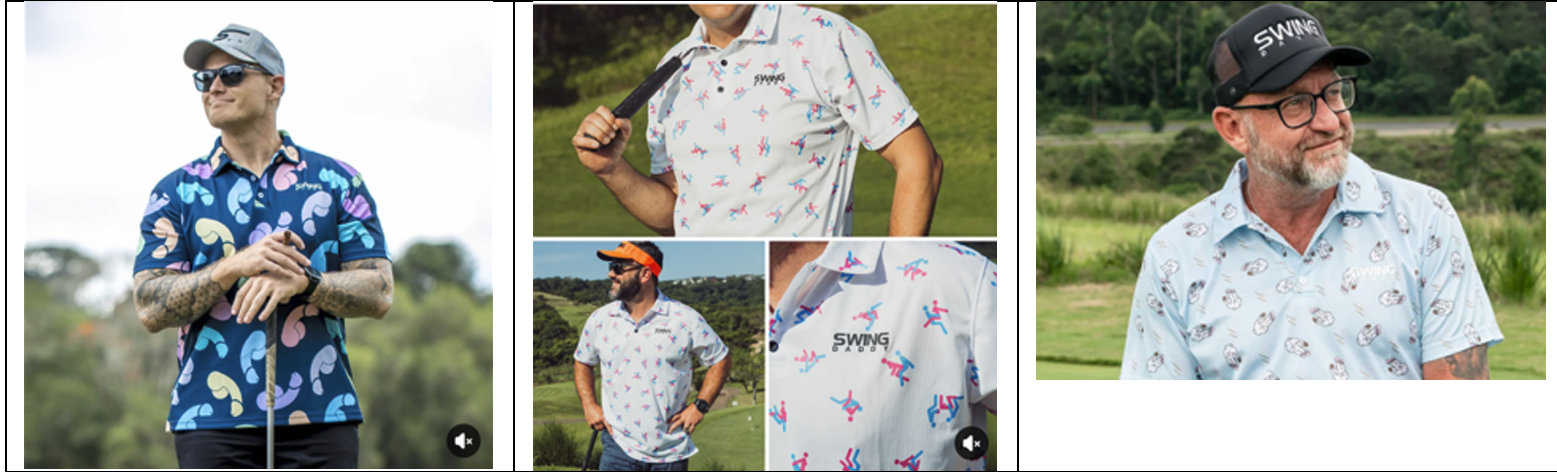
- Consumer said prints of penises, breasts and sexual innuendo were irresponsible and should not be publicly advertised.
- The Directorate ruled the imagery was “not graphic” and “stylised” for humour rather than pornography.
- Posts appeared only on the brand’s own platforms and were “unlikely to be frequented by impressionable children.”
South Africa’s advertising watchdog has dismissed a complaint against Swing Daddy, finding that the company’s sexually suggestive golf-themed social media posts do not breach the Code of Advertising Practice because the designs are cartoon-based, comedic and unlikely to cause serious or widespread offence.
In a decision dated 26 January 2026, the Advertising Regulatory Board assessed screenshots from Facebook and Instagram showing shirts and accessories printed with illustrated genitalia, stick figures in sexual positions and cheeky innuendo. The complainant argued that the items displayed “penises, naked breasts and explicit sexual innuendos,” describing the advertising as irresponsible and saying “adult content should be better managed.”
Advertising only, not what people wear
The Directorate began by drawing a firm line around its powers, stating, “The ARB has no jurisdiction over actual products.” It added that concerns about people wearing the shirts in public “is not something that the ARB can control,” and that it would “limit its consideration to the social media posts submitted.” This meant the ruling focused strictly on the advertising itself, not personal taste or public dress.
Humour not pornography
Applying Clause 1 on offensive advertising, the Directorate quoted the Code, which states that “advertisements should contain nothing that is likely to cause serious or widespread or sectoral offence,” but also that “the fact that a particular product, service or advertisement may be offensive to some is not in itself sufficient grounds for upholding an objection.”
After reviewing the material, the Directorate acknowledged that the examples “rely on innuendo and contain cartoon imagery of, inter alia, penises and stick figures in various sexual positions.” However, it agreed with the advertiser that the images were “not graphic” and were “stylised in a manner that lends itself to humour, rather than pornography, or adult content.”
It also accepted that the items appear mainly under a specific “Party Polo” section and are not promoted through paid mass advertising. Users must deliberately visit the brand’s pages to see them.
The Directorate said the “average person who visits the Advertiser’s website or browses its social media content would be someone who is likely a golf enthusiast,” and therefore more likely to understand the tongue-in-cheek tone. On that basis, it was “not convinced that the advertising … is likely to cause serious, widespread, or sectoral offence.”
Children unlikely to be affected
Under Clause 14, which protects children, the Directorate considered whether the posts could cause “mental, moral or physical harm.” It found that the content appeared only on the advertiser’s own platforms and was “unlikely to be frequented by impressionable children.” Golf clothing and accessories, it added, are “unlikely to be appealing to children or attract their attention.”
The Directorate therefore concluded that the advertising was “not likely to cause mental, moral, or physical harm to children in a manner that the Code seeks to prevent.”
With no breaches established under either clause, the complaint was dismissed in full, allowing the posts to remain online.
Get your news on the go. Click here to follow the Conviction WhatsApp channel.
