


- The Limpopo High Court upheld Thabelo Sandra Kone’s appeal after her RAF claim was wrongly dismissed due to inconsistencies regarding an unidentified vehicle.
- Judge AML Phatudi ruled that pleadings require only material facts, and courts should not treat minor differences in evidence as credibility failures.
- The court found that once Kone gave credible evidence of an unidentified vehicle forcing her off the road, the Road Accident Fund was required to rebut it, but failed to do so.
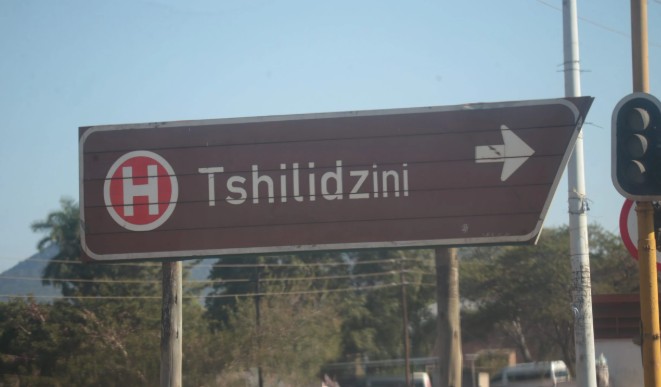
A dispute about whether another vehicle caused a crash became the central issue in a damages claim brought by Thabelo Sandra Kone against the Road Accident Fund (RAF) after a motor vehicle accident on 20 April 2017 near Tshilidzini Hospital.
Kone claimed she lost control of her vehicle after an unidentified truck drove aggressively behind her, flashed its lights, overtook in the lane of oncoming traffic, and then cut back into her lane, forcing her to swerve and crash. The RAF disputed liability, and the trial court dismissed her claim, concluding that the accident report suggested no other vehicle had been involved. Kone appealed this decision.
Her appeal was heard by a Full Court of the High Court in Thohoyandou, where Judge AML Phatudi, with Deputy Judge President MV Semenya and Judge TC Tshidada concurring, reconsidered whether the trial court had properly evaluated the evidence.
Judge Phatudi explained that the key legal question was whether the accident had been caused solely by Kone, or whether an unidentified third-party vehicle, through negligent driving, was involved.
“The burden of proof is upon the Plaintiff to prove, on a balance of probabilities, that there was indeed a third party involved in order for the RAF's involvement to be legally sound,” the judge said.
Pleadings versus evidence misunderstood by the trial court
The Full Court found that the trial court had incorrectly treated differences between Kone’s written statements and her oral testimony as fatal contradictions.
Kone’s particulars of claim stated that the accident occurred because of the negligent driving of an unknown vehicle. At trial, she described the vehicle as a truck that “flashed its lights and overtook recklessly before cutting in front of her.”
Judge Phatudi stressed that pleadings are not expected to contain detailed evidence. “The rule requires the pleading of material facts, and not evidence,” the judge said. “The pleadings set out what happened, while the evidence at trial tells further detail on how such transpired.”
The court found that the essential elements of Kone’s claim had been consistent throughout the litigation. These included the date and location of the accident, the presence of an unknown vehicle, negligent conduct by that vehicle, and the resulting damages.
The judge warned that courts should not treat minor descriptive differences as credibility problems. “These can be said to be semantics. Material to pleadings is the essentialia,” the judgment stated.
The accident report is given too much weight
A major reason for the trial court’s dismissal of the claim was the accident report compiled by a police officer. The report suggested that Kone had simply lost control of her vehicle, with no involvement from another driver. The Full Court found that the trial court had relied too heavily on that document.
Judge Phatudi explained that accident reports are often compiled by officers who did not witness the crash and usually contain information gathered from people at the scene. “They are typically prepared by officers who did not witness the accident,” the judge said, adding that such reports cannot easily outweigh sworn testimony given in court.
The court also noted that the officer who completed the report arrived after the accident and could only observe the aftermath, namely, a single overturned vehicle. “The absence of the motor vehicle or truck at the time of the officer's attendance does not negate its prior involvement in causing the accident,” the judgment said.
Unrebutted evidence established negligence
The Full Court also examined whether Kone had proven negligence on the part of the unidentified driver. According to her testimony, the truck “approached from behind at speed, flashed its lights aggressively, overtook in the lane for oncoming traffic, and then cut sharply back into her lane.”
Judge Phatudi held that such conduct fell below the standard expected of a reasonable driver. “The conduct of the driver of the insured vehicle fell below the standard of a reasonable driver,” the court said.
The judge added that the driver’s actions created a sudden emergency that forced Kone to take evasive action. “Had it not been for the truck driver's conduct, the appellant would not have swerved to the curbs,” the judgment stated.
The court emphasised that once Kone had presented a credible account of the accident, the evidential burden shifted to the RAF to rebut it. The RAF did not call witnesses or produce evidence that directly contradicted her version. “Their failure to do so means the version of the Plaintiff stands uncontradicted,” the court said.
Appeal succeeds, and the RAF is ordered to pay
The Full Court upheld Kone’s appeal and set aside the earlier judgment that had dismissed her claim. The RAF was ordered to compensate Kone for 100 percent of her proven damages arising from the accident, and to pay the legal costs of both the trial and the appeal.
However, Kone was ordered to pay the costs relating to her application for condonation for the late filing of the appeal.
Get your news on the go. Click here to follow the Conviction WhatsApp channel.


