

Skip to content
Close Menu
ConvictionConviction
  • Home
  • Law & Justice
  • Special Reports
  • Opinion
  • Ask The Expert
  • Get In Touch

Subscribe to Updates

Get the latest creative news from FooBar about art, design and business.

What's Hot

Protracted reinstatement battle meant military colonel claimed damages three years too late

October 16, 2026

Couple unlawfully fenced off shared property to create a larger play area for their children

October 16, 2026

Birth injury ruling overturned because mother failed to prove clinic staff were negligent

October 16, 2026
Facebook X (Twitter) Instagram
Trending
  • Protracted reinstatement battle meant military colonel claimed damages three years too late
  • Couple unlawfully fenced off shared property to create a larger play area for their children
  • Birth injury ruling overturned because mother failed to prove clinic staff were negligent
  • Legal Aid SA activates contingency plan as workers prepare to resume strike
  • Reinstatement award set aside after arbitrator mishandles evidence and misapplies law
  • RAF challenges ruling protecting indigent claimants unable to pay medical costs upfront
  • SAHRC vs Lagardien: The sign came down, but the principle stays up
  • Dealership ordered to refund R323,950 for faulty car advertised in ‘excellent condition’
Facebook X (Twitter) Instagram
ConvictionConviction
Sonneblom
  • Home
  • Law & Justice
  • Special Reports
  • Opinion
  • Ask The Expert
  • Get In Touch
ConvictionConviction
Home » Women in South African research
Opinion

Why are women still missing from South African research and innovation?

Professor Grace Khunou argues that despite gains in higher education, structural barriers continue to keep women out of research leadership and knowledge production.
Professor Grace KhunouBy Professor Grace KhunouAugust 24, 2026No Comments
Facebook Twitter Pinterest LinkedIn WhatsApp Reddit Tumblr Email
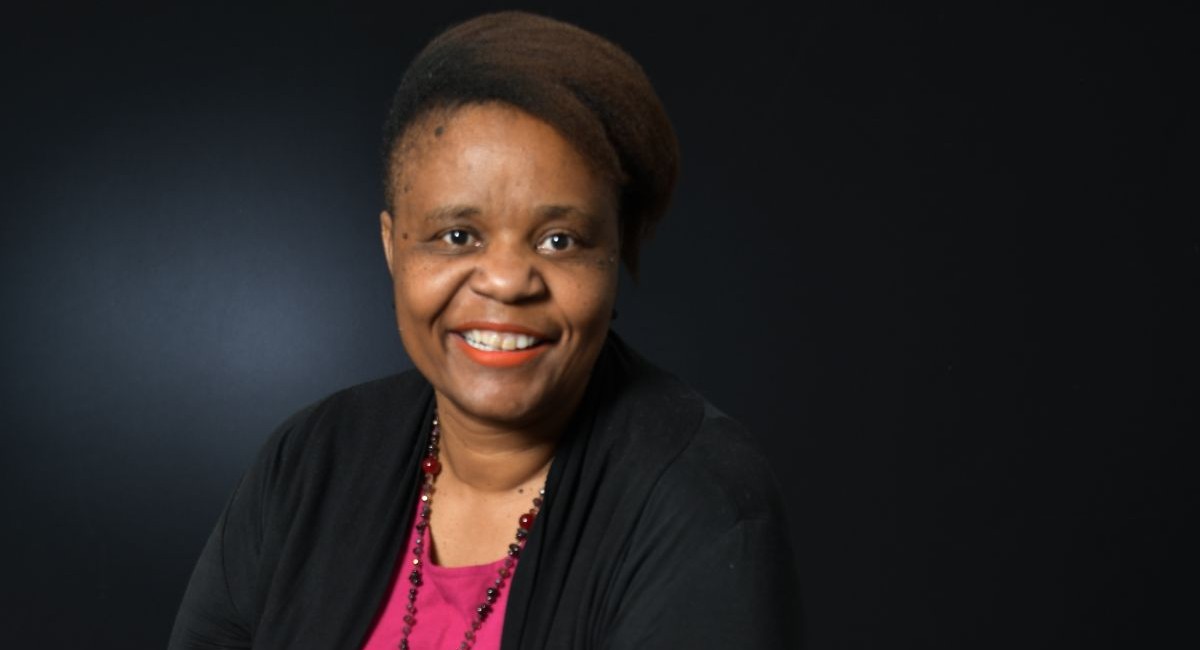
Professor Grace Khunou says meaningful transformation in South African research requires sustained investment in women researchers and leadership.
Share
Facebook Twitter LinkedIn Pinterest Email
  • Women make up more than half of South Africa’s population, yet remain significantly underrepresented in research.
  • Structural inequalities in funding, mentorship and institutional support continue to favour men.
  • Sustained investment in women-centred research programmes is essential to achieving meaningful transformation.

This Women’s Month, I want to share some thoughts on South African women in research. Since 1994, we have seen a growing number of girls and women leaving primary school with Grade 12 and entering the higher education sector.

These numbers continue to overtake those of boys and men. While the declining number of boys is concerning, the numbers of women in education are heartwarming. However, when looking at women in higher education leadership, the numbers remain concerning.

This is also true for women in research. According to the 2024 Status of African Women in Research report, only 33.5% of African researchers are women. The same is reported globally, with women making up only 33% of the world’s researchers.

The importance of representation

Why does it matter that women are “missing” in research? It matters because women are the majority in the South African population. According to Statistics South Africa (Stats SA), women represent over 51% of the population.

Even though representation is significant, it is not the only reason why it matters to have women lead research. Substantively, this matters because women continue to disproportionately bear the brunt of societal challenges, and their issues continue to be understudied and under-resourced.

UN Women recently reported that women the world over are experiencing increasing justice gaps, and when they do not set the research agenda, their lived experiences will not inform the solutions that research proposes.

The justice gaps mentioned in the UN Women report include disparities in legal frameworks, social norms, policy and implementation, among others. These justice gaps, I argue, manifest in social institutions like universities through the inequitable positioning of women in research, among other spaces.

Modest shifts in transformation

While transformation imperatives are shifting how women show up in research, these shifts are too modest. The National Research Foundation’s (NRF) Breaking the Glass Ceiling report on women’s publication trends shows an increase in the contribution of female authors in scientific articles from 31.1% in 2005 to 36.8% in 2020. Only 20% of engineering research capacity is made up of women, and the smallest increase, 21%, is observed among Black female authors in the health sciences.

Barriers to women in research

In terms of research, the continued low numbers are a result of how we continue to think about what knowledge is and who is considered a credible knower. Dr Siphokazi Tau, in her work on women’s leadership in the South African higher education sector, suggests that, given the colonial histories of universities in Africa, it is not surprising that women are missing in key knowledge development roles.

She argues that the extension of Western university models to Africa imported the idea that the university is meant for men, and this explains why women remain “outsiders”. What current research shows is that we continue to have low numbers in STEM disciplines. We often have men as leading scholars, more men as NRF-rated scholars, and more men as research chairs.

This is not because women are not able to achieve the same, but because of structural challenges that continue to privilege men. For example, workload models, research funding mandates, access to mentorship opportunities and institutional research support are more often biased in favour of men.

This favouritism towards men is a significant barrier because women’s experiences in society continue to be gendered. Hence, women experience their everyday lives differently because they are women, mainly because ideas about what their roles should be, compared to those of men, persist, and these are usually exclusionary.

The way forward

Many universities and supporting institutions have various programmes aimed at improving the numbers of women in research, including special programmes and funding set aside for women. As university funding agendas shift towards other developments like artificial intelligence (AI), one should caution that these should not be seen as justification for reducing gender mainstreaming funding.

Reducing such funding will leave women behind and will not be sustainable. Women-centred support programmes can only happen if there are committed leadership efforts to improve access for women.

According to the NRF, significant shifts have been noted between 2020 and 2024. The number of women researchers increased from 673 to 878, support for women researchers increased from 1,318 to 1,489, postdoctoral scholars who are women increased from 280 to 391, and South African women contributed 42% of national research, compared with 41% in 2023. Whilst these numbers show progress, more can and should be done.

Conviction.co.za

Get your news on the go. Click here to follow the Conviction WhatsApp channel.

The opinions expressed in this article are solely those of the author and do not necessarily reflect the views of Conviction.co.za

Gender equality Higher Education Research leadership Unisa Women in research
Share. Facebook Twitter Pinterest LinkedIn Tumblr Telegram Email
Professor Grace Khunou

Executive Director for Leadership and Transformation at the University of South Africa (Unisa).

Related Posts

SAHRC vs Lagardien: The sign came down, but the principle stays up

October 15, 2026

Doublethink is not rational: You cannot hold two opposing thoughts and remain sane

October 14, 2026

‘America First’ in Africa: Coltan and cash for condoms and the ‘El Chapos’

October 13, 2026
Leave A Reply Cancel Reply

Prove your humanity: 10   +   9   =  

Subscribe to our newsletter:
Top Posts

Your driving licence at the gate: What estates can actually legally scan

Sponsor: My Estate LifeSeptember 6, 2026

Making sectional title rules that work: A practical guide

January 17, 2025

Protection order among the consequences of trespassing in an ‘Exclusive Use Area’

December 31, 2024

Between a rock and a foul-smelling place

November 27, 2024
Don't Miss
Labour Law
4 Mins Read

Protracted reinstatement battle meant military colonel claimed damages three years too late

By Kennedy MudzuliOctober 16, 20264 Mins Read

A prolonged reinstatement battle did not stop prescription from running on a military colonel’s damages claim after his suspension was set aside in 2015.

Couple unlawfully fenced off shared property to create a larger play area for their children

October 16, 2026

Birth injury ruling overturned because mother failed to prove clinic staff were negligent

October 16, 2026

Legal Aid SA activates contingency plan as workers prepare to resume strike

October 16, 2026
Stay In Touch
  • Facebook
  • Twitter
  • WhatsApp
Demo
About Us
About Us

Helping South Africans to navigate the legal landscape; providing accessible legal information; and giving a voice to those seeking justice.

Facebook X (Twitter) YouTube WhatsApp Twitch RSS
Latest posts

Your driving licence at the gate: What estates can actually legally scan

Sponsor: My Estate LifeSeptember 6, 2026

Making sectional title rules that work: A practical guide

January 17, 2025

Protection order among the consequences of trespassing in an ‘Exclusive Use Area’

December 31, 2024
OUR PICKS

APRAV welcomes new RAF boss and rejects Road Accident Benefit Scheme revival plan

October 9, 2026

Business owner ordered to pay R200,000 for banning LGBTQ+ people from his shop

October 11, 2026

Tenant who withheld R1.4 million in rent, citing maintenance failures, ordered to leave property

October 13, 2026
© 2026 Conviction.
  • Home
  • Buy Now
  • Law & Justice

Type above and press Enter to search. Press Esc to cancel.

Powered by
Necessary cookies enable essential site features like secure log-ins and consent preference adjustments. They do not store personal data.
None
Functional cookies support features like content sharing on social media, collecting feedback, and enabling third-party tools.
None
Analytical cookies track visitor interactions, providing insights on metrics like visitor count, bounce rate, and traffic sources.
None
Advertisement cookies deliver personalized ads based on your previous visits and analyze the effectiveness of ad campaigns.
None
Unclassified cookies are cookies that we are in the process of classifying, together with the providers of individual cookies.
None
Powered by