


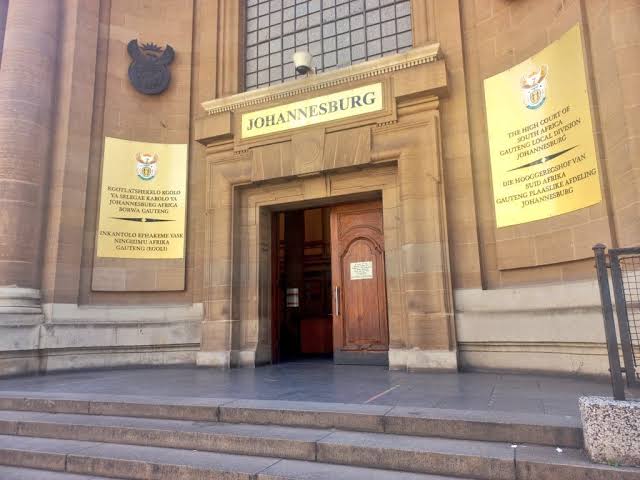
The Gauteng High Court in Johannesburg has overturned the wrongful conviction of Melizitha Moyo, who had been sentenced to 30 years in prison for robbery and murder.
The appeal judgment found that the State failed to prove Moyo’s guilt beyond a reasonable doubt, exposing major flaws in police investigations and evidentiary procedures.
Moyo, along with Sifiso Ngobeni, was accused of robbing Audrey and Christopher Abrahams on 1 August 2013. During the robbery, Christopher was fatally shot. While Ngobeni was identified during an identification parade, Moyo was never identified. He was, however, convicted and sentenced to 15 years for robbery and 30 years for murder, with the sentences running concurrently.
Upon appeal, the High Court found that the State's case relied predominantly on the doctrine of recent possession. Police officers alleged that Moyo had been found with Christopher Abrahams’ bank card four days after the crime. However, this formed the only evidence linking Moyo to the robbery and murder, prompting deeper scrutiny into the reliability of police testimonies.
Key evidentiary lapses identified
- Contradictory police testimonies undermined the credibility of the prosecution’s case.
- No photographic or forensic evidence was presented to verify the recovered items.
- The bank card and other alleged items were never introduced as evidence in court.
- A key witness, Captain Zulu, was never called to testify, despite being involved in the investigation.
- The evidence was not properly booked into official police records.
Guilt not proven beyond reasonable doubt
Judge R Strydom, with Judge PG Malindi, and Acting Judge TP Bokako in agreement, ruled in favor of Moyo, stating that the testimonies provided by the police officers were contradictory and improbable. The judges emphasised that criminal convictions must be based on substantial and reliable evidence, cautioning against weak investigative practices that risk wrongful convictions.
"In my view, the State failed to prove the guilt of the appellant beyond reasonable doubt," Judge Strydom stated, reinforcing the principle that a conviction cannot stand without compelling proof.
#Conviction
Get your news on the go. Click here to follow the Conviction WhatsApp channel


