


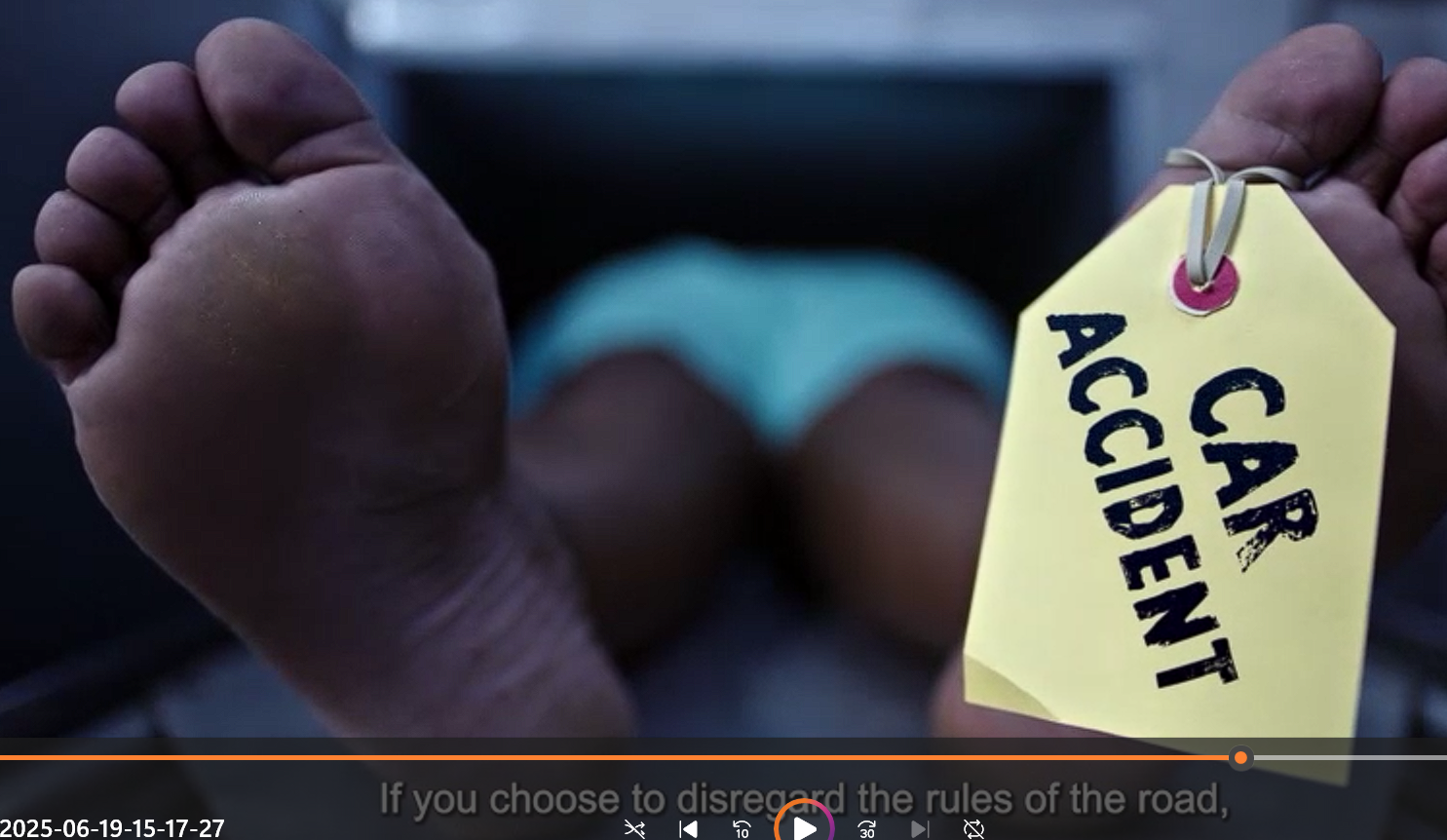
- A consumer lodged a complaint over the RAF’s morgue-themed ad aired during the Comrades Marathon, calling it inappropriate for family viewing.
- The Advertising Regulatory Board found the ad unsettling but not harmful to children, ruling it did not breach the Code of Advertising Practice.
- The Board urged mindful scheduling but upheld the RAF’s right to use emotional messaging to promote road safety, within the principles of responsible advertising.
“If you choose to disregard the rules of the road, we are here to receive you.” This stark warning is delivered over clinical images of a morgue. A toe tag reads “CAR ACCIDENT.” And a calm, authoritative voice concludes: “Your trip shouldn’t end with R.I.P.”
This is not a horror movie trailer. It’s a Road Accident Fund (RAF) television commercial that aired during the 2025 Comrades Marathon, one of South Africa’s most beloved and widely viewed sporting events. And it has sparked a national conversation about responsible advertising, especially when children are part of the audience.
Inside the commercial: A chilling message about road safety
The advert opens in a hospital locker room, where two medical professionals prepare for their shift. “So, how’s it looking today?” one asks. “Extremely busy,” the other replies solemnly.
The scene shifts to a cold, sterile morgue. Bodies covered in blue sheets lie on trolleys. A pair of feet emerges from a refrigerator drawer, the only visible part of the corpse, with a toe tag reading “CAR ACCIDENT.”
No blood. No visible injuries. Just a cold, clinical reality: people are dying on South Africa’s roads every day. The Road Accident Fund’s logo, phone number and website flash on-screen. The message is blunt. The imagery is emotionally charged. But is it harmful?
The complaint: I had to explain what a morgue is to my child
In their complaint to the ARB, the viewer argued that the commercial featured disturbing imagery during a high-profile event that draws multigenerational audiences. They described the experience of watching the ad with their child and being forced to explain what a morgue is, and what happens to people who die in car crashes.
The complainant stressed that national events like the Comrades Marathon should be safe, family-friendly spaces free of content that could cause confusion or distress to young viewers, a key concern in current conversations around responsible advertising in South Africa.
The RAF’s defence: A mandate to save lives
In its response, the RAF stood by the ad’s creative direction. The Fund explained that the advert is part of a broader public awareness strategy to reduce fatalities on South African roads, especially during periods of heavy travel, like long weekends, festive seasons, and major national events.
Drawing on international best practice, the RAF argued that powerful, emotive advertising is not only justified, but necessary. The aim, it said, is not to shock for shock’s sake, but to jolt viewers into reflecting on their driving habits. Morgue scenes, the RAF argued, are part of the real-world consequences of reckless driving.
The organisation also noted that previous campaigns used similarly hard-hitting imagery, such as wrecked vehicles and victim testimonies, in a consistent effort to shift public behaviour through responsible advertising that balances truth with public interest.
The ARB’s decision: Not pleasant, but not harmful
In reviewing the complaint, the ARB considered Clause 14 of Section II of the Code of Advertising Practice, which deals with advertising directed at or likely to influence children.
The Directorate acknowledged that, although the commercial was not aimed at children, it was aired during a family-viewing slot and could reasonably have been seen by them.
However, the Board ruled that the commercial did not violate the code. The visuals, though sombre, were presented in a clinical, non-gratuitous way. There were no graphic images of injuries, no scenes of violence, and no suggestive content. The bodies were fully or mostly covered, and the setting, while unsettling, was not grotesque.
The ARB also noted that children are regularly exposed to themes of death in popular media, including animated classics such as The Lion King, Bambi, and Coco. In this context, the ad’s message was deemed not only understandable but potentially valuable, offering parents a springboard to educate children about road safety in age-appropriate ways, a principle aligned with responsible advertising.
Importantly, the Board found no evidence that the ad would cause mental, moral, emotional, or physical harm to children, the threshold for breach under Clause 14.
A note of confusion: What exactly does the RAF do?
While dismissing the complaint, the ARB did express some concern about the messaging. Specifically, it noted that the RAF does not literally “receive” bodies from accidents, that role belongs to hospitals and forensic services.
The Board cautioned that the metaphor may be misleading, potentially confusing viewers about the RAF’s actual role, which is to provide financial support to victims of road accidents, not to process fatalities.
This could dilute the ad’s clarity, even if its overall purpose, to reduce road deaths, remains in line with responsible advertising objectives.
Confrontational, but within the rules
The decision sets a clear precedent: confrontational messaging is permitted, even encouraged, when it serves a legitimate public interest, so long as it does not cross the line into gratuitous harm.
This isn’t new ground. Public health campaigns around the world, from anti-smoking ads showing diseased lungs to drunk driving PSAs featuring real accident footage, have long relied on discomfort to make people think twice.
The key, according to the ARB, is context, intent, and impact. And in this case, the RAF’s ad passed the test and was found to fall within the realm of responsible advertising.

What’s next for the RAF and social messaging?
The ARB advised the RAF to remain mindful of its scheduling choices when placing hard-hitting ads, especially during time slots where younger viewers are likely to be watching. But it stopped short of requiring any changes or sanctions.
For now, the RAF is free to continue its emotionally charged campaigns. And South Africans can expect more uncomfortable truths on their screens, not because they’re easy to watch, but because they’re meant to be remembered. That, too, is part of responsible advertising.
#Conviction
Get your news on the go. Click here to follow the Conviction WhatsApp channel.
