


- South Africa’s ICU bed availability lags far behind global norms, with just five per 100,000 people, and fewer than one in some provinces, compared to countries like Germany with 39.
- Staffing and training shortfalls worsen access, with fewer than 100 intensivists and only a quarter of ICU nurses trained in critical care.
- National audit and telemedicine offer hope, with plans underway to map resources and expand digital support to stabilise patients and uplift care.
South Africa’s intensive care system is in crisis. With fewer than five ICU beds per 100 000 people and in some provinces, fewer than one, the country falls far behind global standards.
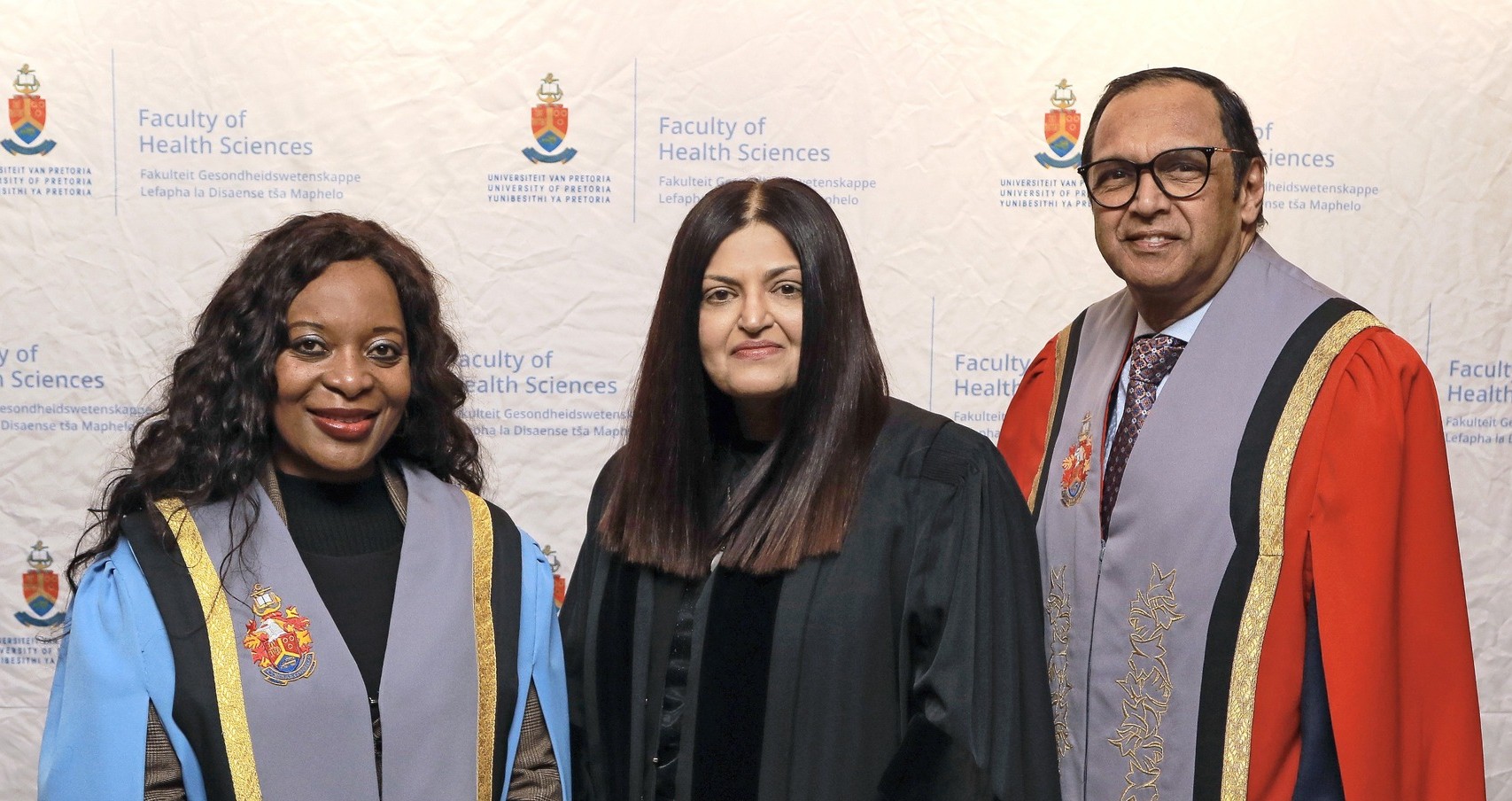
According to Professor Fathima Paruk, Head of Critical Care and Emergency Medicine at the University of Pretoria (UP), urgent and coordinated ICU reform in South Africa is essential to save lives and deliver equitable care.
Delivering her inaugural lecture, titled “Carpe Diem: Achieving efficient and fair allocation of critical care across South Africa,” Paruk laid bare the structural weaknesses in the system: gross inequality, a chronic shortage of skilled healthcare workers, and severe underinvestment in public healthcare infrastructure.
“If you’re in Cape Town, you’re much better off than in Limpopo,” said Paruk. “That shouldn’t be the case in a country that aspires to health equity.”
A system under pressure
South Africa’s ICU shortfall is not only about the number of beds, but also about who is available to manage them. Fewer than 100 intensivists, physicians trained in critical care, serve the entire population. Only one in four ICU nurses has formal critical-care training.
“An ICU bed is meaningless without the trained professionals to run it,” she said.
Paruk also pointed to the uneven distribution of beds between public and private hospitals. In the private sector, ICU capacity can be added on demand. In the public sector, “you have X number of beds, and that’s it.”
This inequity plays out every day, with lives hanging in the balance.
Tools for survival: Ethics, triage and innovation
In response to overwhelming demand, healthcare workers in both sectors rely on triage tools developed by the Critical Care Society of Southern Africa. These guidelines help clinicians prioritise patients ethically and transparently based on their chances of survival.
Paruk’s research into end-of-life care explores these decisions in more depth, integrating clinical guidance with religious, personal and cultural considerations.
She also praised how the pandemic challenged and inspired health systems to evolve. During COVID-19, UP and Steve Biko Academic Hospital collaborated with Berlin’s Charité University using a telepresence robot dubbed “Stevie.” This allowed real-time remote consultations and clinical decision-making.
“COVID-19 brought disruption, but it also showed us what’s possible,” she said. “Telemedicine gave us tools to manage uncertainty, and it remains one of our best options for expanding access today.”
Mapping the way forward
Paruk is now helping lead a long-overdue national ICU audit, supported by the Critical Care Society of Southern Africa. The audit, the first in over 15 years, will gather data on ICU bed numbers, staffing and equipment across public and private hospitals.
The goal is to support evidence-based planning and lay the groundwork for a live dashboard that could track ICU availability in real time. Such tools will be critical to the success of ICU reform in South Africa, particularly as the country prepares to implement the National Health Insurance (NHI).
“We need to know where we are before we can decide where to go,” said Paruk. “This is about hope and action.”
A call to action
While her message was grounded in urgent concern, Paruk ended on a hopeful note. “I’ve covered the strengths and the gaps in critical care in South Africa,” she said. “But the message I want to leave you with is that there is hope. The future is now, and it is ours to shape.”
#Conviction
Get your news on the go. Click here to follow the Conviction WhatsApp channel.
