Skip to content
Close Menu
ConvictionConviction
  • Home
  • Law & Justice
  • Special Reports
  • Opinion
  • Ask The Expert
  • Get In Touch

Subscribe to Updates

Get the latest creative news from FooBar about art, design and business.

What's Hot

Phala Phala ruling closes impeachment route, but accountability questions remain

November 25, 2026

Judge permits SA child’s permanent relocation to the US under strict conditions

November 25, 2026

SARS officer fired after truck linked to fake Lesotho export is spotted on N3 in KZN

November 25, 2026
Facebook X (Twitter) Instagram
Trending
  • Phala Phala ruling closes impeachment route, but accountability questions remain
  • Judge permits SA child’s permanent relocation to the US under strict conditions
  • SARS officer fired after truck linked to fake Lesotho export is spotted on N3 in KZN
  • Phala Phala panel misapplied evidence test and exceeded its mandate, judges find
  • State patient accused of sexually assaulting doctor at Limpopo psychiatric hospital
  • Cancelled wedding, lost deposit and a bitter battle for consumer rights
  • It takes a village to raise a child. It takes a village to raise a rapist
  • Businessman fails to stop SARS from accessing seized phones and laptop
Facebook X (Twitter) Instagram
ConvictionConviction
Sonneblom
  • Home
  • Law & Justice
  • Special Reports
  • Opinion
  • Ask The Expert
  • Get In Touch
ConvictionConviction
Home » Polygamous customary marriages leave women exposed when the law is ignored
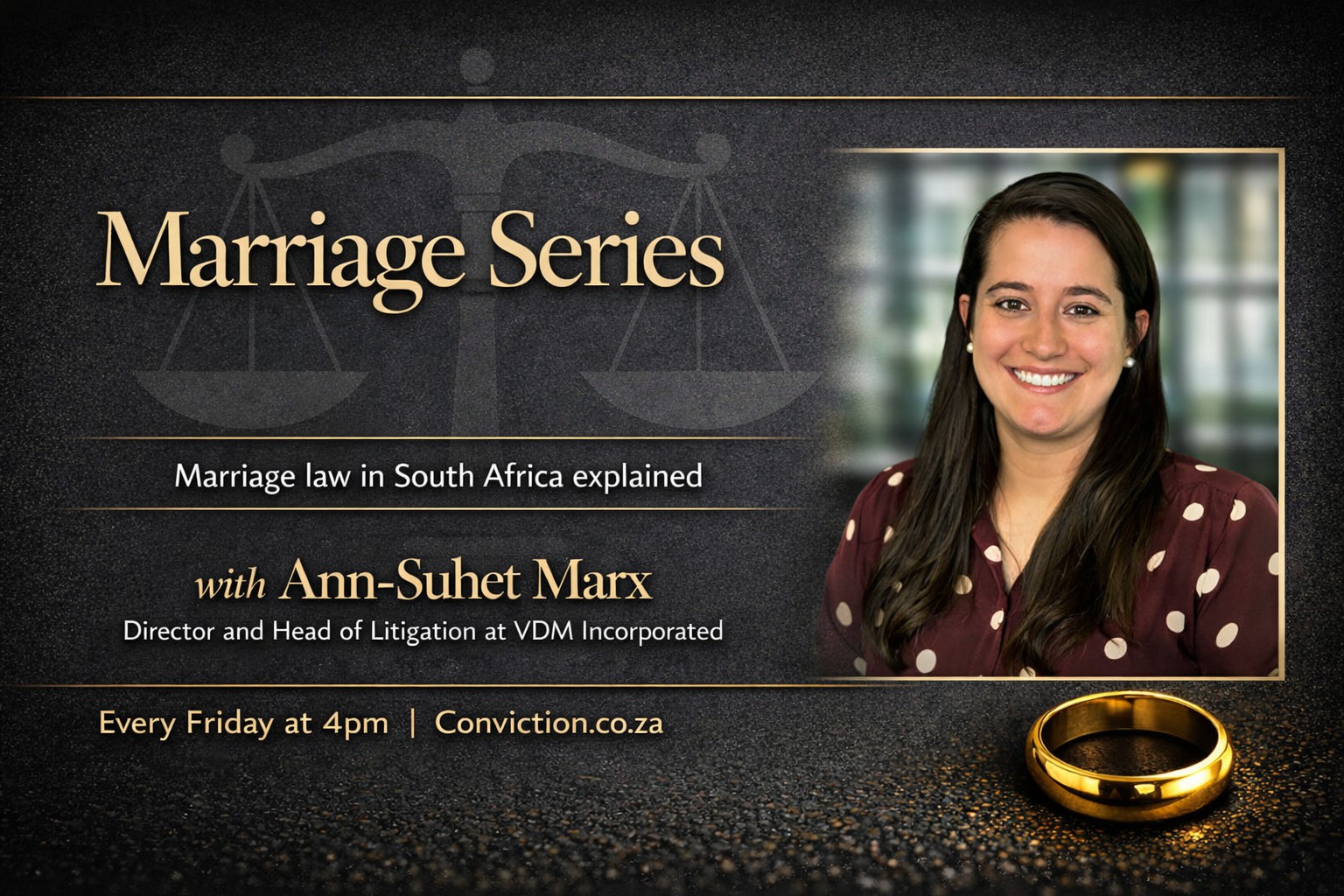
Marriage Series

Polygamous customary marriages leave women exposed when the law is ignored

In the Marriage Series this week, legal expert Ann-Suhet Marx focuses on how ignoring legal requirements in polygamous customary marriages leaves women without protection.
Ann-Suhet MarxBy Ann-Suhet MarxMarch 27, 2026No Comments
Facebook Twitter Pinterest LinkedIn WhatsApp Reddit Tumblr Email
Share
Facebook Twitter LinkedIn Pinterest Email
  • Legal requirements are clear but widely ignored, leaving marriages vulnerable.
  • Consent and court approval are essential yet often overlooked.
  • Women face exclusion and financial loss at divorce or death.

Polygamous customary marriages are recognised by South African law. But widespread misunderstanding about how these marriages work legally is leaving many women financially exposed, emotionally devastated and without protection when marriages end, or husbands die.

These problems rarely surface early. They usually only come to light at divorce or death. By then, families are already in crisis, and the legal consequences can be irreversible.

Customary marriages are not informal arrangements outside the law. They are recognised by legislation and protected by the Constitution. But they come with strict legal requirements. Ignoring them can destroy families.

What the law requires

South African law allows polygamy only in customary marriages, and only where a man has more than one wife. These marriages are governed by the Recognition of Customary Marriages Act. But legality depends on more than tradition or intention.

For a polygamous customary marriage to be valid, all parties must be over the age of 18, everyone must consent freely, and the marriage must be properly negotiated and entered into according to custom.

Failing to meet these requirements can render a marriage legally invalid, regardless of how long the relationship lasted or whether children were born.

The Constitutional Court settled this issue in Mayelane v Ngwenyama in 2013. A husband cannot validly enter into a second customary marriage without the consent of his first wife, even though the Recognition of Customary Marriages Act does not explicitly spell this out.

Allowing a man to marry again without his wife’s consent undermines her dignity, equality and financial security, and is inconsistent with constitutional values. No consent from the first wife means no valid second marriage.

If the first wife did not consent to the husband taking another wife, the second marriage is invalid, and this cannot be emphasised enough.

It does not matter how committed the relationship was. Without consent, the law does not recognise that marriage.

Before taking an additional wife, a husband must apply to the High Court for approval of a written contract regulating how property in the existing and future marriages will be managed.

This process exists to protect all spouses, although in practice, it is ignored far too often. Some families are unaware of the requirement. Others assume it is unnecessary or unaffordable. But the law does not agree.

Failing to obtain High Court approval of a property contract does not automatically invalidate a subsequent customary marriage.

However, there is a serious financial consequence. The later marriage is treated as out of community of property by default.

This means the second wife does not share in the joint estate of the first marriage. It often only becomes apparent years later, usually after a death, when women discover that they have no automatic claim to property they believed was part of the marriage.

Where things go wrong

Most disputes involving polygamous customary marriages arise when a husband dies or a marriage ends. This is when issues of consent, registration and property regimes become critical.

While registering a customary marriage with the Department of Home Affairs is not legally required, failure to register can make it extremely difficult to prove the marriage later. After someone dies, everything depends on proof.

If the marriage cannot be proven or its validity cannot be established, a woman may be excluded from the estate entirely. Inheritance disputes are particularly common where there are multiple wives.

If a later marriage is found to be invalid because consent was never given, that woman may not be recognised as a spouse at all.

Despite legal protections, women remain the most vulnerable when things go wrong.

Many women do not realise that customary marriages are automatically in community of property. Others believe that leaving the marital home ends the marriage. It does not. Only a court can grant a divorce.

Women who lived as wives for many years frequently walk away with nothing because the legal steps were never taken. In most cases, it is not bad faith but rather a lack of information, with devastating consequences.

What can be done

Couples entering customary marriages, and especially polygamous ones, must seek legal advice early and register their marriages.

Registration creates certainty. It simplifies everything from divorce to death benefits. It is one of the most practical ways to protect yourself.

As South Africa continues discussions around reforming marriage laws, public education is critical.

Customary marriages are an important part of society and deserve respect, but respect also means understanding the law and complying with it.

When people get this right, the law protects families. When they do not, the consequences can be devastating.

Conviction.co.za

Get your news on the go. Click here to follow the Conviction WhatsApp channel.


Customary marriages legal compliance Marriage law Polygamy Women’s Rights
Share. Facebook Twitter Pinterest LinkedIn Tumblr Telegram Email
Ann-Suhet Marx

Director and Head of Litigation, Van Deventer Dowlath & Marx Incorporated.

Related Posts

You cannot marry a man whose previous marriage is still legally valid, says judge

November 19, 2026

Understanding the legal rights and responsibilities that come with marriage

November 1, 2026

Missing clan rituals do not automatically invalidate a customary marriage

October 29, 2026
Leave A Reply Cancel Reply

Prove your humanity: 7   +   6   =  

Subscribe to our newsletter:
Top Posts

Your driving licence at the gate: What estates can actually legally scan

Sponsor: My Estate LifeSeptember 6, 2026

Making sectional title rules that work: A practical guide

January 17, 2025

Protection order among the consequences of trespassing in an ‘Exclusive Use Area’

December 31, 2024

Between a rock and a foul-smelling place

November 27, 2024
Don't Miss
Constitutional Law
6 Mins Read

Phala Phala ruling closes impeachment route, but accountability questions remain

By Kennedy MudzuliNovember 25, 20266 Mins Read

The High Court ruling has removed the basis for Ramaphosa’s impeachment process, but Professor Alex van den Heever says further accountability questions remain.

Judge permits SA child’s permanent relocation to the US under strict conditions

November 25, 2026

SARS officer fired after truck linked to fake Lesotho export is spotted on N3 in KZN

November 25, 2026

Phala Phala panel misapplied evidence test and exceeded its mandate, judges find

November 25, 2026
Stay In Touch
  • Facebook
  • Twitter
  • WhatsApp
Demo
About Us
About Us

Helping South Africans to navigate the legal landscape; providing accessible legal information; and giving a voice to those seeking justice.

Facebook X (Twitter) YouTube WhatsApp Twitch RSS
Latest posts

Your driving licence at the gate: What estates can actually legally scan

Sponsor: My Estate LifeSeptember 6, 2026

Making sectional title rules that work: A practical guide

January 17, 2025

Protection order among the consequences of trespassing in an ‘Exclusive Use Area’

December 31, 2024
OUR PICKS

Makro manager dismissed for buying pies at R7 instead of R283 secures reinstatement

November 19, 2026

Wealth adviser barred after scripting R1 billion client exodus to rival firm

November 23, 2026

New labour deal sets September 2027 deadline for nurses’ uniforms

November 21, 2026
© 2026 Conviction.
  • Home
  • Buy Now
  • Law & Justice

Type above and press Enter to search. Press Esc to cancel.

Powered by
Necessary cookies enable essential site features like secure log-ins and consent preference adjustments. They do not store personal data.
None
Functional cookies support features like content sharing on social media, collecting feedback, and enabling third-party tools.
None
Analytical cookies track visitor interactions, providing insights on metrics like visitor count, bounce rate, and traffic sources.
None
Advertisement cookies deliver personalized ads based on your previous visits and analyze the effectiveness of ad campaigns.
None
Unclassified cookies are cookies that we are in the process of classifying, together with the providers of individual cookies.
None
Powered by